A thermostat reading wrong isn’t just an annoyance—it’s a silent energy leak. A miscalibrated unit can cause your HVAC system to run 15–20% longer than needed, according to the U.S. Department of Energy’s 2022 Residential Energy Consumption Survey. That adds up fast: the average homeowner overpays $150–$200 annually due to temperature sensor drift and placement errors.
Why This Happens
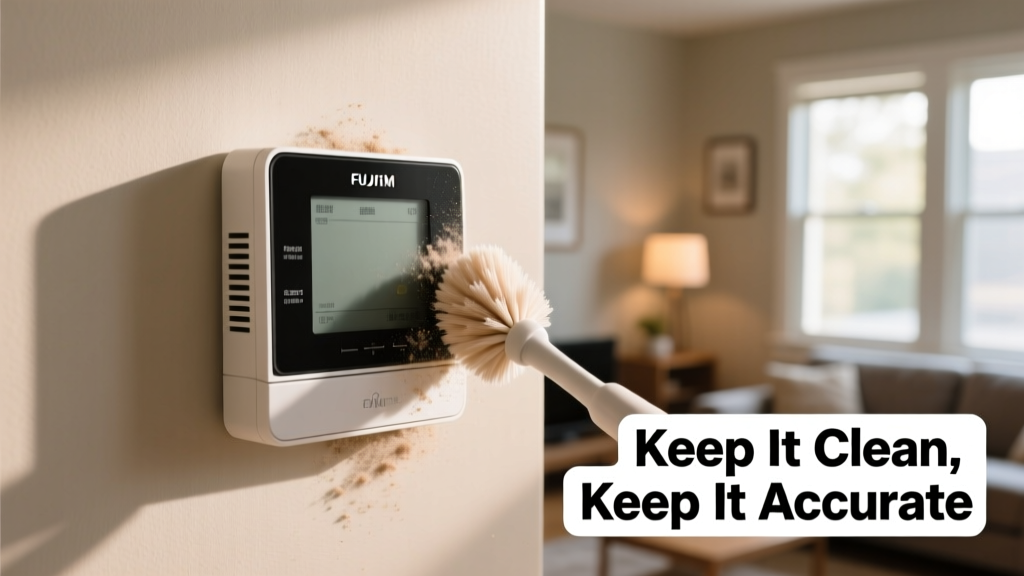
Thermostats don’t fail all at once—they degrade gradually. The most common root causes are environmental interference, aging sensors, and improper installation. Direct sunlight, drafts from windows or doors, proximity to lamps or electronics, and even steam from bathrooms skew readings by 2–5°F. Dust buildup inside the unit insulates the thermistor, slowing response time. And after 5–7 years, most mechanical and early digital thermostats lose calibration accuracy—especially if they’ve never been cleaned or recalibrated.
- Heat sources within 3 feet (lamps, TVs, radiators)
- Drafts from poorly sealed windows or exterior doors
- High-humidity zones like laundry rooms or kitchens
- Mounting on exterior walls with poor insulation
- Older models without self-calibration features (pre-2015)
Maintenance Checklist
| Frequency | Task | Time Required |
|---|---|---|
| Daily | Verify display matches room feel (no lag or jumping digits) | <1 minute |
| Weekly | Wipe exterior with dry microfiber cloth; check for condensation | 2 minutes |
| Monthly | Vacuum around base and behind cover; inspect for dust in sensor vents | 5 minutes |
| Yearly | Remove unit, clean internal contacts with isopropyl alcohol; test against a calibrated thermometer | 20 minutes |
Warning Signs
If your thermostat consistently disagrees with a trusted reference thermometer placed nearby—or if your HVAC cycles erratically—you’re likely dealing with drift. Watch for these red flags:
- Temperature display changes without system activation
- Heating kicks on when it’s already 72°F in the room
- Cooling runs continuously despite reaching setpoint
- Display flickers or shows “--” or “ERR” intermittently
- Room feels noticeably warmer or cooler than the displayed reading
Recommended Products
Not all thermostats handle real-world conditions equally. Prioritize models with built-in humidity compensation, remote room sensors, and auto-calibration. Smart thermostats like the Ecobee SmartThermostat (with room sensors) and Honeywell Home T9 reduce location-related error by up to 68%, per Consumer Reports’ 2023 HVAC Sensor Accuracy Test.
- Remote room sensors (best room sensors for thermostats)
- Non-contact infrared thermometers for spot-checking (how to calibrate thermostat with IR thermometer)
- Isopropyl alcohol (90%+) and soft-bristled brush for cleaning
- Wall insulation foam gaskets to seal gaps behind thermostat mounts
Can a dirty air filter cause wrong thermostat readings?
No—but it mimics the symptoms. A clogged filter restricts airflow, causing coil freezing or heat exchanger overheating. That triggers safety shutoffs, making the system cycle off before reaching the setpoint. The thermostat reads correctly; the system just can’t deliver. Replace filters every 30–90 days depending on pet hair and MERV rating.
Does mounting height affect accuracy?
Yes—significantly. Heat rises, so a thermostat mounted above 5 feet reads warmer than actual occupied-zone temps. The ASHRAE Guideline 100-2020 recommends installing between 4.5 and 5.5 feet high on an interior wall, away from corners and obstructions. Never install above a doorframe or directly across from a return vent.
How often should I recalibrate my thermostat?
Most modern digital thermostats don’t require manual recalibration—but you should verify accuracy annually using a NIST-traceable thermometer. If deviation exceeds ±1.5°F, consult the manufacturer’s reset procedure. For older mercury or bi-metal units, professional recalibration is recommended every 2 years.
Will a power outage throw off my thermostat?
Only temporarily. Battery-backed thermostats retain settings and time, but may lose Wi-Fi sync or smart scheduling. More critically, voltage surges during restoration can damage internal circuitry—especially in units without surge protection. Install a whole-home surge protector or use a UPS for smart thermostats tied to critical systems.
Can I test thermostat accuracy without special tools?
You can get surprisingly close. Place a glass-bulb or digital probe thermometer (calibrated) next to the thermostat for 15 minutes, away from drafts or sunlight. Compare readings after stabilization. If they differ by more than 2°F, investigate mounting location first—then internal cleanliness. As HVAC technician Maria Chen notes in ASHRAE Journal, 'Nine out of ten “faulty” thermostats we replace were actually mislocated or coated in dust—not defective.'
"Nine out of ten 'faulty' thermostats we replace were actually mislocated or coated in dust—not defective." — Maria Chen, ASHRAE Journal, 2022
Preventing wrong readings starts long before the display blinks or the furnace stutters. It’s about where you mount it, how often you clean it, and whether you treat it as part of your HVAC system—not just a wall gadget. Small habits—like checking alignment quarterly and swapping batteries before winter—pay off in consistent comfort and lower utility bills. For deeper diagnostics, see our guide on thermostat not responding to temperature changes.