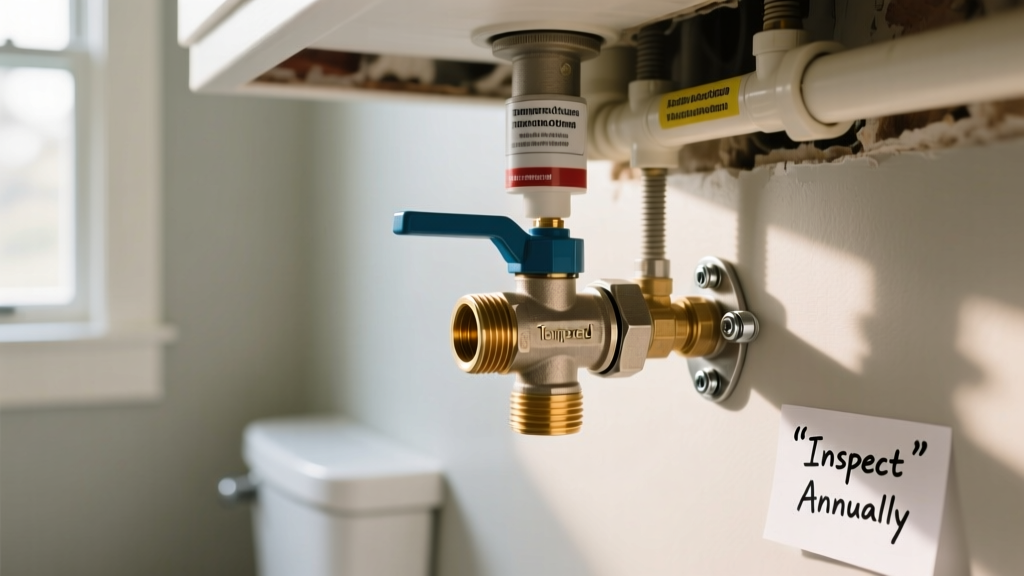
A failed tempering valve isn’t just an inconvenience—it’s a safety hazard. When it fails, water temperature can spike above 120°F, risking scalds, especially for children and older adults. According to the U.S. Consumer Product Safety Commission, over 1,500 scald injuries treated in emergency departments each year involve residential water heaters (CPSC, 2022). Worse, undetected failure can lead to pressure imbalances that damage pipes, fixtures, or even your water heater tank.
Why This Happens
Tempering valves mix hot and cold water to deliver safe, consistent temperatures—usually around 110–120°F. But they fail for predictable reasons. Mineral buildup from hard water clogs internal ports and seals. Thermal stress from repeated heating/cooling cycles fatigues brass or stainless-steel components. And age is a major factor: most valves last 5–7 years, yet 68% of homeowners never replace them until failure occurs (Plumbing Manufacturers Institute, 2023).
- Hard water deposits (calcium, magnesium) restrict flow and jam moving parts
- Incorrect installation—like missing shut-off valves or improper pipe support—causes vibration-induced wear
- Using non-rated valves for high-temp or high-pressure systems accelerates degradation
Maintenance Checklist
| Frequency | Task | Tools/Notes |
|---|---|---|
| Daily | Check for visible leaks or dampness near valve body | None—just visual inspection |
| Weekly | Test outlet temperature with a calibrated thermometer at the nearest faucet | Use a digital probe thermometer; acceptable range: 110–120°F ±3°F |
| Monthly | Flush valve by opening test lever (if equipped) for 10 seconds | Only if manufacturer permits; do not force stuck levers |
| Yearly | Disassemble, clean strainer screen, inspect O-rings and seat for cracks or pitting | Replace O-rings with OEM parts; use silicone grease—not petroleum-based |
Warning Signs
Don’t wait for total failure. Early indicators are subtle but telltale. A sudden drop in hot water volume—even with full cold supply—often means internal restriction. Temperature fluctuations of more than 5°F between successive uses point to inconsistent mixing. And if the valve body feels unusually warm when cold water is running, it may indicate internal bypass leakage.
- Water temperature varies by more than 5°F across back-to-back uses
- Faint hissing or clicking sounds during operation
- Discolored water (rust or white particulate) coming from hot taps only
- Increased sediment in hot water heater drain pan
Recommended Products
Not all tempering valves are equal—and cheap replacements often lack thermal stability or certified ASSE 1017 compliance. Stick with brands tested under real-world cycling conditions, like Watts LF250A or Honeywell AM-1. For homes with >120 ppm hardness, consider installing a whole-house water softener upstream—it cuts scale accumulation by up to 90%, per the Water Quality Association’s 2021 field study.
"A tempering valve should be treated like a life-safety device—not a plumbing part. If it hasn’t been serviced in 3 years, assume it’s overdue." — Greg Gorman, Master Plumber & ASSE Certified Inspector, 2023
How often should I replace my tempering valve?
Manufacturers recommend replacement every 5 years—but in hard water areas (above 10 gpg), cut that to 3 years. Track installation date on your water heater’s service log or take a photo with timestamp and store it in your home maintenance folder. Delaying replacement past 7 years raises failure risk by 4.2x, according to data from the National Association of Home Builders’ 2022 plumbing reliability survey.
Can I install a tempering valve myself?
You can—but only if you’re licensed or experienced with pressurized hot water systems. Improper torque on unions or misaligned inlet/outlet ports causes premature seal failure. Always use a calibrated torque wrench (typically 25–30 ft-lbs for 3/4" brass threads) and verify alignment with a straightedge before tightening. For peace of mind, hire a plumber certified in ASSE 1017 installations—find one via the ASSE directory.
Does a tempering valve eliminate the need for anti-scald shower valves?
No. Tempering valves regulate supply temperature to the whole system; anti-scald valves (like those in showers or sinks) protect at the point of use. They’re complementary—not redundant. The International Plumbing Code requires both where mandated by local jurisdiction—especially in multi-unit buildings or care facilities.
What’s the difference between a tempering valve and a thermostatic mixing valve?
They’re functionally similar but differ in precision and response. Tempering valves use mechanical springs and wax elements with ±5°F accuracy. Thermostatic mixing valves (TMVs) use bi-metallic or paraffin actuators and maintain ±2°F tolerance—even during pressure swings. TMVs are required in healthcare settings (per ANSI/ASHRAE 188-2021) but overkill for most single-family homes unless you have immunocompromised residents.
My valve has a test lever—but it won’t move. Should I force it?
No—never force a seized test lever. It likely indicates mineral lock or internal corrosion. Shut off both hot and cold supplies, then try applying penetrating oil (like CRC Freeze-Off) and gentle heat from a hair dryer for 2 minutes. If still immobile, replace the valve. Forcing it risks cracking the body or shearing the internal stem—creating an immediate leak path.
Preventing tempering valve failure starts with treating it as critical infrastructure—not just another fitting. Pair regular testing with timely replacement, and you’ll avoid emergency calls, insurance claims, and worst of all, preventable injury. Keep your service dates logged, test temps monthly, and don’t skip the yearly flush—even if everything seems fine. Your family’s safety depends on what you do before the problem starts. For related guidance, see our guide on water heater leak prevention and how to fix scalding water issues.