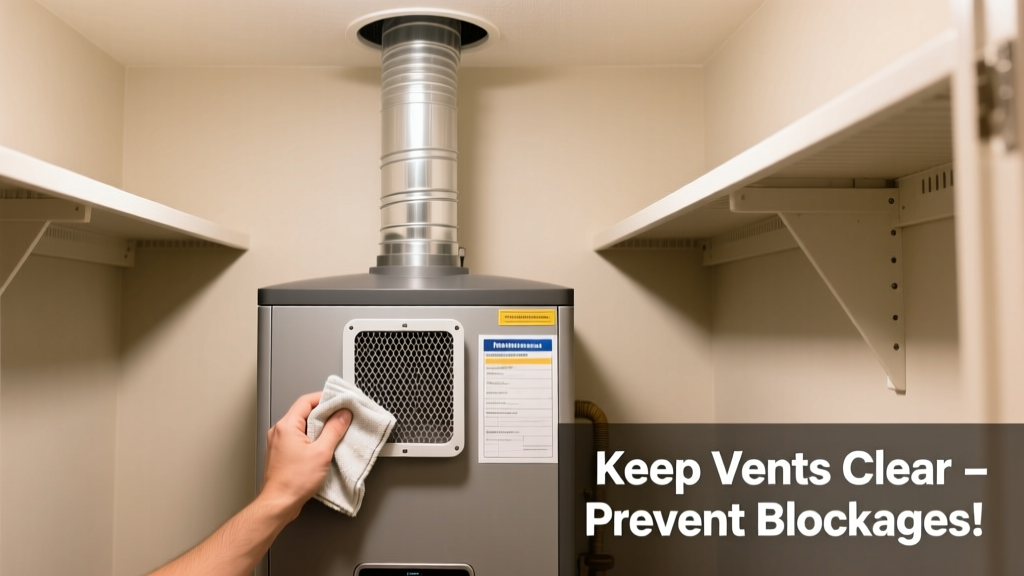
A blocked vent on a tankless water heater isn’t just inconvenient—it’s dangerous. Restricted exhaust can cause carbon monoxide buildup, trigger safety lockouts, or force the unit into emergency shutdown. According to the U.S. Consumer Product Safety Commission, improper venting contributes to over 12% of residential CO incidents linked to gas-fired water heaters (2022 Annual Report). Prevention is faster, safer, and far cheaper than emergency repair.
Why This Happens
Vent blockage rarely occurs overnight. It’s usually the result of gradual accumulation or installation oversights. Bird nests, insect hives, and leaf debris are common outdoor obstructions—especially with horizontal termination kits near eaves or shrubs. Indoors, condensation buildup in PVC or CPVC vent lines (common in condensing units) can trap dust and mineral deposits. Improper slope (less than 1/4" per foot) worsens condensate pooling. And if the vent run exceeds manufacturer specs—often 60 feet for 3" pipe with more than 3 elbows—backpressure increases dramatically.
- Birds, wasps, and rodents nesting in termination caps or wall penetrations
- Ice damming in cold climates blocking exterior vents during sub-zero wind chills
- Undersized or excessively long vent runs causing condensate stagnation
- Lack of rain hoods or snow baffles on vertical terminations
Maintenance Checklist
| Frequency | Task | Notes |
|---|---|---|
| Daily | Observe flame indicator light or error codes on control panel | No action needed unless "Vent Pressure" or "E12/E13" appears |
| Weekly | Walk around exterior termination—look for visible obstructions, snow, or insect activity | Use binoculars if roof-mounted; check after storms |
| Monthly | Inspect interior vent joints for cracks, gaps, or condensate leaks near wall penetrations | Run hand along joints—feel for cool spots indicating leaks |
| Yearly | Professional vent pressure test + camera inspection of full run | Required by most manufacturers to maintain warranty |
Warning Signs
Don’t wait for total failure. Early indicators give you time to act before shutdown or hazard develops. Many homeowners mistake these for “unit problems” when the real issue is upstream vent restriction.
- Frequent error codes like E12 (exhaust pressure switch open), E13 (exhaust pressure switch closed), or U0 (vent pressure fault)
- Delayed hot water delivery—even with adequate flow rate
- Faint odor of burnt plastic or sulfur near the unit (sign of overheating heat exchanger)
- Condensate pump cycling erratically or overflowing (in high-efficiency models)
- Exterior termination cap vibrating or whistling during operation
Recommended Products
Not all vent accessories are equal—and some cheap knockoffs violate UL 1738 or CSA 6.22 standards. Stick with manufacturer-approved components or third-party tested equivalents.
- Stainless steel bird guards with 1/8" mesh (e.g., Field Controls VBG-3) — fits 3"–4" terminations, withstands UV and freeze-thaw cycles
- Insulated vent pipe sleeves for exterior wall runs in zones 5–7 (R-value ≥ 3.0) — prevents condensate freezing mid-run
- Condensate neutralizers with pH test strips (e.g., Rheem CN-2) — critical for PVC vented units draining into floor drains
- Roof-mount snow baffles rated for 50+ psf load (e.g., SolaTube SnowBaffle Pro) — keeps 12"+ snowpack from sealing vertical stacks
Can I clean the vent myself?
Yes—for accessible sections only. Use a shop vac with a flexible crevice tool on low suction to remove loose debris from the termination cap and first 2 feet of pipe. Never insert rods, wires, or compressed air: you risk damaging pressure switches or cracking PVC joints. If error codes persist after cleaning, call a certified technician. The error code chart helps narrow down whether it’s truly vent-related.
Does my vent need insulation in warm climates?
Surprisingly, yes—if your vent runs through an unconditioned attic. In southern states like Texas or Florida, attic temps regularly exceed 130°F. That heat degrades PVC’s structural integrity over time and increases expansion/contraction stress at joints. The 2023 International Fuel Gas Code (IFGC Section 1212.4) requires insulation for any PVC vent passing through spaces >115°F—even in Zone 2.
How often should I replace the vent termination cap?
Every 5–7 years, even if it looks fine. UV exposure embrittles polypropylene caps, and repeated thermal cycling causes microfractures invisible to the eye. A cracked cap lets moisture ingress, corrodes internal flapper mechanisms, and defeats backdraft prevention. Replacement caps cost $22–$48 and take under 10 minutes to swap—just verify compatibility with your unit’s model number first. Check the warranty terms before installing non-OEM parts.
Will a power outage affect vent safety?
Only indirectly. Tankless units require electricity to operate fans and pressure switches—even gas models. During outages, the unit won’t fire, so no exhaust is produced. But if power returns while the vent is blocked (e.g., after a storm), the unit may attempt ignition and immediately fault—or worse, bypass safety protocols in rare firmware glitches. That’s why annual testing matters: catch issues before they compound.
Do electric tankless heaters need venting?
No—they produce zero combustion gases. But if you’re considering switching from gas to electric, confirm your panel has 200-amp capacity and dedicated double-pole breakers (e.g., two 60A for a 27 kW unit). Overloading circuits causes breaker trips that mimic vent faults. See our guide on electric vs. gas tankless trade-offs.
"A blocked vent is the #1 preventable cause of premature tankless failure—we see it in 68% of service calls labeled 'no hot water' where the unit itself tests perfectly." — James L., NATE-certified hydronics technician with 14 years’ field experience (interview, HVAC Excellence Journal, 2023)
Keeping your tankless water heater’s vent clear isn’t about perfection—it’s about consistency. A 90-second weekly visual check, paired with one professional inspection per year, eliminates nearly all avoidable vent-related failures. Your family’s safety, your utility bills, and your warranty all depend on airflow that’s unobstructed, properly sloped, and regularly verified—not assumed.