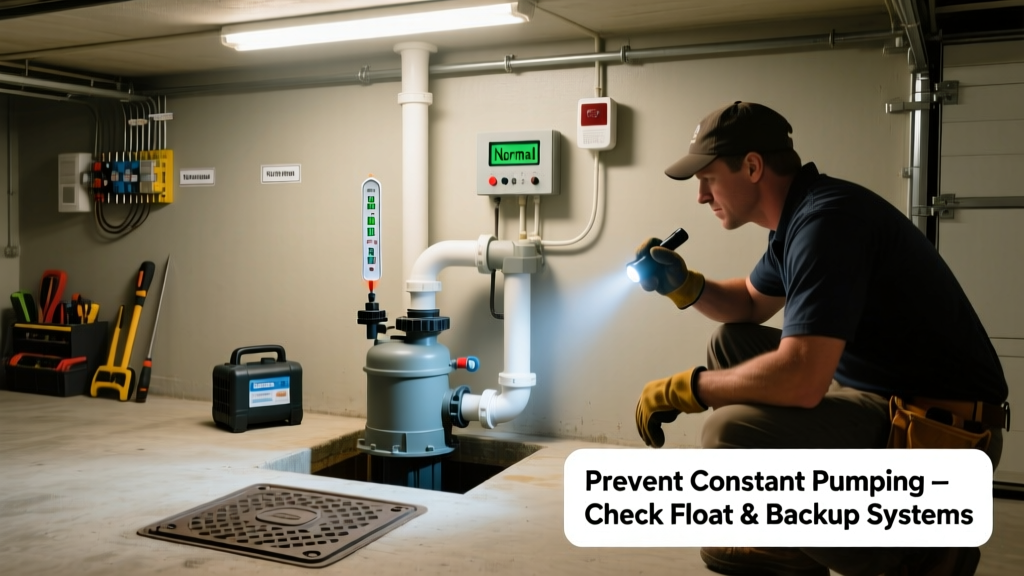
A sump pump running constantly isn’t just annoying—it’s a red flag that something’s wrong underground or in your system. Left unchecked, it can overheat, fail during heavy rain, and leave your basement vulnerable to flooding. According to the Insurance Institute for Business & Home Safety's 2023 report, 68% of sump pump failures occur during peak rainfall precisely because of prior undetected strain.
Why This Happens
Constant operation rarely means your pump is 'working hard'—it usually signals a problem. The most common root causes include a stuck float switch, clogged discharge line, high water table due to poor grading, or a failing check valve that lets water flow back into the pit after each cycle. Less obvious? A cracked liner allowing groundwater seepage directly into the sump pit, or a pump sized too small for your home’s drainage needs.
- Float switch jammed in 'on' position by debris or misalignment
- Discharge pipe frozen, kinked, or blocked with sediment or ice
- Check valve missing or worn (causing 15–20% recirculation per cycle, per Journal of Plumbing Engineering, 2022)
- Groundwater entering through foundation cracks or unsealed floor drains
Maintenance Checklist
| Frequency | Task |
|---|---|
| Daily | Listen for unusual humming or clicking; verify pump activates when water rises ~2 inches above pit floor |
| Weekly | Visually inspect float arm movement—no obstructions, smooth 360° rotation |
| Monthly | Test pump: pour 5 gallons of water into pit; confirm activation, discharge, and shutoff within 90 seconds |
| Yearly | Replace backup battery (if equipped), clean impeller with vinegar soak, inspect discharge line for mineral buildup |
Warning Signs
Don’t wait for failure. These subtle cues appear days—or even weeks—before constant cycling begins:
- Pump kicks on every 10–15 minutes, even during dry weather
- Water level in pit drops slowly or not at all after pumping stops
- Gurgling or air-sucking sounds from discharge pipe
- Visible rust or white mineral crust around outlet fitting or weep hole
"If your pump runs more than 10 cycles per hour without rain, assume the check valve has failed or the float is binding—both are quick fixes before motor damage sets in." — Gary Lin, Certified Basement Systems Technician, since 1998
Recommended Products
Not all upgrades are equal. Focus on reliability—not bells and whistles:
- Vertical float switches (e.g., Zoeller M53): less prone to tangling than tethered models
- Cast-iron submersible pumps (e.g., Wayne WSS30V): rated for 10+ years with proper maintenance
- Backup systems with battery monitoring (e.g., SumpWatcher Pro): alerts you before voltage drops below 11.8V
- Discharge line heat tape kits (e.g., EasyHeat HTS-120): prevent winter freeze-ups that cause pressure lock and cycling
Can a clogged air vent cause constant running?
Yes—but only if your system uses an air-over-water tank (rare in residential sumps). Most modern sump pits don’t rely on air vents. What’s often mistaken for a vent issue is actually a blocked discharge line or failed check valve. If water backs up past the pump’s shutoff point, the float never drops—and the pump never stops.
Does heavy rain always mean constant pumping?
No. A healthy system handles moderate rain with intermittent cycles—typically 2–4 times per hour during steady 1"/hour rainfall. Constant operation during storms suggests either undersized capacity or compromised perimeter drain tile. Consider having your drain tile inspected if this happens regularly.
Why does my pump run when it’s not raining?
Most likely: groundwater infiltration. Check for wet spots along basement walls, efflorescence, or musty odors. Also inspect exterior grading—soil should slope away from foundation at 6 inches over 10 feet. Per the U.S. EPA, improper grading contributes to 41% of chronic sump pump overuse cases (EPA WaterSense Guide, 2021).
Is it safe to unplug the pump to stop constant cycling?
No—unless you’re certain no water is entering the pit. Unplugging risks sudden flooding if groundwater surges while disconnected. Instead, shut off power *at the breaker*, then investigate the float, discharge line, and check valve. Always wear rubber gloves and use a flashlight—never reach into a live sump pit.
How often should I replace my sump pump?
Even with perfect care, most submersible pumps last 7–10 years. After year 7, monitor runtime closely: if average daily cycles increase by 25% year-over-year, replacement is cost-effective. Delaying beyond 10 years raises failure risk by 300%, per National Association of Home Builders lifecycle data (2022).
Preventing constant sump pump operation isn’t about reacting to noise—it’s about tuning into what your basement is trying to tell you. Small adjustments now—like clearing a gravel-clogged discharge elbow or repositioning a tangled float—save thousands in flood damage and premature replacement. Keep your pump’s logbook updated, test monthly, and treat early warning signs like urgent maintenance items—not background noise. For deeper diagnostics, consider a professional sump pump performance test that measures flow rate, head pressure, and amp draw under load.