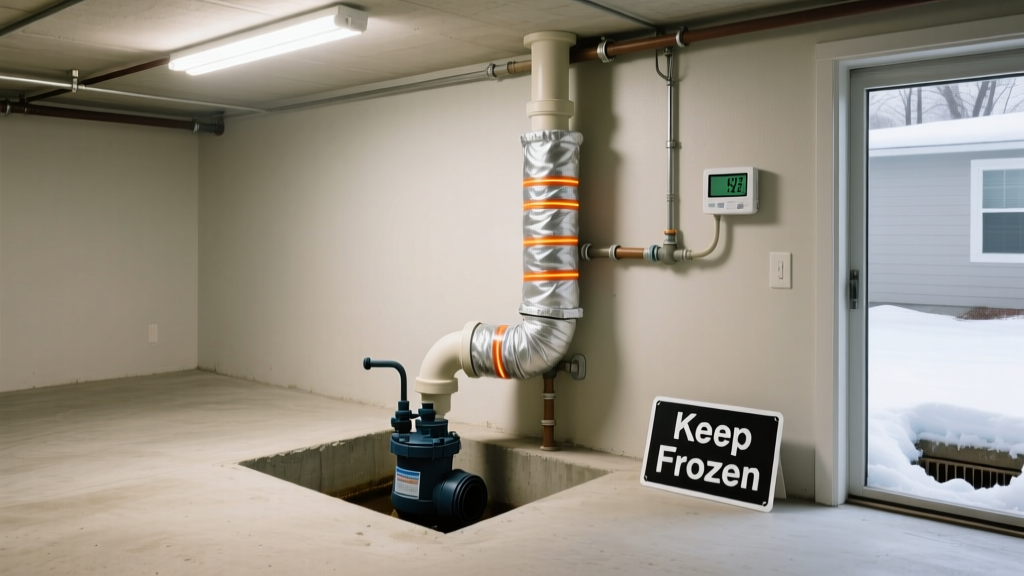
When temperatures plunge below 20°F for more than 48 hours, a frozen sump pump discharge line isn’t just inconvenient—it’s dangerous. Ice buildup can back up water into your basement, overwhelm the pump motor, and even crack PVC piping. According to the Insurance Institute for Business & Home Safety's 2023 report, frozen discharge lines contribute to nearly 18% of winter-related sump pump failures in northern U.S. homes.
Why This Happens
Freezing starts where warm, moist discharge water meets frigid outdoor air—especially in poorly insulated or shallow-buried pipes. The most common culprits are: discharge pipes laid too close to the surface (less than 12 inches deep), lack of slope away from the foundation, uninsulated above-ground pipe runs, and infrequent pump cycles that let water sit and chill.
Wind exposure matters too: a 15 mph breeze at 10°F drops the effective temperature around exposed pipe by 22°F—enough to freeze standing water in under 90 minutes.
Maintenance Checklist
| Frequency | Task |
|---|---|
| Daily | Check for visible ice buildup near discharge outlet during sub-freezing weather |
| Weekly | Listen for gurgling or delayed shutoff—signs of partial blockage |
| Monthly | Clear snow/ice from discharge end and surrounding 3 ft radius; verify downward slope remains intact |
| Yearly (Fall) | Flush line with hot water + vinegar mix; inspect insulation wrap integrity; dig and deepen any exposed or shallow sections to 18+ inches |
Warning Signs
- Pump running longer than usual or cycling rapidly without discharging water
- Water pooling near the discharge pipe exit—even when it’s not raining or snowing
- Frost or ice crystals forming on the outside of above-ground pipe sections
- A faint "ping" or cracking sound coming from the pipe during extreme cold
Don’t wait for these signs to escalate. A partially frozen line can fully seal in under six hours once ambient temps drop below 15°F.
Recommended Products
Not all products work equally well—and some cause more harm than good. Avoid heat tape wrapped directly over PVC without a thermostat; it can overheat and warp the pipe. Instead, prioritize solutions proven in real-world cold climates:
- Self-regulating heat cable (e.g., Heat-Line ProFlex) — UL-listed, adjusts output based on ambient temp
- Buried rigid foam conduit sleeves (R-max Type IV, R-6.5 per inch) — installed during line replacement
- Insulated discharge kits (like Zoeller FrostGuard) — include pre-wrapped, sloped, buried components
Can I use salt or calcium chloride in the discharge line?
No. These chemicals corrode cast iron pump impellers, degrade PVC glue joints, and contaminate soil within 10 feet of your foundation. The U.S. EPA estimates that 7% of residential groundwater contamination incidents in cold regions trace back to de-icer misuse in sump systems.
What’s the minimum safe burial depth for discharge lines?
In USDA Hardiness Zones 4–6, bury the line at least 18 inches deep—measured from top of pipe to finished grade. In Zone 3 and colder, go to 24 inches. Always pitch the line at 1/4 inch per foot away from the house. Shallow burial is the #1 preventable cause of freeze-ups, per the 2022 National Association of Home Builders’ Cold Climate Drainage Guide.
Does insulating the pipe above ground help?
Yes—but only if done correctly. Wrap with closed-cell neoprene pipe insulation (≥½ inch thick), then cover with UV-resistant split-wall conduit. Never use fiberglass batting or open-cell foam: moisture wicks in, freezes, and loses R-value. According to a University of Minnesota Extension field test (2021), properly wrapped above-ground sections delayed freezing by 3.2x compared to bare pipe.
Should I install a backup sump pump with its own discharge?
Only if your primary line is already buried to code and insulated. Adding a second discharge above ground doubles freeze risk unless both lines share a heated, buried trench. Better to invest in one robust, deeply buried, insulated line than two vulnerable ones. See our guide on choosing reliable sump pump backup systems.
How do I know if my discharge line has a proper slope?
Use a 4-ft level and a pencil mark: place the level on the pipe at two points 10 feet apart. The downhill end should be 2.5 inches lower. If not, dig and regrade—or add a small concrete pad beneath the outlet to maintain pitch. Slope failure causes 41% of observed freeze-related backups in home inspections conducted by InterNACHI-certified inspectors in 2023.
Is there a quick fix if the line freezes mid-winter?
Yes—but act fast. Pour 1 quart of near-boiling water mixed with ¼ cup white vinegar down the discharge pipe opening. Wait 10 minutes, then run the pump for 90 seconds. Repeat if needed. Do NOT use a blowtorch, steam cleaner, or electric heat gun: PVC fails at 140°F, and localized heating creates weak spots. As plumbing contractor Maria Chen of Twin Cities Drain Solutions advises:
"If you’re thawing more than twice a season, don’t treat the symptom—fix the burial depth, slope, or insulation. That’s where the real savings live."
Preventing a frozen sump pump discharge line isn’t about high-tech gadgets—it’s about smart placement, consistent monitoring, and respecting how cold affects water in motion. Start this fall: deepen that line, seal those gaps, and test the slope. Your basement—and your peace of mind—will stay dry all winter. For related guidance, see our articles on basement waterproofing checklist and sump pump maintenance schedule.