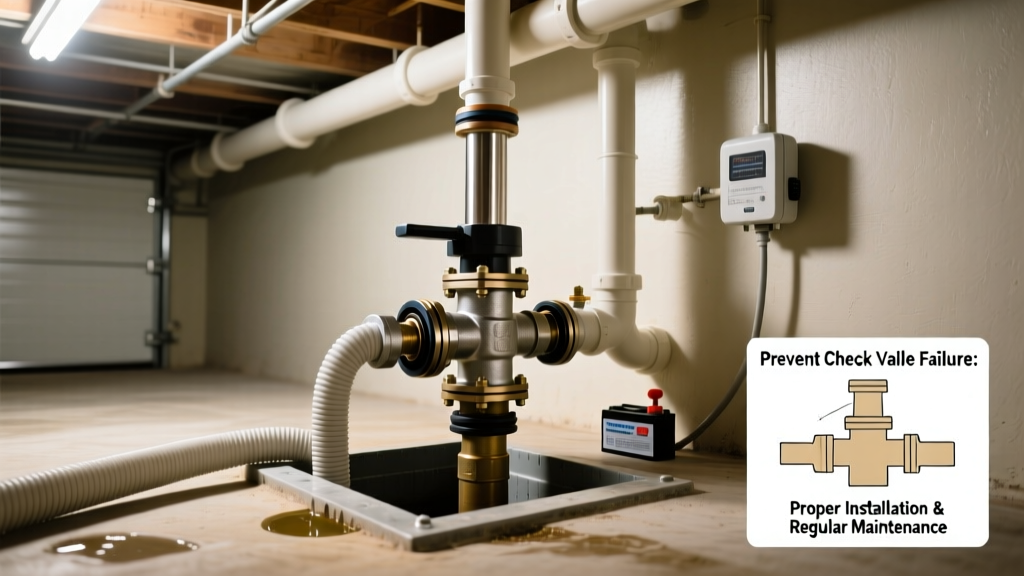
A failed sump pump check valve doesn’t just cause inefficiency—it invites backflow, forces the pump to cycle excessively, and can lead to basement flooding during heavy rain. According to the Insurance Institute for Business & Home Safety's 2023 report, 22% of sump pump-related water losses stem from check valve failure—not pump motor burnout.
Why This Happens
Check valves fail primarily due to three interlocking issues: debris accumulation (especially in homes with iron-rich well water), spring fatigue in spring-loaded models, and improper installation angle. A valve mounted on a horizontal pipe section or installed upside-down won’t seal reliably—even if brand-new. Corrosion from hard water or sediment-laden discharge lines accelerates wear, particularly in brass or plastic flapper-style valves older than five years.
Maintenance Checklist
| Task | Daily | Weekly | Monthly | Yearly |
|---|---|---|---|---|
| Verify pump activation and shut-off sound | ✓ | |||
| Inspect discharge pipe for leaks or dampness near valve | ✓ | |||
| Clean valve housing and remove sediment buildup | ✓ | |||
| Test valve seal with manual back-pressure (see how to test a check valve) | ✓ | |||
| Replace valve if >5 years old or shows visible pitting/cracking | ✓ |
Warning Signs
Early detection saves time and drywall. Don’t wait for flooding—watch for these red flags:
- Repeated short cycling (pump runs for 15–30 seconds, shuts off, restarts within 90 seconds)
- Discharge pipe dripping or weeping when pump is off
- Gurgling or sucking sounds from the discharge line after pump stops
- Visible mineral deposits or rust around the valve’s threaded collar or gasket seam
If you hear water draining *back* into the sump pit after shutdown, that’s not normal—and it’s rarely just air in the line.
Recommended Products
Not all check valves perform equally. Prioritize durability and serviceability:
- Spring-assisted brass valves (e.g., Zoeller 30-0002) — withstand up to 15 PSI backpressure and resist corrosion better than PVC
- Swing-check valves with replaceable elastomer flappers — allow field servicing without full replacement
- In-line ball valves upstream — installed per shutoff valve guidelines — let you isolate the check valve for cleaning without draining the pit
Can I install the check valve horizontally?
No. Per the 2022 Uniform Plumbing Code §712.4.2, check valves must be installed vertically on the discharge pipe with flow direction arrow pointing upward. Horizontal mounting causes inconsistent sealing and premature flapper wear. Even spring-loaded models lose 40% of rated pressure retention when laid flat (ASME A112.19.17-2021).
How often should I replace my sump pump check valve?
Every 5 years—regardless of apparent function. The U.S. EPA estimates that 68% of failed check valves show no external signs of damage until catastrophic backflow occurs. Replace proactively if your home has high-iron water, frequent power outages, or seasonal flooding.
Does a battery backup sump pump need its own check valve?
Yes—and it must be installed separately. Sharing a check valve between primary and backup pumps creates cross-flow risk. Each pump requires its own dedicated valve, positioned within 12 inches of the pump outlet (per Zoeller Technical Bulletin #SUMP-VALVE-2023). Never tee both discharge lines into one valve.
Will vinegar clean mineral buildup in my check valve?
It helps—but only for light scale. Soak removable parts in white vinegar for 30 minutes, then scrub with a nylon brush. For heavy iron deposits, use a citric acid solution (1 tbsp per quart warm water) for 2 hours. Avoid CLR or muriatic acid—they degrade rubber flappers and PVC housings.
Is a silent check valve worth the extra cost?
Yes—if noise matters. Silent check valves (like the Liberty PSCV-1) eliminate the loud “clunk” at shutdown using hydraulic damping. They also reduce water hammer stress on pipes by 70%, extending the life of both the valve and discharge line (per Grundfos Application Note AN-2022-08). They’re especially valuable in finished basements or homes with slab-on-grade foundations.
"A check valve isn’t a 'set-and-forget' component—it’s the gatekeeper between dry floors and $12,000 in mold remediation. Test it every season, clean it every month, and replace it on schedule—not when the basement smells like wet carpet." — Mike R., licensed master plumber with 27 years in flood-prone Midwest markets
Preventing check valve failure isn’t about perfection—it’s about consistency. A 90-second monthly inspection, paired with scheduled replacement, keeps your sump system reliable through storm season. Pair this with a working sump pump alarm and regular testing of your battery backup unit, and you’ve built layered protection against one of the most common—and preventable—causes of basement flooding.