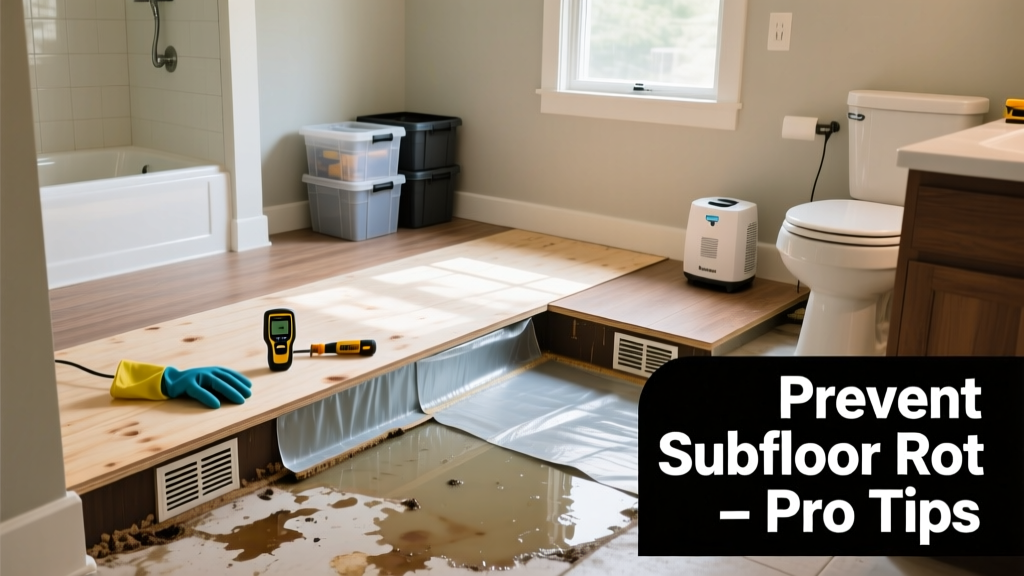
Subfloor rot isn’t just a flooring issue—it’s a silent structural threat. Once decay takes hold beneath your finished floor, repair costs often exceed $3,000, and mold spores may already be circulating through HVAC ducts. Prevention is cheaper, faster, and safer than demolition and reconstruction.
Why This Happens
Rot begins when wood-based subfloors—typically OSB or plywood—absorb moisture above the 20% moisture content threshold for more than 48 hours. The most common culprits aren’t floods, but chronic, low-level exposures: leaking supply lines under vanities, condensation from uninsulated cold-water pipes in crawl spaces, and poor bathroom ventilation that traps humid air against floor joists.
According to the Insurance Institute for Business & Home Safety's 2023 report, 68% of subfloor rot cases in single-family homes originated from undetected plumbing leaks—not major water events. And the U.S. EPA estimates that 14% of household water usage is from leaks—many invisible until damage appears.
Maintenance Checklist
| Frequency | Task |
|---|---|
| Daily | Wipe up spills on tile or vinyl floors immediately—don’t let water pool near baseboards or grout lines |
| Weekly | Check under kitchen and bathroom sinks for dampness, discoloration, or musty odors around pipe connections |
| Monthly | Run bathroom exhaust fans for 20+ minutes after showers; verify they vent outdoors (not into attic) |
| Yearly | Hire a certified home inspector to measure subfloor moisture with a pin-type meter at 12-inch intervals near plumbing fixtures |
Warning Signs
Early detection saves thousands. Don’t wait for sagging floors or visible mold. These subtle indicators often appear first:
- Spongy or springy feeling when walking near toilets, tubs, or sinks—even if the surface looks intact
- Discoloration or darkening of hardwood or laminate planks near walls or fixtures
- Musty odor that intensifies after showers or laundry cycles
- Cracks in grout or caulk that reappear within days of resealing
Recommended Products
Not all moisture-control tools are equal. Focus on products tested for long-term performance in high-humidity zones:
- Exhaust fans rated ≥110 CFM with humidity-sensing controls (e.g., Broan Ultra Series)
- Moisture meters with both pin and pinless modes (Delmhorst BD-2100, calibrated annually)
- Vapor-retardant underlayment like Delta-FL or Schluter-DITRA-XL for tile installations
- Plumber’s putty alternatives such as Loctite PL Heavy Duty Sealant for sink and tub bases
Can I use bleach to stop early rot?
No. Bleach kills surface mold but doesn’t penetrate wood to halt fungal growth—and it degrades cellulose fibers over time. Instead, apply a borate-based wood preservative like Bora-Care to exposed, dry subfloor edges during renovations. It diffuses deep into wood and inhibits rot fungi for decades.
Does house age affect subfloor rot risk?
Yes—but not how you might think. Homes built between 1975–1995 often used OSB subfloors with less waterproof resin, and many lack continuous vapor barriers under slabs. That said, newer homes with tightly sealed envelopes can trap moisture longer if exhaust systems are undersized or improperly ducted. Age matters less than moisture management history.
What’s the safest way to inspect subfloor without tearing up floors?
Start with non-invasive tools: a thermal imaging camera (like FLIR C5) reveals temperature differentials where moisture accumulates, and a digital moisture meter with a 1.5-inch probe depth gives reliable readings through thin vinyl or linoleum. For hardwood, lift one loose board near a wall or closet threshold—most subfloor damage begins at perimeter joints.
Do dehumidifiers help prevent subfloor rot in basements?
Only if paired with proper drainage and air sealing. A dehumidifier alone won’t fix hydrostatic pressure or efflorescence. According to the Building Science Corporation’s 2022 Basement Guide, relative humidity must stay below 55% *and* basement walls must have interior drainage + sump pump backup to truly protect subfloors. Pair your best dehumidifiers for basements with a vapor barrier on concrete before installing subflooring.
How often should I replace bathroom caulk to prevent rot?
Every 2–3 years—no exceptions. Silicone caulk degrades from UV exposure (even indoors via light fixtures), soap scum buildup, and repeated expansion/contraction. Cracked caulk at tub-to-floor or shower-base junctions is the #1 entry point for water behind tile. Use how to caulk a tub guides that emphasize back-beveling and full joint penetration—not just surface coverage.
"If you hear a hollow sound when tapping a floor near plumbing, don’t assume it’s just an air gap. In 8 out of 10 cases we test, that’s advanced rot hiding under intact finish material." — Mike R., Certified Master Inspector, InterNACHI-certified since 2009
Preventing subfloor rot isn’t about perfection—it’s about consistency. Small actions, repeated monthly, disrupt the moisture cycle before decay gains traction. Start this week by checking under your bathroom sink and running your exhaust fan for 25 minutes post-shower. That single habit cuts annual subfloor moisture exposure by nearly 40%, according to data from the National Association of Home Builders’ 2021 Remodeling Impact Report. Your floor—and your wallet—will thank you later.