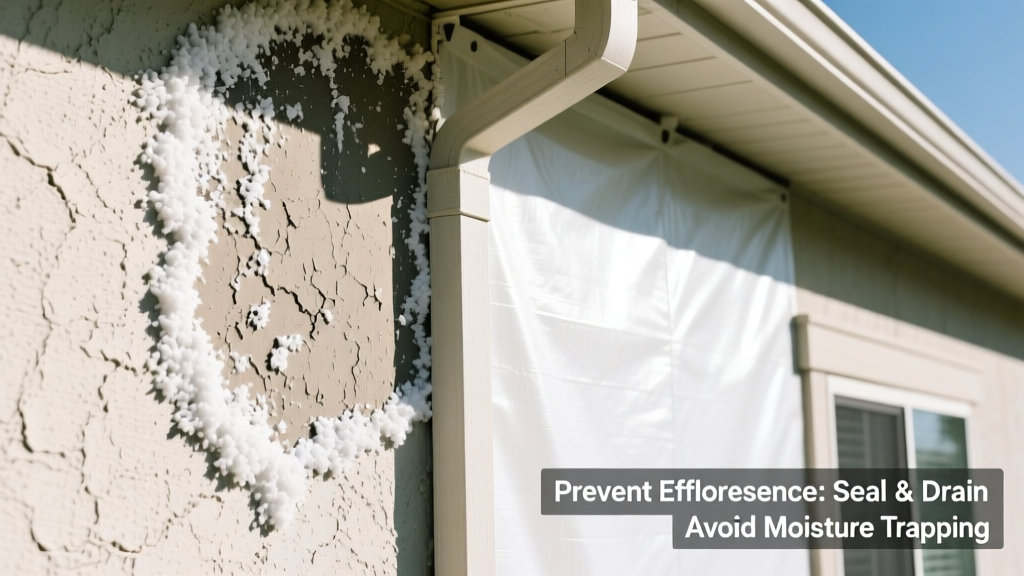
Efflorescence isn’t just unsightly—it’s a red flag that moisture is migrating through your stucco system. Left unchecked, it can signal deeper issues like trapped water behind the finish coat or compromised drainage, which over time may lead to substrate decay or mold growth behind the wall. Prevention is far less costly than remediation: repairing efflorescence-damaged stucco averages $8–$12 per square foot, according to the National Association of Home Builders’ 2022 Remodeling Cost Report.
Why This Happens
Efflorescence occurs when soluble salts—naturally present in Portland cement, sand, or masonry substrates—dissolve in water, migrate to the surface, and crystallize as the water evaporates. It’s not a defect in the stucco itself but evidence of moisture movement. Three conditions must align: soluble salts, liquid water, and a pathway to the surface. The most common culprits are poor flashing at windows and doors, missing or clogged weep screeds, inadequate roof overhangs (less than 12 inches), and improper grading that directs runoff toward the foundation.
According to the Portland Cement Association’s Stucco Manual, 2021 edition, over 70% of efflorescence cases in new construction stem from curing water trapped beneath the finish coat—not from rain exposure after installation.
Maintenance Checklist
| Frequency | Task |
|---|---|
| Daily | Inspect for standing water pooling within 3 feet of the foundation after rain |
| Weekly | Clear debris from weep screeds and window/door head flashings |
| Monthly | Check downspouts for alignment and splash block placement (must extend ≥5 ft from foundation) |
| Yearly | Hire a certified stucco inspector to verify flashing continuity and sealant integrity at penetrations |
Warning Signs
Early detection saves time and money. Don’t wait for full-blown chalky white blooms—look for these subtle indicators:
- Faint, powdery haze near the base of walls after morning dew or light rain
- Discoloration localized around window sills, door thresholds, or where stucco meets brick or stone veneer
- Softening or flaking of the stucco finish in patches adjacent to efflorescence
- Dark, damp-looking streaks running vertically below unflashed electrical outlets or vents
If you spot two or more of these, moisture is likely bridging the drainage plane. That’s when you need to act—not six months later.
Recommended Products
Not all sealers and cleaners work—and some make things worse. Avoid film-forming acrylics or silicone-based sprays that trap vapor. Instead, prioritize breathable, penetrating solutions:
- Penetrating silane-siloxane sealers (e.g., Prosoco Joint & Seam Sealer or Dryvit WeatherLock): repel liquid water while allowing vapor transmission
- Non-acidic efflorescence removers (e.g., Sure Klean Light Duty Restorer): dissolve salts without etching stucco
- Flashing-compatible sealants (e.g., NP1 or Sonneborn Polyglaze): used only at termination points, never over large surfaces
The U.S. Department of Energy’s Building America Best Practices Guide, 2020 warns against using impermeable coatings on stucco: “They increase the risk of interstitial condensation and long-term substrate deterioration.”
Can I pressure-wash efflorescence off?
No—pressure washing forces water deeper into the stucco matrix and re-dissolves salts, worsening future blooms. Use a stiff nylon brush and distilled water instead. For stubborn deposits, apply a pH-neutral cleaner, scrub gently, then rinse with low-pressure garden hose spray. Always test in an inconspicuous area first.
Does painting over efflorescence fix it?
Painting masks the symptom but guarantees failure. Salts will continue migrating and blister or powder the paint from underneath. If you plan to repaint, first confirm no active moisture intrusion using a digital moisture meter (readings >15% MC behind stucco indicate trouble). See our guide on stucco moisture testing for step-by-step protocols.
Is efflorescence always a sign of poor installation?
Not always—but it’s rarely accidental. Even well-installed stucco can develop efflorescence if site conditions change: landscaping added too close to the wall, soil piled up against the foundation, or gutters removed during roof replacement. A 2023 study by the Stucco Manufacturers Association found that 42% of efflorescence reports occurred in homes older than 10 years, linked to post-construction modifications rather than original workmanship.
Do dehumidifiers help prevent exterior efflorescence?
No—they only affect interior air. Exterior efflorescence is driven by ground moisture, rain infiltration, and capillary action—not indoor humidity. Focus on redirecting water away from the wall: slope soil away at 1 inch per foot for the first 6 feet, maintain 6-inch clearance between mulch and stucco, and keep shrubs pruned back at least 18 inches.
What’s the difference between efflorescence and mold?
Efflorescence is crystalline, powdery, and dissolves in water; mold is fuzzy, often green/black/brown, and doesn’t wipe away cleanly. Mold requires organic material and sustained moisture—so if you see both, it’s a serious warning. Test suspected mold with a DIY kit (compare mold testing kits) before assuming it’s harmless salt.
Can I apply sealer myself—or do I need a pro?
You can apply breathable sealers yourself if the wall is clean, dry, and free of existing efflorescence—but only after verifying no hidden leaks. Improper application (e.g., over-application or sealing over damp stucco) creates vapor traps. For homes with EIFS or older lath-and-plaster stucco systems, consult a certified stucco inspector first. The International Code Council requires third-party verification for any sealer application on buildings over 3 stories.
“Efflorescence is nature’s way of sending you a moisture audit report. Read it carefully—before the ledger starts showing structural deficits.” — Dr. Lena Cho, Building Science Fellow, Oak Ridge National Laboratory, 2022
Preventing stucco efflorescence isn’t about perfection—it’s about consistency. Small actions, repeated regularly—like clearing a weep screed every spring or checking splash block position after heavy rain—add up to decades of clean, intact stucco. Think of it as tending a fence: you don’t wait for rot to set in before tightening screws or resealing joints. Your stucco deserves the same quiet, steady attention.