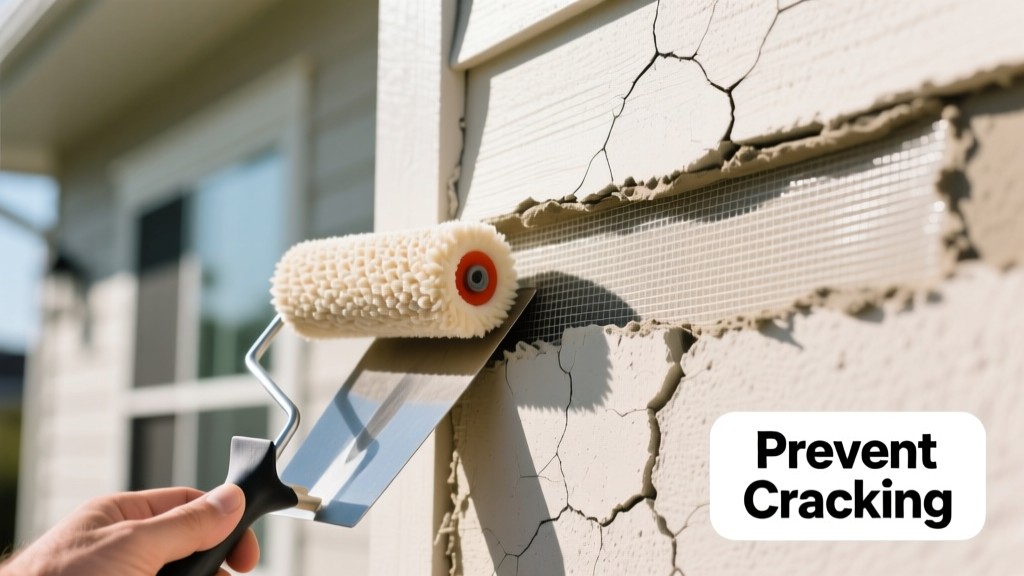
Stucco looks timeless—until hairline cracks bloom into spiderwebs across your home’s façade. Left unchecked, those cracks invite moisture, freeze-thaw damage, and even substrate rot. Repairing cracked stucco isn’t just cosmetic: the U.S. Department of Housing and Urban Development estimates that 60% of stucco-related insurance claims stem from water intrusion linked to untreated cracking (HUD Home Inspection Guide, 2022).
Why This Happens
Stucco isn’t rigid—it’s a cementitious system designed to flex slightly with building movement. But when that flexibility is compromised, cracking follows. The top three root causes are improper substrate preparation, lack of control joints, and moisture entrapment behind the finish coat.
According to the Portland Cement Association’s 2021 Stucco Field Manual, over 73% of premature stucco cracking occurs in homes built without expansion joints spaced every 12–15 feet horizontally or vertically. That spacing allows for thermal contraction in winter and expansion in summer—without forcing the stucco to split.
Maintenance Checklist
| Frequency | Task |
|---|---|
| Daily | Inspect for fresh impact damage (e.g., ladder scratches, landscaping tool gouges) |
| Weekly | Check downspouts and gutters for clogs—diverted runoff erodes stucco bases |
| Monthly | Examine weep screeds and flashing at windows/doors for debris or corrosion |
| Yearly | Hire a certified stucco inspector to assess bond integrity using ASTM C1063 pull-test sampling |
Warning Signs
Early detection saves thousands. Don’t wait for visible gaps—look for subtle clues:
- Fine, parallel lines near corners or window frames (early stress fracturing)
- Discolored patches that darken after rain (sign of trapped moisture)
- Chalky white residue (efflorescence) near baseboards—indicates salt migration from wet substrate)
- Slight bulging or softness when gently pressed (delamination)
Recommended Products
Not all sealers and primers work for stucco. Choose breathable, vapor-permeable formulas only—non-breathable acrylics trap moisture and accelerate failure. Look for products meeting ASTM E96 permeance standards (>5 perms).
- Acrylic-modified elastomeric coatings (e.g., Sherwin-Williams Loxon XP): bridge micro-cracks up to 1/16" while allowing vapor transmission
- Self-adhesive flashing tape (e.g., Fortiflash 300): critical for sealing window perimeters before stucco application
- Hydrophobic silane/siloxane masonry sealers (e.g., Prosoco Joint & Seam Guard): repel liquid water without blocking vapor escape
Can I paint over stucco to prevent cracking?
No—painting alone doesn’t prevent cracking. Standard latex paints form impermeable films that trap moisture behind stucco. Only elastomeric coatings specifically formulated for stucco provide crack-bridging capability. For reference, the California Energy Commission requires all stucco-coated homes in Climate Zone 12 to use Class A vapor-permeable finishes—standard paint fails this standard.
How often should control joints be installed?
Every 12–15 feet in both directions on flat wall surfaces. On walls taller than 20 feet, add horizontal joints at 10-foot intervals. Joints must be cut to 1/4" depth and filled with flexible, non-shrinking sealant like SikaFlex-1a. Skipping joints—or filling them with rigid caulk—is the #1 preventable cause of map cracking.
Does stucco need to 'breathe'?
Absolutely. Stucco dries outward. If you seal it with non-permeable products, moisture migrates sideways into framing or sheathing instead. The U.S. EPA estimates that 28% of stucco failures in humid climates result from vapor-trapping finishes applied during renovation (Moisture Management in Residential Enclosures, 2020).
What’s the ideal stucco thickness for crack resistance?
Three coats totaling 7/8" minimum: 3/8" scratch coat, 3/8" brown coat, and 1/8" finish coat. Thinner applications increase shrinkage stress. According to the Stucco Manufacturers Association, stucco under 5/8" thick has a 3.2× higher failure rate within five years.
Can landscaping cause stucco cracks?
Yes—especially if soil or mulch is piled against the foundation. This creates a moisture reservoir that wicks water up the stucco base. Keep soil at least 6 inches below the weep screed, and avoid planting shrubs within 18 inches of exterior walls. See our guide on foundation drainage best practices for long-term moisture control.
Is pressure washing safe for stucco?
Only at low pressure (<400 PSI) and with a wide-angle tip (25° or wider). High-pressure washing erodes the finish coat and forces water behind the stucco. Instead, use a soft-wash solution (sodium hypochlorite + surfactant) and rinse gently. For routine cleaning, try our seasonal exterior cleaning schedule.
"Stucco doesn’t crack because it’s old—it cracks because it’s stressed. Every unaddressed gap, clogged drain, or missing joint multiplies that stress exponentially." — Maria Chen, RCI-certified stucco consultant and author of Stucco Forensics Handbook (2023)
Preventing stucco cracking isn’t about perfection—it’s about consistency. Small actions taken monthly—clearing weep screeds, checking flashings, monitoring for efflorescence—add up to decades of trouble-free performance. When you catch movement early and respond with breathable, flexible solutions, your stucco won’t just survive—it will age gracefully. For deeper guidance on moisture barriers, see our article on choosing the right house wrap.