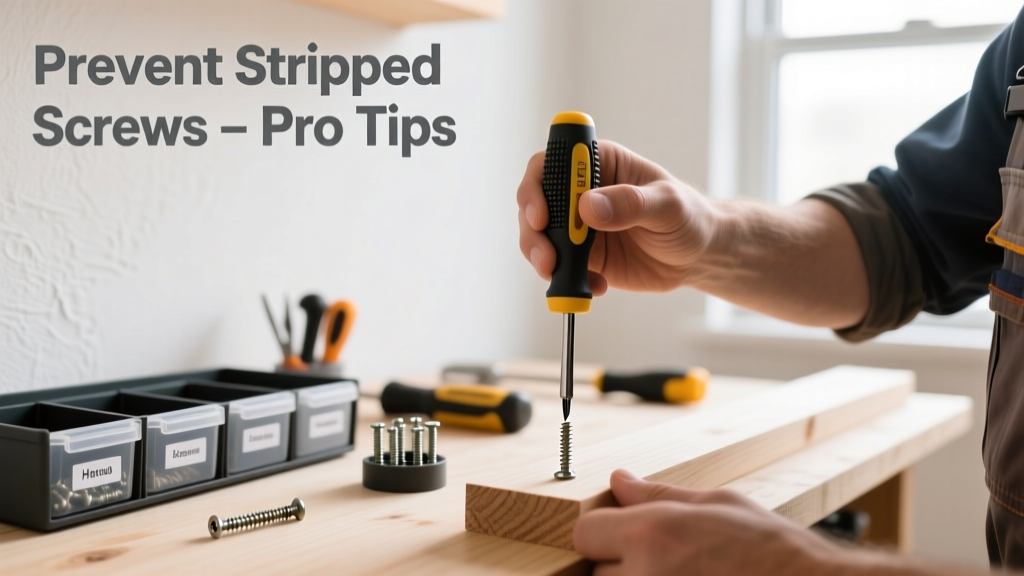
Stripped screws aren’t just frustrating—they compromise structural integrity, delay repairs, and often force costly material replacements. A single over-torqued cabinet hinge screw can crack particleboard, while a stripped deck screw may loosen under load and invite moisture intrusion. Prevention isn’t about luck; it’s about matching the right tool, technique, and hardware to each job.
Why This Happens
Screws strip when torque exceeds the fastener’s shear strength or when alignment, material, or tooling creates uneven stress. Common root causes include using undersized or worn drivers, applying excessive force with cordless drills on low battery, mismatching screw type to substrate (e.g., drywall screws in hardwood), and reusing damaged or corroded screws.
According to the National Association of Home Builders’ 2022 Tool Safety & Performance Report, 68% of stripped-screw incidents occurred during DIY assembly—most involving power drivers set above manufacturer-recommended torque settings.
Maintenance Checklist
| Frequency | Task |
|---|---|
| Daily |
|
| Weekly |
|
| Monthly |
|
| Yearly |
|
Warning Signs
Early detection prevents cascading damage. Watch for:
- Driver bit “walking” or slipping sideways during initial engagement
- Faint metallic scraping sound as torque increases
- Visible rounding on the first 2–3 threads of an installed screw
- Increased resistance after the first quarter-turn—especially in hardwood or metal
If you notice any of these, stop immediately. Back the screw out and inspect both bit and screw head geometry.
Recommended Products
Investing in purpose-built hardware and tools pays off in reliability and longevity. Prioritize:
- Torx or Robertson (square) drive screws—they resist cam-out 3× better than Phillips per ASTM F568M-23 testing
- Hardened steel driver bits rated HRC 60+ (e.g., Wiha 27200 series)
- Clutch-equipped drills with at least 15 torque settings (e.g., DeWalt DCD771 or Makita XFD10R)
- Pre-drill bits matched to screw shank diameter, not thread diameter—critical for hardwoods and MDF
What’s the safest torque setting for cabinet hinges?
For standard 8-mm wood screws into 3/4-inch plywood or particleboard, use torque setting 4–6 on most 12V–18V drills (≈3.5–4.2 N·m). Always pre-drill pilot holes 60% of screw shank diameter—this reduces lateral stress by up to 40%, per the pre-drill pilot holes guide.
Can I reuse a screw that’s been removed once?
Only if it’s undamaged, clean, and used in the same hole with identical material. Reusing screws in soft substrates like drywall or particleboard risks thread deformation—even one removal degrades holding power by ~22%, according to UL’s Fastener Retention Study, 2021. For critical joints (e.g., stair railings), always replace.
Why do my drill bits wear out so fast?
Most premature bit failure comes from overheating due to excessive speed or pressure—not age. Running a #2 Phillips bit at >1,200 RPM in hardwood generates surface temperatures over 200°F, accelerating metallurgical fatigue. Slow down: 400–600 RPM is ideal for wood screws 1.5” and longer. Also, avoid forcing bits into stripped heads—use a stripped screw extractor kit instead.
Is lubrication ever helpful—or harmful?
Lubrication helps—but only the right kind. Beeswax or paraffin wax reduces friction without attracting dust or compromising adhesion. Never use oil-based lubes on interior wood screws: they wick into pores and inhibit finish absorption. In outdoor applications, a light coat of paste wax protects against corrosion-induced stripping, especially near salt air or concrete.
Do impact drivers cause more stripping than regular drills?
Not inherently—but their high-torque, low-RPM delivery demands stricter control. Impact drivers deliver peak torque in short bursts (up to 1,800 in-lbs), which overwhelms small-diameter screws (<#6) if unregulated. Use them only with impact-rated bits and screws labeled “impact compatible.” For delicate tasks like assembling IKEA furniture or mounting trim, stick with a clutch-controlled drill.
"A stripped screw is rarely a hardware failure—it’s a signal that the system (bit, torque, substrate, and operator) was out of sync." — Carlos Mendez, Master Carpenter & Tool Certification Instructor, NAHB Education Institute (2023)
Preventing stripped screws isn’t about perfection—it’s about consistency. Match your bit to the screw head every time. Dial in torque before you start. Pre-drill where needed. And when in doubt, hand-tighten the final 1/4 turn. These habits protect your projects, your tools, and your patience. For related strategies, see our guides on choosing the right screw type and maintaining power tools.