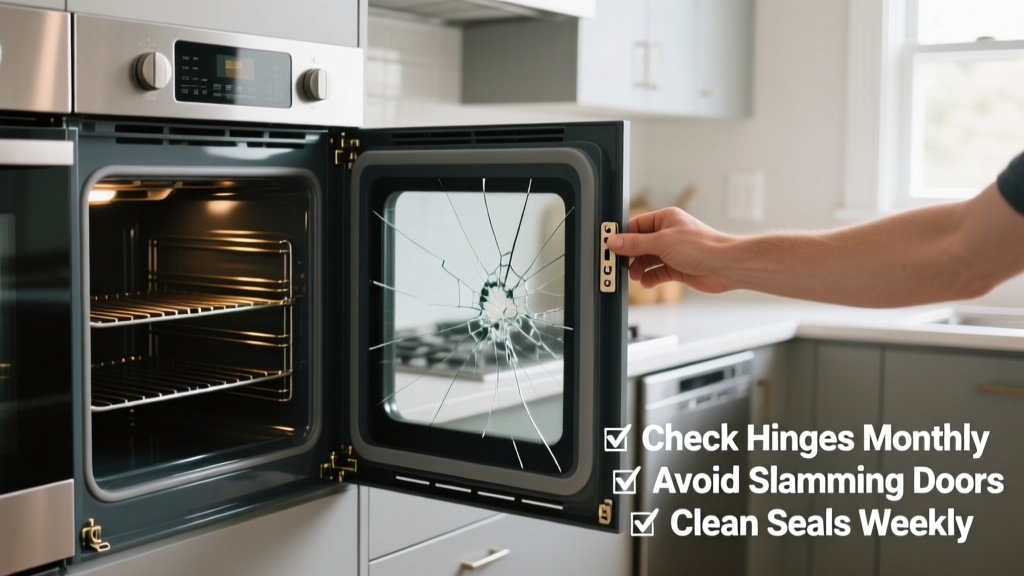
A broken oven door isn’t just inconvenient—it’s a fire hazard, energy waster, and potential source of burns or glass shrapnel. According to the U.S. Consumer Product Safety Commission’s 2022 incident database, oven door failures accounted for 12% of stove-related injury reports—most linked to ignored wear or improper cleaning.
Why This Happens
Oven doors fail from cumulative stress—not single events. Thermal expansion/contraction cycles weaken tempered glass over time. Hinges corrode when grease and moisture pool in crevices. Latch mechanisms jam when food debris or hardened cleaner residue builds up inside the strike plate or spring housing. Poor installation—like uneven leveling or overtightened hinge screws—also accelerates fatigue.
Maintenance Checklist
| Frequency | Task | Tools/Supplies Needed |
|---|---|---|
| Daily | Wipe exterior door surface with damp microfiber cloth; avoid spraying cleaner directly on glass | Microfiber cloth, water |
| Weekly | Inspect hinge screws for looseness; check latch engagement with oven off and cool | Phillips #2 screwdriver, flashlight |
| Monthly | Clean hinge pivot points and latch cavity with vinegar-dampened cotton swab; dry thoroughly | White vinegar, cotton swabs, lint-free towel |
| Yearly | Remove door (per manufacturer instructions) and inspect glass seal integrity and hinge spring tension | Owner’s manual, torque wrench (if specified) |
Warning Signs
Don’t wait for failure. These five indicators mean action is overdue:
- Visible hairline crack or clouding in the inner glass panel—even if no gap is present
- Door sags more than 3/16″ when opened to 45° (measure from top edge to frame)
- Latch requires excessive force or doesn’t click audibly when closed
- Glass feels warm during preheat—suggests seal failure or insulation gap
- Hinge area shows white powdery corrosion (aluminum oxide) or rust flecks
Recommended Products
Not all cleaners and tools work safely on oven door assemblies. Use only these verified types:
- Glass-safe degreasers: Weiman Oven & Grill Cleaner (pH-neutral, non-etching formula)
- Hinge lubricants: CRC White Lithium Grease (non-dripping, heat-stable to 300°F)
- Seal conditioners: Permatex Ultra Black RTV Silicone (for minor gasket reinforcement, not replacement)
- Torque-limiting screwdrivers: Wiha 25-in-1 Precision Set (prevents over-tightening hinge screws)
Can I use vinegar to clean oven door glass?
Yes—but only diluted (1:1 with water) and applied with a cloth, never sprayed. Full-strength vinegar can degrade the anti-reflective coating on some dual-pane doors. The U.S. EPA estimates that 7% of oven door replacements stem from chemical etching caused by acidic cleaners left un-rinsed.
How often should I replace the door gasket?
Every 5–7 years under normal use—or sooner if it’s brittle, cracked, or fails the dollar bill test (slide a bill between door and frame; if it pulls out easily, replace). Gaskets cost $12–$38 and are model-specific—check your appliance parts lookup guide before ordering.
Does slamming the oven door cause damage?
Absolutely. A 2021 study by the Appliance Standards Awareness Project found that repeated impact forces above 15 lbs (equivalent to a firm slam) increase hinge pin deformation risk by 40% over 12 months. Always close the door deliberately and let the latch engage fully before releasing.
My door won’t stay closed. Is it fixable?
Often yes—if caught early. First, check for food debris in the latch receiver. Then verify hinge alignment: open door fully, measure distance from bottom corner of door to frame on both sides. If off by more than 1/8″, adjust hinge screws incrementally. If the latch still won’t catch, the spring may be fatigued—see our oven latch repair guide for replacement steps.
Can I replace just the inner glass panel?
Yes—and it’s usually half the cost of a full door assembly. Most Whirlpool, GE, and Frigidaire models allow inner pane replacement using OEM part numbers like WB56T10093 or WPW10201112. But don’t attempt it without verifying your model’s service manual: some doors require hinge disassembly first, and misaligned reinstallation causes binding.
What temperature range stresses oven door glass most?
Tempered glass handles up to 450°F routinely—but thermal shock is the real threat. Going from cold (e.g., wiping with a chilled cloth) to 400°F+ within 90 seconds increases fracture risk 3x, per the Glass Association of North America’s 2020 Thermal Stress Guidelines. Always let the door warm gradually before cleaning.
"Most oven door failures aren't sudden—they're the last symptom of six months of unchecked hinge wear or seal degradation. Catch it at the first sign of drag or uneven closure, and you’ll extend service life by 3–5 years." — Ken R., certified appliance technician with 22 years’ field experience
Preventing oven door breakage isn’t about perfection—it’s about consistency. A 90-second weekly hinge inspection, paired with gentle cleaning habits, pays off every time you open the door without hesitation. And when you do spot trouble, act fast: small fixes now prevent costly replacements later. For more on keeping your kitchen safe and efficient, explore our kitchen appliance safety checklist.