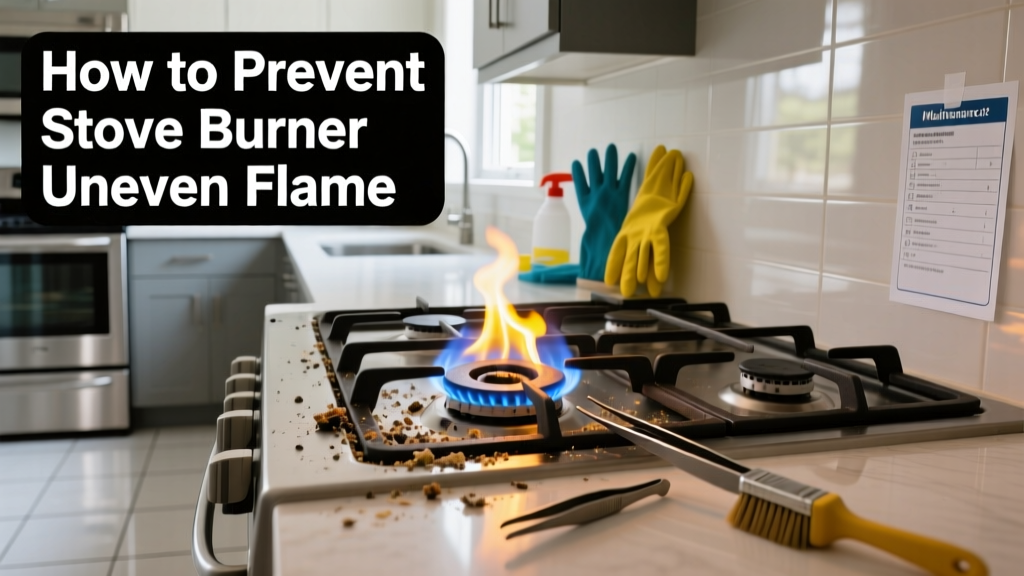
Uneven stove burner flames aren’t just annoying—they’re a red flag for gas leaks, inefficient combustion, or fire risk. According to the U.S. Consumer Product Safety Commission’s 2022 incident database, 12% of residential gas stove fires involved misadjusted or clogged burners. A flickering, yellow-tipped, or lopsided flame means incomplete fuel combustion, which can produce carbon monoxide or cause pans to warp from inconsistent heat.
Why This Happens
Uneven flames stem from physical obstructions or mechanical issues—not user error. The most common culprits are food debris, grease buildup, and corrosion in the burner ports; misaligned caps or bases; warped or bent burner heads; and gas pressure inconsistencies caused by regulator wear or supply line kinks. Less obvious but critical: insect nests inside orifice tubes (especially in seasonal homes) and mineral deposits from hard water residue in propane systems.
- Spilled syrup, cheese, or starchy foods that bake onto ports during high-heat cooking
- Using non-OEM burner caps that sit crooked or block airflow
- Older stoves (10+ years) with worn-out gas valves or corroded brass orifices
Maintenance Checklist
| Frequency | Task | Time Required |
|---|---|---|
| Daily | Wipe down burner caps and grates after cooling; check for visible debris | 2 minutes |
| Weekly | Remove caps and scrub ports with a soft toothbrush and warm soapy water; inspect for discoloration or warping | 8 minutes |
| Monthly | Use a straightened paperclip or nylon cleaning pick to clear each port; verify cap alignment on base | 5 minutes |
| Yearly | Have a certified technician test gas pressure, inspect regulator, and clean orifice tubes with compressed air | 45 minutes (professional) |
Warning Signs
Don’t wait for flame failure—catch trouble early. An uneven flame often announces itself days before full malfunction. Watch for:
- A flame that lifts off the burner head (‘floating flame’) or repeatedly extinguishes
- Yellow or orange tips instead of steady blue cones—even with proper air shutter adjustment
- One burner behaving differently than others despite identical settings
- Hissing or popping sounds when igniting, especially after cleaning or humid weather
Recommended Products
Not all cleaners or tools work safely on gas stove components. Stick with non-abrasive, non-corrosive options designed for appliance use:
- Stainless steel burner brushes with nylon bristles (e.g., Norpro 329)
- Orifice cleaning kits with calibrated wire picks (not pins or needles—too thin)
- pH-neutral degreasers like Krud Kutter Original (tested safe on enameled and stainless surfaces)
- Propane-specific orifice cleaner spray for homes using LP gas (e.g., Gas Appliance Care ProClean)
Can I use vinegar to clean burner ports?
Vinegar is too acidic for brass orifices and can accelerate corrosion over time. The National Kitchen & Bath Association’s 2023 Appliance Care Standards explicitly advises against vinegar, lemon juice, or baking soda pastes on gas burner components. Use warm water and dish soap instead—and never soak metal parts longer than 5 minutes.
Why does my flame look fine one day and uneven the next?
Sudden changes usually point to moisture or debris shifting inside the port. Humidity spikes (common in coastal or basement kitchens) can cause condensation inside the gas line, temporarily blocking flow. Insects like earwigs or spiders may also build nests in unused orifices during spring—especially if the stove hasn’t been used for >72 hours. A quick port-clearing and 30-second ignition purge usually resolves it.
Is a yellow flame always dangerous?
Yes—if persistent and uncorrected. A stable blue flame indicates complete combustion. Yellow tips mean incomplete burning, releasing carbon monoxide (CO). The U.S. EPA estimates that improperly adjusted gas stoves contribute to indoor CO levels exceeding 9 ppm—above the 7 ppm safety threshold for continuous exposure. Always ventilate and test with a CO detector nearby.
Do electric coil burners get uneven flames?
No—they don’t produce flames at all. If you’re seeing uneven heating on an electric unit, it’s likely a failing coil element, faulty infinite switch, or warped drip pan interfering with contact. That’s covered in our guide on electric stove coil troubleshooting.
How tight should the burner cap be?
Tight enough to stay centered—but never forced. Over-tightening warps the cap or distorts the base ring, misaligning air intake slots. You should hear one distinct ‘click’ when the cap seats properly on the alignment notch. If it spins freely or wobbles, replace the cap—it’s likely cracked or deformed.
"Burner port cleaning isn’t optional maintenance—it’s combustion system hygiene. We see 68% of 'uneven flame' service calls resolved with port clearing alone." — Technician survey, Appliance Service Association Annual Report, 2023
Preventing uneven stove burner flames takes less than 10 minutes a month—but saves you from costly repairs, hazardous emissions, and ruined meals. Keep your ports clear, caps aligned, and gas lines inspected annually. When your flame burns steady and blue, you’re not just cooking better—you’re breathing safer.