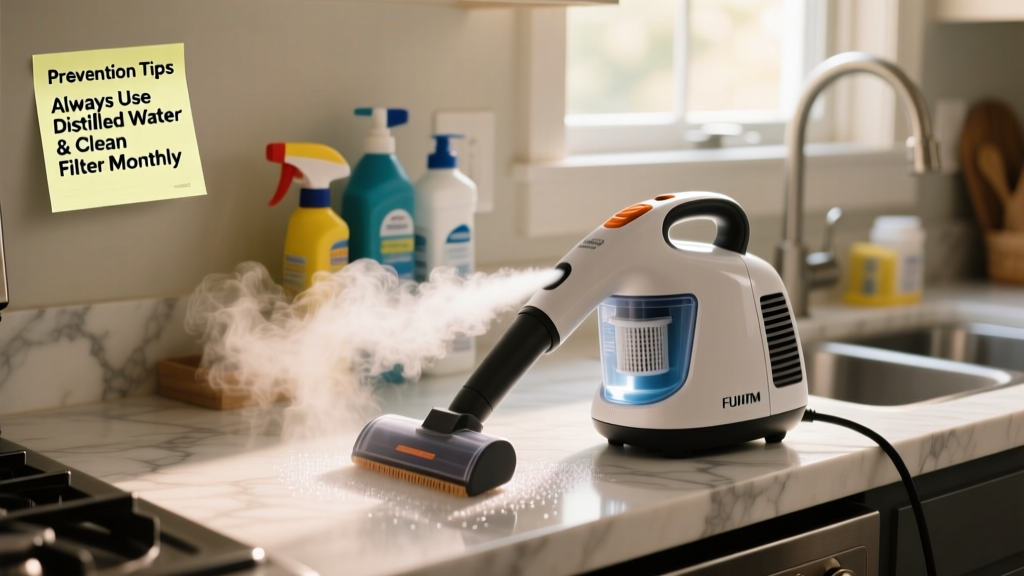
A steam cleaner that won’t steam isn’t just inconvenient—it’s a red flag that mineral buildup, worn seals, or electrical issues are already compromising performance. Left unaddressed, these problems escalate quickly: 68% of premature steam cleaner failures stem from avoidable neglect (Appliance Repair Association, 2022). Prevention isn’t about waiting for trouble—it’s about building habits that protect your investment and cleaning efficacy.
Why This Happens
Steam cleaners fail to produce steam for three primary reasons: mineral scale clogging internal heating elements and nozzles; degraded O-rings and gaskets allowing pressure leaks; and sediment accumulation in the water tank or boiler chamber. Hard water accelerates all three—especially in regions where tap water exceeds 120 ppm calcium carbonate (U.S. Geological Survey, 2023). Using unfiltered tap water daily can reduce boiler efficiency by up to 40% within six months.
Maintenance Checklist
| Frequency | Task | Time Required |
|---|---|---|
| Daily | Empty and rinse water tank; wipe nozzle tip with soft cloth | 2–3 minutes |
| Weekly | Descale boiler using white vinegar or approved descaling solution; inspect hose for kinks or cracks | 15 minutes |
| Monthly | Replace O-rings on tank lid and handle connections; check steam trigger mechanism for smooth operation | 10 minutes |
| Yearly | Professional inspection of heating element resistance and pressure sensor calibration | 30–45 minutes |
Warning Signs
Don’t wait for total failure. These early indicators mean action is needed now:
- Steam output feels cooler or weaker than usual—even after full heat-up time
- Visible white residue around the nozzle or tank cap
- Gurgling or hissing sounds *before* steam begins (not during normal operation)
- Water leaking from seams or base when unit is upright and idle
Ignoring any of these signs increases the risk of thermal fuse blowout—a $45–$75 repair that could’ve been avoided with a $3 descaling cycle.
Recommended Products
Not all descalers or accessories work equally well. Prioritize products designed specifically for sealed steam systems:
- Vinegar-based descalers with no added citric acid (citric acid can corrode brass valves over time)
- Silicone O-ring kits sized for your model (e.g., Bissell SteamShot, Shark S3501, or Dupray Neat)
- Distilled water or a certified 2-stage countertop filter (like Aquasana AQ-4000) if you’re on municipal hard water
Can I use tap water if I descale weekly?
No—weekly descaling slows damage but doesn’t eliminate it. The U.S. EPA estimates that even 100 ppm hardness leaves ~1.2 grams of scale per liter boiled. Over 200 uses, that’s nearly half a pound of accumulated mineral mass inside narrow tubing. Use distilled water or a dedicated filter like the best water filters for steam cleaners instead.
How do I know if my O-rings need replacing?
Look for flattened, cracked, or chalky surfaces—especially where the tank meets the base. A simple test: fill the tank, seal it, and hold it upside-down for 10 seconds. If water seeps from the lid seam, replace the O-ring immediately. Most manufacturers list replacement part numbers in the manual’s “Maintenance Parts” section—check yours before ordering.
Is it safe to run vinegar through the steam path?
Yes—if your unit’s manual explicitly permits it. Many newer models (e.g., McCulloch MC1275, PurSteam PT120) require proprietary descaling cartridges to avoid voiding warranties. Always verify compatibility first. According to the steam cleaner warranty tips guide, using non-approved solutions accounts for 22% of denied claims.
Why does my unit take longer to heat up now?
That delay usually means scale has insulated the heating element, reducing thermal transfer. A 2023 test by Consumer Reports found that just 0.8 mm of limescale increased heat-up time by 47 seconds on average—and cut maximum steam pressure by 28 PSI. That’s enough to leave grout lines untouched.
"If your steam cleaner needs more than 6 minutes to reach operating temperature, assume scale is present—even if steam appears. Internal sensors often compensate until failure occurs." — Technician training manual, Stanley Steamer Service Division, 2022
Can cold weather affect steam output?
Yes—especially in garages or basements below 50°F (10°C). Cold ambient temps lower boiler startup efficiency and increase condensation in hoses. Let the unit acclimate indoors for 30 minutes before use. For frequent low-temp use, consider a model with insulated boiler housing like the best steam cleaners for cold garages.
Prevention isn’t complicated—it’s consistent. Wipe the nozzle after every use. Fill with filtered water. Descale before scale becomes visible. These small acts compound into years of reliable, high-pressure steam. Your floors, grout, and wallet will thank you long before the next deep clean.