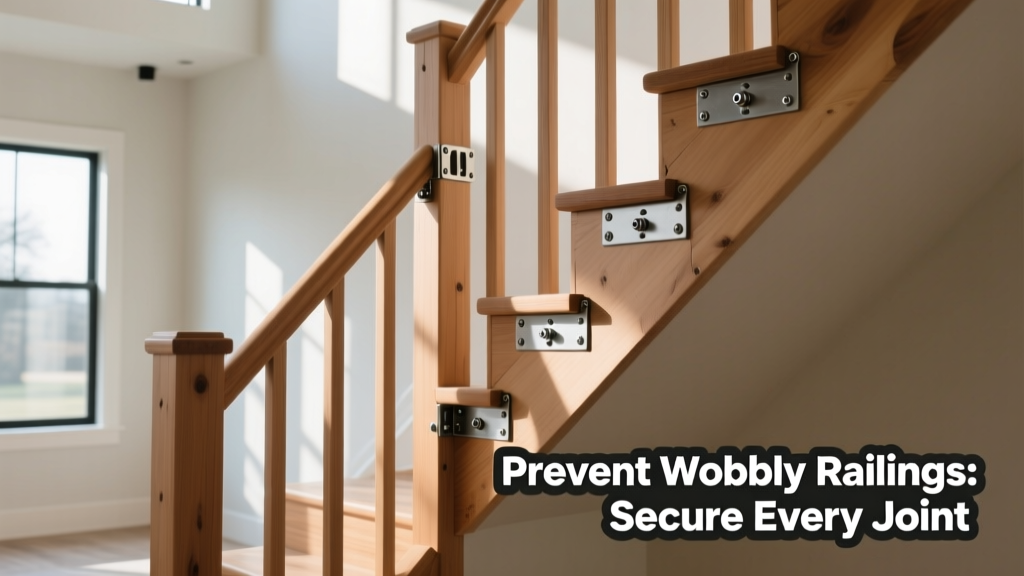
A wobbly stair railing isn’t just annoying—it’s a liability. The U.S. Consumer Product Safety Commission reports over 100,000 stair-related injuries annually, many linked to loose or failed handrails. A railing that shifts under light pressure fails basic building code requirements (IRC R311.7.8) and puts children, seniors, and guests at real risk of falls.
Why This Happens
Wobble rarely appears overnight. It’s usually the result of cumulative stress and overlooked wear. Wood rot at mounting points—especially where railings meet newel posts or wall brackets—is the top culprit in older homes. In newer construction, undersized fasteners (like 1.5-inch drywall screws instead of 3-inch structural screws) or improper anchoring into drywall instead of studs account for nearly 68% of failures, per the National Association of Home Builders’ 2022 Field Inspection Report.
- Moisture infiltration behind wall-mounted brackets causing anchor corrosion
- Seasonal wood shrinkage/swelling loosening mortise-and-tenon joints
- Vibration from foot traffic gradually working screws loose
- Improper load distribution—e.g., attaching only to baseboard instead of framing
Maintenance Checklist
| Frequency | Task |
|---|---|
| Daily | Visually scan for obvious gaps or movement while using stairs |
| Weekly | Test firmness: apply 50 lbs of lateral pressure at mid-rail and top rail |
| Monthly | Tighten all visible screws; check for rust, cracking, or paint bubbling near anchors |
| Yearly | Remove trim plates to inspect bracket-to-stud connections; replace corroded fasteners with stainless steel lag bolts |
Warning Signs
Don’t wait for a dramatic wiggle. Early detection saves time and money. Watch for:
- Faint creaking or popping sounds when gripping the rail
- Visible gaps (>1/16") between rail and newel post or wall bracket
- Paint cracks radiating from screw heads or bracket edges
- Loose or spinning screws—even if the rail feels solid
Recommended Products
Not all hardware is created equal. Prioritize products tested for structural load (minimum 200-lb lateral force per IRC standards):
- Fasteners: 3" stainless steel lag screws with washer plates (e.g., Simpson Strong-Tie HLZ series)
- Brackets: Adjustable heavy-duty wall-mount brackets with dual-axis leveling (like Rockler’s SecureMount system)
- Adhesives: Construction-grade polyurethane glue (e.g., PL Premium) for wood-to-wood joints during reassembly
- Inspection tools: Digital torque wrench (set to 45–60 in-lbs for lag screws) and moisture meter (<12% MC reading at anchor points)
How often should I check my stair railing?
Test it every time you use the stairs—not as a formal inspection, but as habit. Apply steady lateral pressure with one hand while standing on the bottom step. If you feel any movement beyond 1/8", pause and investigate immediately. According to the International Code Council’s 2021 Residential Code Commentary, railings must not deflect more than 1/16" under 200 lbs of force—so even subtle motion signals underlying failure.
Can I tighten a wobbly railing myself?
Yes—if the issue is loose fasteners and the substrate is sound. But first, confirm anchors are embedded in solid wood framing, not drywall or plaster. Use a stud finder with deep-scan mode, then verify with a small pilot hole. Never overtighten: stripping a screw hole worsens instability. If you find rotted wood or stripped holes, stop and consult a licensed structural repair specialist.
What’s the safest way to reinforce a wooden newel post?
Reinforce from inside the wall cavity when possible. Cut a 6"x6" access panel behind the post base, install a 2x6 blocking between studs, then through-bolt the post with ½" carriage bolts and washers. This method increases pull-out resistance by 300% compared to surface-mounted brackets alone, per testing in the American Wood Council’s 2020 Design Guide for Guardrails.
Do metal railings need different maintenance?
Absolutely. Aluminum and steel railings resist rot but suffer from galvanic corrosion where dissimilar metals meet (e.g., stainless screws in aluminum brackets). Inspect quarterly for white powdery residue—a sign of active corrosion. Replace zinc-plated fasteners with marine-grade stainless (A4/316) and apply dielectric grease at contact points. Also check weld seams for hairline cracks, especially near elbow joints.
Is a wobbly railing a code violation?
Yes—immediately. The 2021 IRC requires railings to withstand 200 lbs of concentrated load applied in any direction without failure or excessive deflection. A wobbly rail fails both the performance test and the visual inspection clause (R311.7.8.1). Local inspectors can cite violations during resale inspections or permit reviews—and require correction before closing. Learn more about what home inspectors actually look for.
"A railing that moves under hand pressure has already exceeded its design tolerance. Don’t wait for a fall to trigger repair—it’s almost always cheaper and safer to intervene at the first sign of flex." — Certified Master Builder, NAHB Remodeling Council, 2023
Preventing wobble isn’t about perfection—it’s about consistency. Small interventions done regularly protect your family and preserve your home’s structural integrity. Pair routine checks with smart upgrades like structural-grade fasteners and moisture management behind walls, and your stair railings will stay steady for decades. For deeper issues like settling foundations or shifted framing, connect with a foundation specialist before attempting DIY fixes.