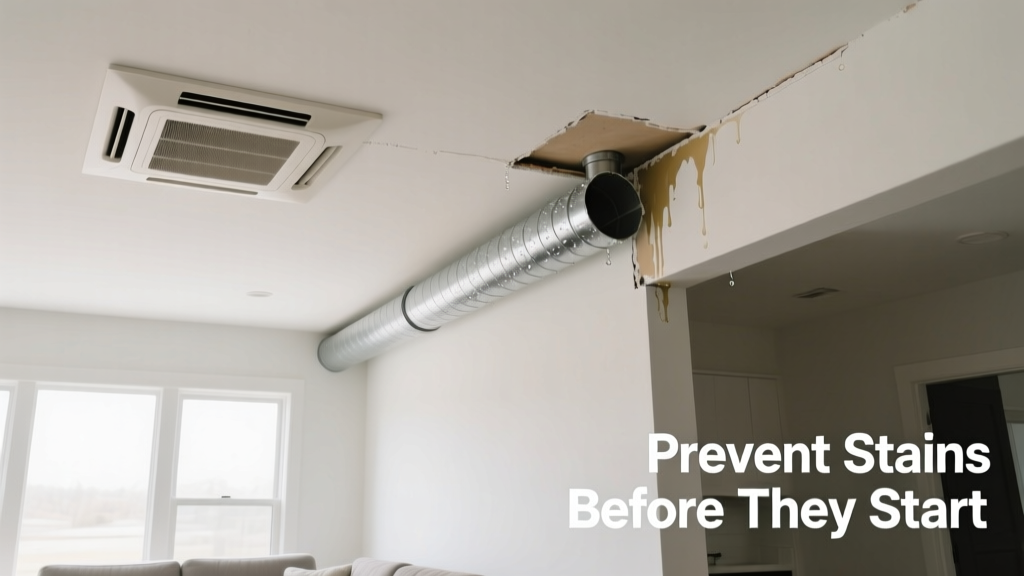
Stained ceilings aren’t just an eyesore—they’re a red flag for hidden moisture that can rot framing, degrade insulation, and spawn mold colonies in as little as 48 hours. Left unchecked, a single brown water spot can lead to $2,500–$7,000 in structural repair and remediation, according to the Insurance Institute for Business & Home Safety's 2023 report.
Why This Happens
Most ceiling stains stem from three sources: roof leaks (especially around chimneys, vents, and skylights), plumbing failures in upper-floor bathrooms or kitchens, and condensation buildup in poorly ventilated attics. Less obvious culprits include clogged gutters overflowing onto fascia boards, ice dams lifting shingles in winter, and even HVAC condensate line backups—particularly in homes with older drain pans.
According to the U.S. EPA, 14% of household water usage is from leaks—and many go undetected behind walls or above ceilings for months before surfacing as discoloration.
Maintenance Checklist
| Frequency | Task | Time Required |
|---|---|---|
| Daily | Check for dripping faucets or running toilets on upper floors | 2 minutes |
| Weekly | Inspect bathroom exhaust fan operation and airflow at vent hood | 3 minutes |
| Monthly | Look for soft spots, sagging, or bubbling paint on ceilings directly below plumbing or roof penetrations | 5 minutes |
| Yearly | Hire licensed roofer to inspect flashing, sealant integrity, and attic ventilation; clean gutters and downspouts | 2–3 hours |
Warning Signs
Early detection beats repair every time. Don’t wait for full-blown staining—these subtle cues appear first:
- A faint yellow or tan ring expanding slowly near a light fixture or wall junction
- Peeling or bubbling paint that feels cool or damp to the touch
- Musty odor localized to one room—even without visible moisture
- Discoloration that darkens after rain or heavy appliance use (e.g., showering)
If you notice two or more of these signs, shut off water supply to upper-level fixtures and contact a plumber or roofing contractor within 48 hours.
Recommended Products
Not all products are equal when it comes to moisture control. Prioritize those with verified performance data and compatibility with your home’s systems:
- Exhaust fans: Broan Ultra Quiet 110 CFM (certified by HVI for continuous ventilation)
- Gutter guards: LeafFilter stainless steel micro-mesh (tested to handle 26 gallons/minute per foot)
- Roof sealants: Henry 208 All-Weather Roof Cement (ASTM D412 tested for -40°F to 180°F flexibility)
- Attic ventilation kits: GAF Cobra Vent with Smart Ridge technology (increases net free area by 35% over standard ridge vents)
Can I paint over a stained ceiling to hide it?
No—painting over a stain without fixing the source traps moisture behind the surface, accelerating drywall degradation and encouraging mold growth. Use a stain-blocking primer like Zinsser Bulls Eye 1-2-3 only after confirming the leak is fully resolved and the substrate is dry.
Does humidity alone cause ceiling stains?
Rarely—but chronic high indoor humidity (above 60% RH) combined with cold attic surfaces can cause condensation to form on the back of drywall, leading to mineral deposits and eventual staining. Run dehumidifiers in basements and use bathroom fans for at least 20 minutes post-shower.
How often should I inspect my attic for signs of leakage?
Twice yearly: once before winter (to catch failing seals before freeze-thaw cycles) and once after spring rains (to identify roof damage from wind or debris). Bring a flashlight and look for water trails on rafters, rust on nail heads, or white mineral deposits (efflorescence) on wood surfaces.
Are recessed lights a common cause of ceiling stains?
Yes—especially non-IC-rated fixtures installed in insulated ceilings. Heat buildup melts insulation, creating thermal channels that draw moist air upward. The resulting condensation drips onto drywall. Replace older cans with IC-rated, airtight LED models like Halo RL560ATR.
What’s the fastest way to find the source of a ceiling stain?
Start directly above the stain: check roof penetrations (vents, pipes, skylights), then trace plumbing lines in the floor above. If no obvious source appears, use a moisture meter like the Protimeter Surveymaster to compare readings across adjacent areas—differences >5% indicate active wetness.
"A ceiling stain is never isolated—it’s always connected to something upstream. Follow the water, not the spot." — Certified Master Inspector, InterNACHI 2022 Field Manual
Do attic fans help prevent ceiling stains?
Only if properly sized and balanced with intake ventilation. An unbalanced attic fan creates negative pressure that pulls conditioned, humid indoor air into the attic through ceiling gaps—exactly what causes condensation stains. Always pair powered fans with soffit or gable intake vents totaling at least 1:300 ratio (1 sq ft net free area per 300 sq ft attic floor).
Preventing stained ceilings isn’t about perfection—it’s about consistency. A five-minute monthly scan of your upper-level plumbing and attic access point catches 80% of issues before they reach drywall. Pair that with seasonal gutter cleaning and annual roof inspections, and you’ll extend your ceiling’s lifespan by 10–15 years. For more on identifying hidden leaks, see our guide to detecting concealed water damage. And if you’ve already spotted discoloration, read our step-by-step on repairing water-damaged drywall safely.