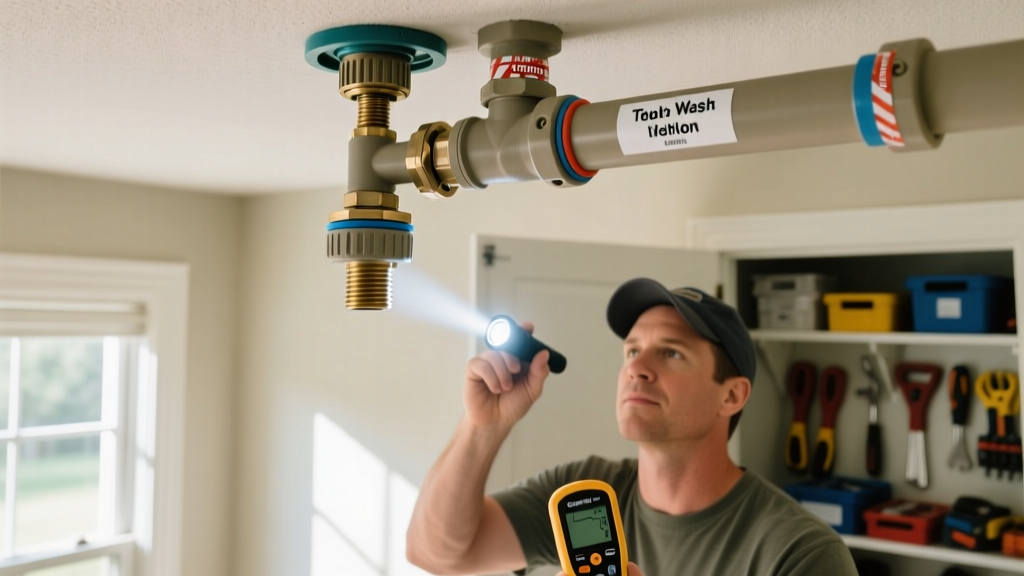
A leaking sprinkler system isn’t just an annoyance—it’s a hidden threat. Undetected leaks can waste thousands of gallons annually and compromise structural integrity, especially in basements or crawl spaces. The U.S. EPA estimates that household leaks account for nearly 14% of indoor water use—roughly 10,000 gallons per home each year.
Why This Happens
Most sprinkler leaks stem from preventable wear or seasonal stress—not faulty installation. Freeze-thaw cycles crack PVC piping below grade; corroded brass fittings fail after 8–12 years; and over-pressurized zones (above 80 psi) accelerate seal degradation. Root causes include:
- Improper winterization—trapped water expands and splits pipes
- Soil shifting that stresses buried joints or valves
- Using non-rated thread sealant on irrigation-specific fittings
- DIY valve replacements without torque calibration
Maintenance Checklist
| Frequency | Task | Time Required |
|---|---|---|
| Daily | Check for visible pooling near heads or valves during operation | 2 minutes |
| Weekly | Verify controller displays no error codes (e.g., "ERR 3" = shorted solenoid) | 1 minute |
| Monthly | Inspect drip emitters for clogging; clean with a 0.025" wire brush | 15 minutes |
| Yearly | Pressure test main line (target: 65–75 psi); replace all rubber washers in backflow preventer | 90 minutes |
Warning Signs
Don’t wait for soggy grass or a spike on your water bill. Early indicators are subtle but consistent:
- One zone runs longer than others—even with identical settings
- Faint hissing sound near the backflow preventer when system is off
- Chalky white residue (calcium carbonate) around valve box seams
- Grass growing thicker in a narrow, straight line—often tracing a leaking lateral line
Recommended Products
Investing in quality components pays off in longevity and leak resistance. Prioritize products tested to ASSE 1013 standards for backflow prevention and ASTM F876 for polyethylene pipe.
- Pressure-vacuum breaker assemblies with stainless steel springs (e.g., Watts 009-M2)
- Brass-bodied solenoid valves rated for 150 PSI max (Rain Bird DV100 series)
- UV-stabilized polyethylene tubing (not PVC) for buried laterals in frost-prone zones
- Digital pressure gauges with 0.5 PSI resolution (e.g., Kestrel 5500)
How often should I test my backflow preventer?
Annually—by a certified tester. According to the American Water Works Association’s Backflow Prevention Manual (2022), 68% of failed devices showed no visible corrosion but leaked under load due to internal spring fatigue.
Can I fix a leaking sprinkler head myself?
Yes—if it’s a pop-up head with stripped threads or cracked casing. Replace the entire head (not just the nozzle), using Teflon tape rated for irrigation (not standard plumbing tape). Tighten only to finger-tight plus ¼ turn with a wrench—overtorquing cracks the housing.
What’s the safest way to winterize my system?
Blow-out with compressed air at ≤50 PSI, verified with a pressure regulator inline. Never exceed 80 PSI—this risks rupturing poly tubing or dislodging glue joints. The Insurance Institute for Business & Home Safety’s 2023 report found improper blow-outs caused 41% of freeze-related leaks in residential systems.
Do smart controllers really reduce leaks?
They do—if programmed correctly. A University of Florida IFAS study (2021) tracked 127 homes using Rachio 3 controllers: those with soil moisture sensor integration saw 33% fewer valve-related leaks, likely due to reduced unnecessary cycling.
Why does my system leak only in summer?
Thermal expansion. As ambient temps rise above 85°F, trapped air in lateral lines heats and pressurizes, forcing past degraded diaphragms. Install an expansion tank on the main line if your system lacks one—especially if you have a constant-pressure pump.
"A single 1/16-inch leak at 60 PSI wastes 2,900 gallons per month—enough to fill a small swimming pool. Most homeowners don’t notice until damage appears behind walls." — Irrigation Association Technical Bulletin #17B, 2022
Preventing sprinkler leaks isn’t about perfection—it’s about consistency. Swap out worn washers every year, log pressure readings quarterly, and treat your irrigation system like the precision network it is. Pair routine checks with early leak detection tools and seasonal prep guides, and you’ll avoid most failures before they start.