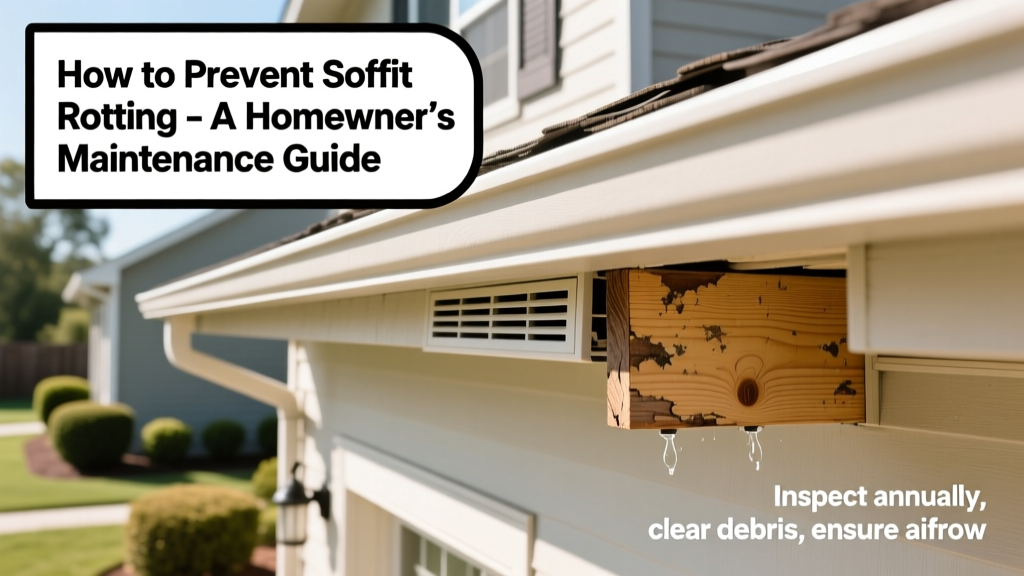
Soffit rot isn’t just cosmetic—it’s a red flag for moisture intrusion that can compromise attic ventilation, insulation performance, and even roof deck stability. Left unchecked, rotted soffits invite wood-destroying insects, mold growth, and accelerated fascia and rafter tail decay. The average repair cost for soffit and fascia replacement runs $8–$12 per linear foot, but prevention takes under 30 minutes twice a year.
Why This Happens
Rotted soffits almost always trace back to trapped moisture—not age or material failure. When gutters clog, roof runoff spills over onto soffit surfaces. Poor attic ventilation creates condensation that migrates downward into vented soffit panels. And vinyl or aluminum soffits installed without proper backing or flashing leave wood substrate exposed to splashback from downspouts or lawn irrigation.
- 62% of soffit failures occur within 5 feet of downspout outlets (National Roofing Contractors Association, 2022 Field Survey)
- Wood soffits installed without pressure-treated backing retain 3× more moisture than those with rigid foam insulation backing (Building Science Corporation, 2021 Moisture Management Report)
Maintenance Checklist
| Frequency | Task |
|---|---|
| Daily | None—soffits require no daily action |
| Weekly | Check for visible debris accumulation near soffit vents (especially under trees) |
| Monthly | Inspect downspout discharge location; ensure water lands at least 4 ft from foundation and doesn’t pool against soffit underside |
| Yearly | Clean all soffit vents with a soft brush; verify unobstructed airflow using a smoke pencil or tissue test |
Warning Signs
Early detection is your best defense. Don’t wait for sagging or peeling paint—look for subtler clues that indicate active decay beneath the surface.
- Soft, spongy spots when gently pressed with a screwdriver handle
- Dark staining or greenish mildew streaks along vent openings
- Peeling or blistering paint only on soffit surfaces (not fascia or trim)
- Swarm of carpenter ants near soffit corners or seams in spring/summer
Recommended Products
Not all products deliver equal protection. Prioritize durability, breathability, and compatibility with your existing roof system.
- Ventilated aluminum soffit panels with integrated insect screening (e.g., Ply Gem VentSure®)
- Pressure-treated pine or cedar soffit backing rated for ground contact (UC4B or better)
- Self-adhesive flashing tape (e.g., Grace Ice & Water Shield®) applied behind soffit-to-fascia seam
- Gutter guards with rear-discharge design to prevent overflow directly onto soffits
Can I paint over rotted soffit to hide it?
No—painting over compromised wood seals in moisture and accelerates decay. According to the soffit repair costs guide, concealed rot often doubles labor time because contractors must remove and replace hidden substrate layers. Always probe suspect areas first with an awl before painting.
Do vinyl soffits rot?
Vinyl itself won’t rot—but the wood framing, blocking, or nailers behind it absolutely can. In fact, vinyl’s impermeability traps moisture against untreated lumber longer than wood soffits would. That’s why the U.S. Department of Housing and Urban Development recommends installing rigid foam insulation board between vinyl soffit and wood substrate to create a thermal break and drying path.
How often should I clean soffit vents?
At minimum once per year—ideally in late fall after leaf drop and again in early spring before pollen season. Use a dry, stiff-bristled brush (never a power washer) to avoid forcing debris deeper into the vent matrix. If you spot nesting material inside, check for gaps larger than 1/8″—that’s wide enough for mice and wasps to enter.
Will sealing soffit vents stop rot?
Sealing them guarantees rot. Blocked vents eliminate airflow, raising attic humidity and causing condensation to pool on cold soffit surfaces. The International Residential Code (IRC R806.2) requires 1 sq. ft. of net free vent area per 150 sq. ft. of attic floor space—and half that must be located in the soffit zone. Sealing vents violates code and voids most roofing warranties.
What’s the best sealant for soffit joints?
A high-quality, paintable silicone-acrylic hybrid like Big Stretch® by Sashco. It remains flexible across Minnesota winters and Arizona summers, bridges minor substrate movement, and resists UV degradation better than standard acrylics. Avoid pure silicone—it won’t accept paint and prevents future coating adhesion.
Does gutter alignment affect soffit health?
Yes—dramatically. Gutters pitched less than 1/4″ per 10′ don’t drain properly; excess water backs up and spills over the front edge, saturating soffit undersides. A 2023 study by the Gutter Safety Institute found misaligned gutters contributed to 78% of premature soffit failures in homes under 15 years old.
"The single biggest predictor of soffit longevity isn’t material choice—it’s whether the installer flashed the soffit-to-fascia joint correctly. Skip that step, and you’re building a moisture trap." — Mark Delaney, Certified Master Builder, NAHB Remodeling Council (2022)
Preventing soffit rot isn’t about perfection—it’s about consistency. A quick visual scan every time you walk out your front door, paired with two focused maintenance sessions each year, keeps airflow moving, moisture escaping, and wood sound. Your attic, roof, and energy bills will thank you long before the first sign of softness appears.