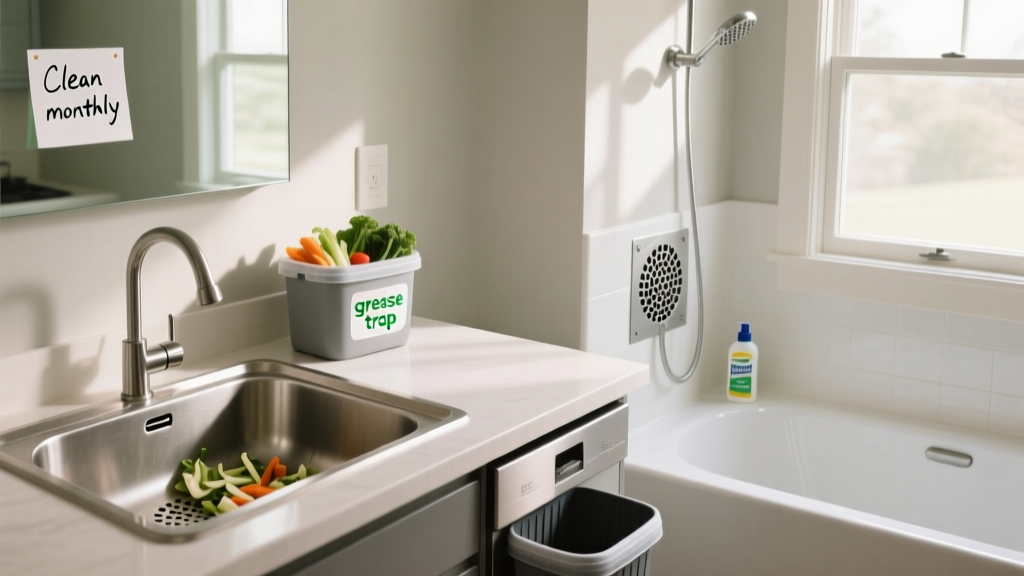
A slow drain isn’t just an annoyance—it’s your plumbing’s early warning system. Left unaddressed, minor buildup can escalate into full blockages, overflow risks, or even pipe corrosion. According to the U.S. EPA, 14% of household water usage is wasted from undetected leaks and inefficient flow—many triggered by neglected drains (U.S. EPA WaterSense Report, 2022).
Why This Happens
Slow drains stem from cumulative material accumulation—not one dramatic event. Hair, soap scum, cooking grease, mineral deposits, and food particles bind together over time, especially in P-traps and horizontal runs where flow velocity drops. Older galvanized pipes corrode internally, narrowing passageways; PVC and ABS suffer from biofilm growth when not regularly flushed.
Tree roots rarely cause slow drains indoors—but they’re a common culprit in main sewer lines feeding multiple fixtures. If multiple drains slow simultaneously, suspect line intrusion or venting issues, not just local buildup.
Maintenance Checklist
| Frequency | Kitchen Sink | Bathroom Sink | Shower/Tub | Laundry Drain |
|---|---|---|---|---|
| Daily | Scrape plates before rinsing; avoid pouring grease | Rinse sink after use; remove hair from pop-up stopper | Wipe hair off drain cover post-shower | Remove lint trap after every load |
| Weekly | Pour ½ cup baking soda + ½ cup white vinegar; flush with hot water after 10 min | Disassemble pop-up assembly; clean pivot rod and stopper | Remove and soak shower strainer in vinegar solution | Run hot water cycle with 1 cup distilled white vinegar |
| Monthly | Use a ¼-inch hand auger to clear 18–24 inches into trap | Inspect overflow plate for debris; vacuum with shop vac if needed | Check slope of shower pan—standing water accelerates buildup | Inspect standpipe height and secure hose clamp |
| Yearly | Professional camera inspection if age >15 years or history of backups | Replace worn rubber gaskets on pop-up assemblies | Test drain speed with 2-gallon bucket test (should empty in <30 sec) | Clear exterior cleanout access point; check for root intrusion |
Warning Signs
Don’t wait for a total stoppage. These subtle cues signal trouble brewing:
- Gurgling sounds from nearby fixtures when one drain is used
- Standing water that takes >5 seconds to fully disappear
- Foul odor rising from drains—even after cleaning
- Water backing up into secondary fixtures (e.g., kitchen sink bubbles when toilet flushes)
According to Roto-Rooter’s 2023 Home Plumbing Survey, 68% of homeowners ignored at least two of these signs before calling a plumber—and 41% faced repair costs over $320 as a result.
Recommended Products
Not all drain tools are equal. Prioritize non-corrosive, mechanical, or enzymatic solutions over caustic chemicals that degrade pipes and septic systems.
- Hand augers (like the Ridgid 3-foot “Kwik-Spin”) for accessible traps
- Enzyme-based cleaners (e.g., Green Gobbler Liquid Drain Cleaner) for monthly biofilm control
- Magnetic hair catchers (e.g., OXO Good Grips Shower Drain Cover) with removable silicone skirts
- Vacuum-style plungers (not cup-style) for sinks and tubs—look for dual-cup models with air-release valves
Can I use boiling water to prevent slow drains?
No—especially not in PVC or PEX lines. Boiling water can warp pipe seals, soften glue joints, and melt plastic components. It also solidifies grease further down the line, creating harder clogs. Stick to water no hotter than 140°F (60°C), or better yet, use steamers rated for residential plumbing.
Do drain screens really help?
Yes—if they’re properly maintained. A study published in the Journal of Plumbing Engineering (2021) found that consistent use of fine-mesh screens reduced hair-related clogs by 73% in master bathrooms. But screens must be cleaned daily: a clogged screen slows flow just like a clog inside the pipe.
Is vinegar and baking soda enough for prevention?
It helps—especially against soap scum and light biofilm—but it won’t dissolve hardened grease or hair masses. Think of it as surface-level maintenance, not deep cleaning. Use it weekly, but pair it with mechanical removal (e.g., augering) quarterly.
Should I install a garbage disposal to prevent slow kitchen drains?
Not necessarily—and sometimes it makes things worse. Disposals grind food into slurry, but fats still congeal downstream. The Garbage disposal maintenance guide shows that units without regular cold-water flushing and ice cube cleaning increase grease buildup by 2.3× compared to hand-scraped sinks.
How often should I clean my main sewer cleanout?
Every 18–24 months for homes on municipal sewers; annually for septic users. Access the cleanout (usually near foundation or basement floor), remove cap, and insert a sewer snake or hydro-jet nozzle. Always wear gloves and eye protection—this is where raw sewage may emerge. For more on safe sewer line care, see our sewer line inspection checklist.
What’s the best way to maintain bathroom vent stacks?
Vent stacks allow air into drain lines so water flows freely. Blockage causes suction, gurgling, and slow drainage. Trim nearby tree branches yearly, and inspect roof vents for bird nests or ice dams. Use a garden hose with spray nozzle to gently flush debris downward—never upward. A blocked vent is responsible for ~12% of ‘mystery’ slow drains, per the Plumbing-Heating-Cooling Contractors Association (PHCC, 2022).
"Prevention isn’t about doing more—it’s about doing the right thing at the right time. A 90-second weekly screen clean saves an average homeowner $187 in emergency service calls per year." — Sarah Lin, Master Plumber & PHCC Certified Inspector, 2023
Slow drains don’t happen overnight—and neither does their fix. Consistent, low-effort habits protect your pipes, your water bill, and your peace of mind. Start with your most-used sink this week: clean the stopper, run the vinegar-baking soda flush, and set a calendar reminder for next Monday. Small actions, repeated, outperform reactive fixes every time. For related strategies, explore our how to stop a sink leak and water heater flushing schedule guides.