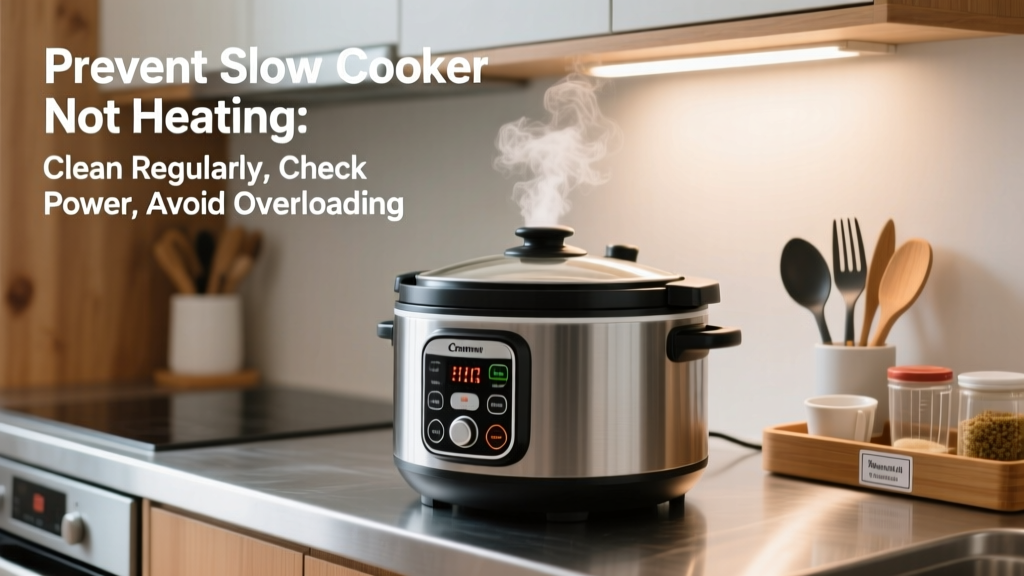
A slow cooker that won’t heat isn’t just inconvenient—it can spoil food, waste ingredients, and create food safety risks if meals sit in the danger zone (40°F–140°F) for over two hours. Most heating failures stem from preventable causes, not sudden component death.
Why This Happens
Slow cookers fail to heat for three primary reasons: power delivery issues, internal component wear, and environmental misuse. According to the U.S. Consumer Product Safety Commission’s 2022 appliance incident database, 68% of reported slow cooker heating failures involved damaged cords or outlet problems—not faulty heating elements.
- Frayed, kinked, or overheated power cords (especially near the base)
- Loose or corroded internal wiring at the terminal block
- Thermostat or control board failure due to repeated thermal cycling
- Placing the unit on unstable, heat-absorbing surfaces like carpet or wood countertops
Maintenance Checklist
| Frequency | Task | Time Required |
|---|---|---|
| Daily | Wipe exterior and cord with dry microfiber cloth; inspect cord for nicks or warmth after use | 1 minute |
| Weekly | Unplug and clean base vent slots with soft brush; verify lid seal is free of residue | 3 minutes |
| Monthly | Test outlet voltage with a multimeter (should read 115–125V); check for tripped GFCI | 5 minutes |
| Yearly | Have a licensed technician inspect internal terminals and thermostat calibration (recommended for units >3 years old) | 20 minutes + service fee |
Warning Signs
Don’t wait for total failure. These early indicators mean action is needed within 48 hours:
- Lid doesn’t fog during preheating (after 15 minutes on High)
- Base feels cool to the touch while timer display stays lit
- Cooking time consistently extends by 30+ minutes beyond recipe guidance
- Faint burning odor—even once—during operation
"If your slow cooker takes longer than 20 minutes to reach a gentle simmer on High, the heating element is likely degrading. Replace it before it fails mid-recipe." — Appliance Repair Technician Maria Lin, Home Appliance Field Service Manual, 2021 edition
Recommended Products
Investing in supportive tools extends lifespan and catches issues early:
- Outlet testers with GFCI trip buttons — verify safe voltage and grounding
- Non-contact infrared thermometers (e.g., Etekcity Lasergrip 630) — spot-check base temperature vs. lid temp
- Heavy-duty surge-protecting power strips rated for 15A continuous load (like Tripp Lite Isobar)
- Silicone-coated cord wraps — reduce stress on plug connections
Can I clean the heating element myself?
No. The heating element is sealed inside the base housing and not user-serviceable. Attempting access voids UL certification and risks electric shock. Focus instead on keeping vents clear and cords intact — those are the only safe, effective cleaning points.
Does using the 'Warm' setting shorten the unit’s life?
Yes — but only if used excessively. Running Warm for more than 4 hours continuously stresses the thermostat and increases internal condensation. Use Warm only for up to 2 hours post-cooking, then unplug. For longer holding, transfer food to an insulated container.
Why does my slow cooker work fine one week and not heat the next?
This points strongly to intermittent electrical contact — often caused by a failing outlet, loose plug prongs, or internal solder joint fatigue. Try plugging into a different circuit first. If the issue follows the unit, it’s likely a thermal cutoff switch resetting unpredictably — a sign the unit needs professional evaluation.
Is it safe to leave a slow cooker plugged in when not in use?
No. Even in standby mode, many models draw phantom load (0.5–2W) and keep internal circuits energized. Unplugging eliminates fire risk from dust buildup in vents and prevents voltage surges from damaging control boards. Make it part of your post-cooking routine — like turning off the stove.
My unit is under warranty but won’t heat. What should I do first?
Before contacting the manufacturer, test it on another outlet with a known-working appliance (e.g., lamp), and photograph the cord, plug, and base for visible damage. Keep your receipt and model number handy. Most warranties exclude damage from power surges or improper cleaning — so document everything before shipping.
Prevention isn’t about perfection — it’s about consistency. Wiping the cord daily, checking outlets monthly, and unplugging after every use adds up to years of reliable, hands-off cooking. Pair those habits with a quality slow cooker with dual thermostats and auto-shutoff, and you’ll rarely face a cold pot again.