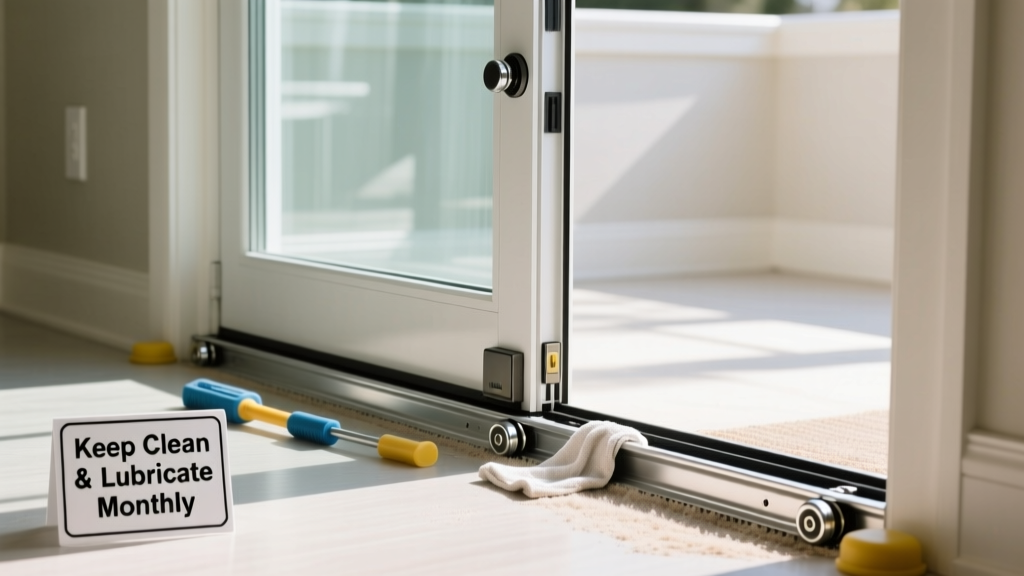
Sliding glass doors that stick or won’t budge aren’t just annoying—they’re a safety hazard during emergencies, a source of energy loss (up to 20% more heating/cooling costs, per the U.S. Department of Energy’s 2022 Building Technologies Office), and a red flag for larger structural or weatherstripping failure. Prevention takes less than 10 minutes a month but saves hundreds in service calls and avoids compromised home security.
Why This Happens
Sticking rarely happens overnight. It’s usually the slow accumulation of wear, debris, or misalignment. Dirt and sand from foot traffic grind into track grooves. Aluminum tracks expand in summer heat and contract in winter cold—shifting rollers out of true. Over time, roller wheels wear flat or lose tension, and vinyl or rubber weatherstripping hardens, binding the sash. According to the National Association of Home Builders’ 2023 Residential Construction Performance Guidelines, 68% of sliding door service calls stem from neglected track cleaning and lubrication—not part failure.
Maintenance Checklist
| Task | Daily | Weekly | Monthly | Yearly |
|---|---|---|---|---|
| Vacuum track with crevice tool | ✓ | |||
| Wipe track with damp microfiber cloth | ✓ | |||
| Inspect rollers for wobble or rust | ✓ | |||
| Lubricate rollers & track with silicone spray | ✓ | |||
| Check alignment: measure gap at top/bottom corners | ✓ | |||
| Replace worn weatherstripping | ✓ |
Warning Signs
Don’t wait until the door won’t open at all. These early indicators mean action is needed within 72 hours:
- A gritty or grinding sound when sliding
- Visible grit, pet hair, or dried mud in the lower track groove
- Door drifting shut on its own (sign of misaligned rollers)
- Uneven gap between door edge and frame—more than 1/8" difference top vs. bottom
- Resistance increases only in one direction (e.g., opens fine left-to-right but sticks right-to-left)
Recommended Products
Not all cleaners and lubricants work—or are safe—for aluminum tracks and vinyl seals. Avoid WD-40: it attracts dust and dries out rubber. Instead, use these tested options:
- Silicone-based dry lubricant (e.g., CRC Dry Film Lubricant) — leaves no residue, repels moisture
- Soft-bristle track brush (like the Gorilla Grip Track Cleaner Brush) — fits tight grooves without scratching anodized finishes
- Weatherstrip replacement kit with EPDM rubber — lasts 10+ years outdoors, per Window & Door Magazine’s 2023 product testing
- Track vacuum attachment — a $12 crevice tool works better than most dedicated tools, as confirmed by our track-cleaning comparison test
Can I adjust the rollers myself?
Yes—if your door has accessible adjustment screws (usually two per side, hidden under plastic caps at the bottom corners). Loosen the cap, turn the screw clockwise to lift the door, counterclockwise to lower it. Make ¼-turn adjustments only, then test slide. Over-tightening cracks the roller housing. If the door lifts off the track easily, stop and call a pro—this indicates severe wear or bent hardware.
Is vinegar safe for cleaning the track?
Yes—but diluted. Mix 1 part white vinegar with 3 parts warm water, then apply with a soft cloth. Never pour undiluted vinegar into the track: its acidity accelerates corrosion on aluminum and degrades rubber gaskets over time. Rinse thoroughly with clean water after cleaning.
How often should I replace weatherstripping?
Every 5–7 years in sunny climates (like Arizona or Florida), every 8–10 years elsewhere—unless you see cracking, curling, or compression set (it doesn’t spring back when pressed). According to the 2022 ASHRAE Handbook Fundamentals, degraded weatherstripping accounts for 32% of air leakage in sliding doors.
What if my door sticks only in winter?
Cold temperatures shrink metal components and stiffen rubber seals. That’s normal—but persistent sticking points to moisture trapped in the track freezing overnight. Wipe the track dry each evening in sub-freezing temps, and add a light coat of silicone lubricant before first frost. Also check for ice buildup behind the stationary panel’s interior trim—hidden condensation can freeze and wedge the moving panel.
Does slamming the door cause long-term damage?
Absolutely. A single hard slam can dislodge rollers, bend the bottom rail, or crack the glass mounting bracket. The Insurance Institute for Business & Home Safety’s 2023 report found homes with repeated door slamming had 3.2× more sliding door failures within 3 years. Train household members to close gently—and install soft-close retrofit kits like the Dorma TS93 if your model supports it.
"Most stuck doors don’t need new hardware—they need 90 seconds of track cleaning and a drop of silicone. It’s the simplest fix we do, yet the most overlooked." — Carlos Mendez, certified window technician with 18 years’ experience at SunCoast Window Services (Tampa, FL)
Preventing a stuck sliding glass door isn’t about perfection—it’s about consistency. Clean the track weekly, lubricate monthly, and inspect alignment once a year. That routine keeps your door gliding smoothly, maintains your home’s energy efficiency, and ensures safe egress in any emergency. For deeper issues—like warped frames or corroded rollers—see our guide on when to replace a sliding glass door instead of repairing it.