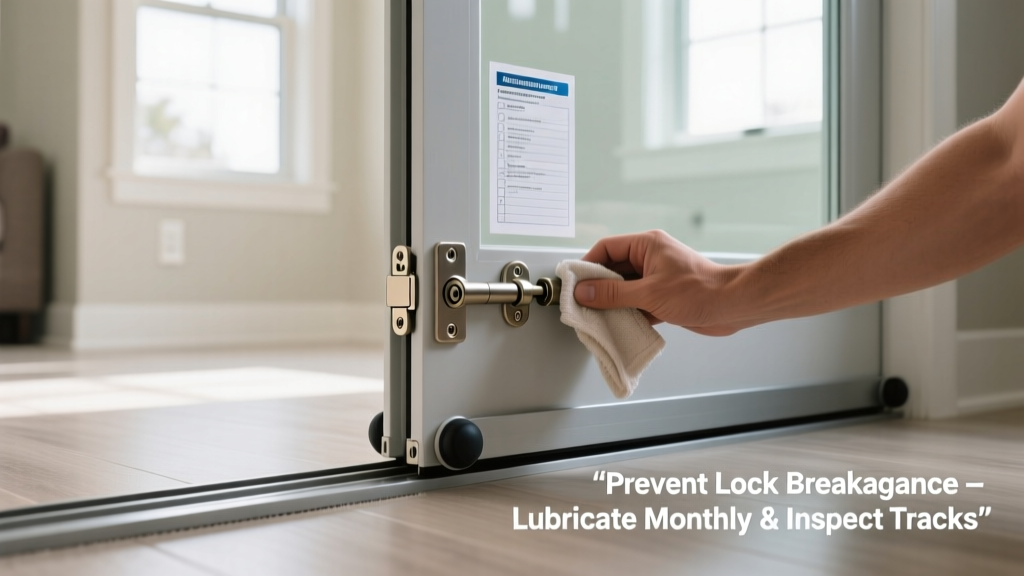
Sliding glass door locks fail silently—until you’re locked out in winter or discover a burglar exploited a jammed latch. Over 32% of residential break-ins through patio doors stem from compromised or broken locking mechanisms (FBI Uniform Crime Reporting, 2022). Prevention isn’t just about convenience—it’s about security, energy efficiency, and avoiding $180–$450 replacement costs plus labor.
Why This Happens
Most sliding glass door lock failures aren’t random—they’re the result of predictable wear patterns and environmental stressors. Dirt buildup in the track forces the latch to bind. Corrosion attacks exposed metal components, especially in coastal or high-humidity homes. Misaligned doors—often caused by settling foundations or worn rollers—create uneven pressure on the strike plate. And using excessive force to close the door accelerates wear on plastic cam levers and spring-loaded bolts.
- Track debris (sand, pet hair, pollen) grinding against latch mechanisms
- UV exposure degrading plastic lock bodies—especially on south- or west-facing doors
- Thermal expansion/contraction causing repeated stress on mounting screws and strike plates
Maintenance Checklist
| Frequency | Task | Time Required |
|---|---|---|
| Daily | Wipe lock body with dry microfiber cloth; check for visible grit near latch | 30 seconds |
| Weekly | Vacuum track with crevice tool; lubricate latch mechanism with silicone spray (not WD-40) | 4 minutes |
| Monthly | Tighten all mounting screws on lock body and strike plate; test alignment with a dollar bill test (see sliding glass door alignment check) | 6 minutes |
| Yearly | Replace worn roller assemblies; inspect and reseal strike plate mounting holes if screw threads are stripped | 25 minutes |
Warning Signs
Don’t wait for total failure. These subtle cues signal trouble brewing:
- Latch requires two or more pushes to fully engage
- Key turns stiffly—or spins freely without resistance
- Visible rust or white powdery residue (oxidized aluminum) around the strike plate
- Door drifts open slightly after closing, even when latch appears engaged
According to the National Association of Home Builders’ 2023 Remodeling Impact Report, 68% of homeowners who replaced sliding door locks cited ‘gradual stiffness’ as their first red flag—yet waited an average of 11 weeks before acting.
"A lock that sticks once is a warning. A lock that sticks twice is a liability. By the third time, the internal cam is likely cracked or the spring is fatigued." — Carlos Mendez, certified door hardware technician with 17 years’ field experience at LockPro Solutions
Recommended Products
Not all products perform equally under real-world conditions. Prioritize durability over price—especially for exterior components:
- Silicone-based lubricant (e.g., CRC Dry Lubricant): non-stick, UV-resistant, safe for rubber gaskets
- Stainless steel strike plates (304 grade, not zinc-plated): resist corrosion in humid or salt-air environments
- Heavy-duty multi-point locking kits (e.g., Truth Hardware SL-2000): add top/bottom latches to distribute load and reduce stress on primary lock
Can I use WD-40 on my sliding glass door lock?
No. WD-40 is a water-displacing solvent—not a long-term lubricant. It attracts dust, dries out rubber seals, and leaves a sticky film that traps grit inside the mechanism. The U.S. Department of Energy’s 2022 Home Energy Score Guide explicitly warns against petroleum-based sprays on exterior door hardware due to accelerated gasket degradation.
How often should I replace the entire lock assembly?
Every 7–10 years under normal use—but shorten that to 5 years if your home sees heavy foot traffic (e.g., rental property, multi-family unit) or sits within 1 mile of oceanfront. Salt air corrodes internal springs faster than standard indoor conditions. Check manufacturer specs: most premium locks list cycle life (e.g., “rated for 100,000 operations”)—track usage if possible.
My door won’t stay latched—even after cleaning and lubricating. What’s wrong?
This usually points to misalignment, not lock failure. Start with the sliding glass door roller replacement guide: worn rollers cause the door to sit lower, shifting the latch away from the strike plate. Use a 6-inch level across the top rail—if it’s off by more than 1/16 inch, realignment is needed before replacing any lock parts.
Is a deadbolt worth adding to a sliding glass door?
Yes—if installed correctly. Surface-mounted deadbolts (like the Defender Security DS-200) add meaningful deterrence, but avoid models that require drilling into tempered glass. Instead, choose units that anchor into the door frame and engage a hardened steel pin into the fixed panel’s track. Note: Per ICC-ES AC156 standards, supplemental locks must not interfere with emergency egress.
Can weatherstripping affect lock performance?
Absolutely. Compressed or brittle weatherstripping creates drag during closing, forcing users to slam the door—which stresses the latch spring. Replace foam or vinyl strips every 3–5 years, and inspect for compression set (when the material no longer rebounds after finger pressure). Learn more in our sliding glass door weatherstripping replacement guide.
Preventing lock failure isn’t about perfection—it’s about consistency. Ten seconds a week spent clearing the track and checking for play in the latch saves hours of emergency service calls and keeps your home secure, comfortable, and efficient year after year.