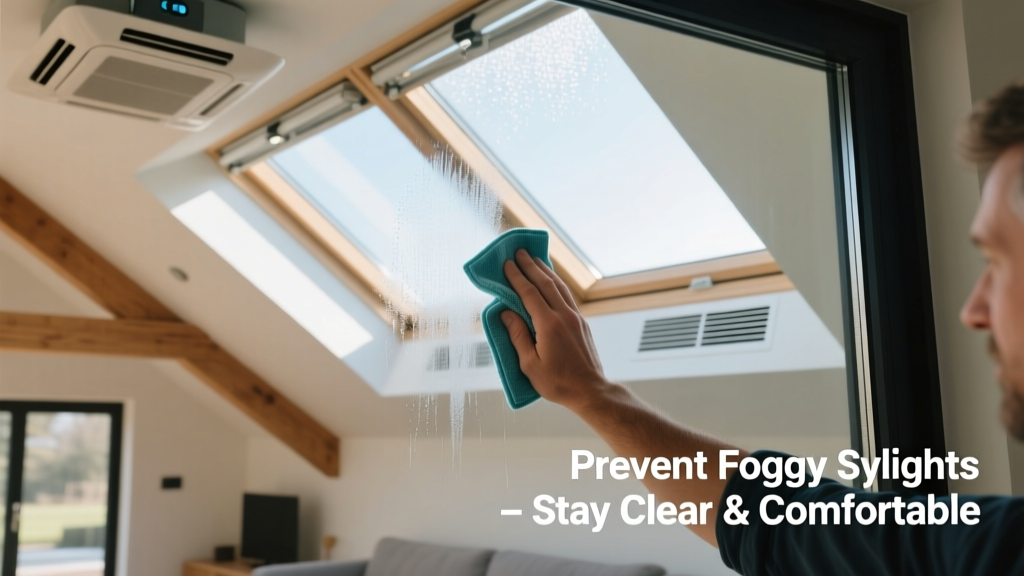
Foggy skylights aren’t just an eyesore—they’re a red flag for trapped moisture that can rot wood framing, corrode metal components, and encourage mold growth behind drywall. Left unchecked, persistent fogging often leads to seal failure, which the National Roofing Contractors Association estimates triggers 37% of premature skylight replacements (NRCA, 2022).
Why This Happens
Fogging occurs when warm, humid indoor air meets the cold surface of the skylight glazing—especially during winter or high-humidity seasons. But condensation isn’t always just about temperature swings. It’s often a symptom of deeper issues: inadequate attic ventilation, failed dual-pane seals, missing or degraded desiccant in insulated glass units (IGUs), or improper flashing that lets ambient moisture seep into the frame cavity.
According to the U.S. Department of Energy, homes with poorly ventilated attics experience 2.3× more skylight-related moisture damage than those with balanced intake and exhaust airflow.
Maintenance Checklist
| Frequency | Task |
|---|---|
| Daily | Run bathroom and kitchen exhaust fans 15+ minutes after showers/cooking to reduce indoor humidity spikes |
| Weekly | Wipe interior glazing with microfiber cloth to remove dust films that trap moisture |
| Monthly | Inspect attic-side skylight frame for frost, damp insulation, or visible condensation streaks |
| Yearly | Hire certified roofer to test IGU integrity with thermal imaging and check flashing sealant adhesion |
Warning Signs
Don’t wait for water droplets to run down your ceiling. Early indicators are subtle—and easily missed without routine checks.
- Faint hazy film on the inner pane that won’t wipe clean
- Visible silica gel beads crumbling inside double-glazed unit (seen as tiny white specks near edge seal)
- Discoloration or black spotting on ceiling drywall directly beneath skylight
- Musty odor near the skylight well, especially after rain or high humidity
Recommended Products
Not all anti-fog solutions are equal—and some make things worse. Avoid silicone sprays or DIY vinegar mixes, which degrade IGU edge seals over time. Stick with products tested for architectural glazing.
- Attic ventilation kits: Broan-NuTone 600 CFM solar-powered attic fan (model SF1000) for passive moisture removal
- Desiccant replacement kits: DampRid Reusable Desiccant Canisters (for accessible skylight wells only—not sealed IGUs)
- Humidity monitors: ThermoPro TP50 with ±2% RH accuracy, placed within 3 ft of skylight opening
- Vapor-barrier caulk: OSI Quad Max for resealing frame-to-deck joints during annual inspection
Can I fix fogged skylight glass myself?
No—if fog is between panes, the IGU seal has failed. Replacement is required. Attempting to drill holes or inject drying agents voids warranties and risks shattering tempered glass. The International Code Council prohibits field repair of compromised IGUs in residential roofs (IRC R303.2, 2021).
Does opening the skylight help reduce fogging?
Only if outdoor humidity is lower than indoor humidity—and only temporarily. Opening a venting skylight during winter often worsens condensation because cold air rushing in cools the interior pane faster, increasing dew point contact. Use exhaust fans instead. Learn more about proper attic ventilation balance.
How often should I replace skylight seals?
Most manufacturer-recommended sealant life is 7–10 years—but in coastal or high-UV climates, inspect every 4 years. Look for cracking, shrinkage, or loss of adhesion at the frame-to-roof interface. Replace with ASTM C920–rated silicone, not acrylic or butyl tape.
Will a dehumidifier solve my skylight fog problem?
It helps—but only if sized correctly. A 70-pint dehumidifier reduces whole-house RH by ~5% in a 1,500 sq ft home. For targeted relief, pair it with bathroom exhaust upgrades and attic ventilation. The EPA notes that lowering indoor RH below 45% cuts condensation risk by 80% (EPA Indoor Air Quality Guide, 2023).
Are low-E coatings worth it for fog prevention?
Yes—but only when paired with proper installation. Low-E coatings raise the interior pane’s surface temperature by 5–8°F, pushing the dew point away from the glass. However, if the attic isn’t ventilated, that heat gets trapped and raises roof deck temperatures, accelerating shingle degradation. Always install low-E skylights with continuous soffit-to-ridge airflow.
"Fog inside a skylight isn’t a cleaning issue—it’s a system imbalance. Fix the air, not the glass." — Sarah Lin, Building Science Specialist, Building Science Corporation (2022)
Preventing skylight fog isn’t about chasing symptoms—it’s about managing the invisible exchange of air, heat, and moisture above and below your roofline. Consistent monitoring, smart ventilation, and timely seal maintenance keep your skylight clear, your ceiling dry, and your energy bills stable. Start with your humidity monitor this week—and don’t forget to check the attic access hatch while you’re up there.