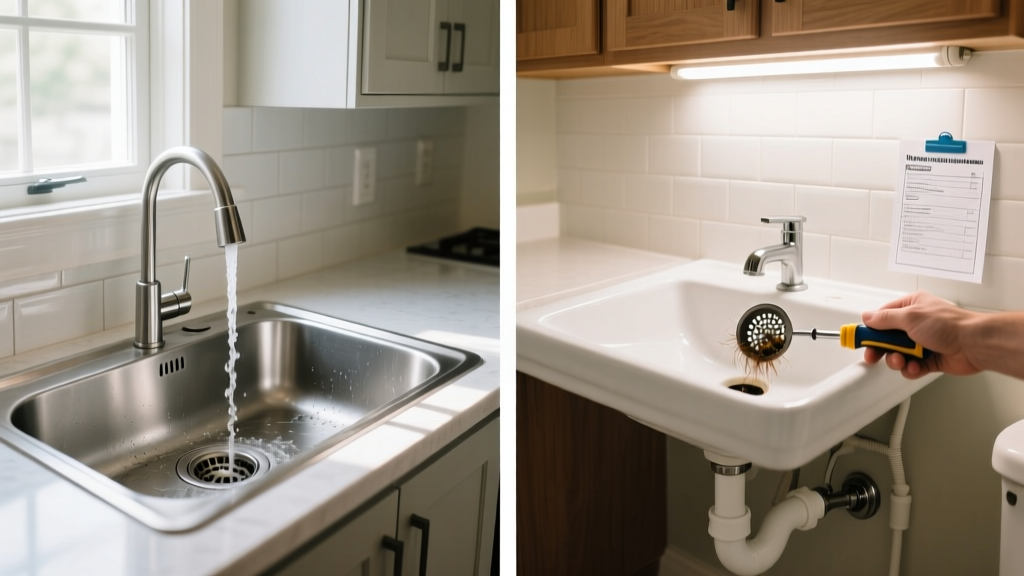
A slow or stopped-up sink isn’t just annoying—it’s a red flag for bigger plumbing trouble. Left unaddressed, partial clogs harden into full blockages, pressure builds in pipes, and standing water can warp cabinets or breed mold. According to the U.S. EPA, 14% of household water usage is wasted from leaks and inefficient fixtures—many triggered by avoidable drain issues.
Why This Happens
Drain failure rarely strikes without warning. Most sink drainage problems stem from three overlapping causes: organic buildup (hair, soap scum, food particles), mineral deposits (especially in hard water areas), and foreign object intrusion (like dental floss, cotton swabs, or grease poured down the drain). Grease solidifies at room temperature and traps debris like glue—creating layered obstructions that resist plunging and chemical cleaners.
- Hair and soap scum combine into dense, spongy masses in bathroom drains
- Kitchen sinks suffer most from starchy water (pasta, rice) and coffee grounds, which swell when wet
- Older homes with galvanized steel pipes accumulate rust and scale, reducing interior diameter over time
Maintenance Checklist
| Frequency | Task | Tools/Supplies Needed |
|---|---|---|
| Daily | Rinse kitchen sink with near-boiling water after washing dishes; wipe basin dry to reduce soap film | Kettle, microfiber cloth |
| Weekly | Pour ½ cup baking soda + ½ cup white vinegar down each drain; wait 15 min, then flush with hot water | Baking soda, vinegar, kettle |
| Monthly | Remove and clean pop-up stopper and pivot rod; scrub with old toothbrush and mild detergent | Toothbrush, dish soap, towel |
| Yearly | Detach P-trap under sink; inspect for corrosion, debris, and seal integrity; replace rubber gaskets if cracked | Adjustable wrench, bucket, replacement gaskets |
Warning Signs
Don’t wait for a total backup. These early indicators mean action is needed within 48 hours:
- Water pools for more than 5 seconds before draining
- Gurgling sounds from adjacent drains or toilets when running water
- Faint sewage odor near the sink, especially after hot showers or dishwasher cycles
- Visible film or residue around the drain flange or overflow opening
Recommended Products
Not all drain tools are equal—and some make things worse. Avoid caustic liquid drain openers (they corrode pipes and harm septic systems). Instead, invest in:
- Drain strainers with fine-mesh inserts (e.g., OXO Good Grips, fits standard 3.5" openings)
- Flexible Zip-It tools for hair removal (replace every 3 months)
- Enzyme-based maintenance treatments like Green Gobbler Liquid (works on organic matter without harming pipes)
- Hand-crank drain snakes with ¼" cable for deeper clogs—learn proper technique here
Can I use boiling water on PVC pipes?
No. Water above 140°F can soften and deform PVC and ABS pipes—especially older joints. Stick to water heated to 120–130°F (just below simmering) for monthly maintenance. For homes with PVC, PVC vs. copper pipe longevity comparisons show copper handles heat better but costs more to install.
Do garbage disposals prevent sink clogs?
They delay them—not prevent them. Disposals grind food but don’t eliminate fats, oils, or fibrous scraps like celery or onion skins. In fact, the National Association of Home Builders’ 2022 Plumbing Systems Report found disposal-equipped kitchens had 22% more annual drain service calls due to improper use.
Is a slow bathroom sink always a hair clog?
Usually—but not always. If cleaning the stopper and overflow doesn’t help, check the vent stack. A blocked roof vent creates negative pressure that slows drainage across multiple fixtures. Try running water in another nearby sink while observing airflow at the vent opening—if you hear sucking or see no air movement, it’s likely obstructed.
How often should I replace my sink strainer?
Every 12–18 months. Over time, metal strainers pit and plastic ones warp, letting debris slip through. Look for tiny cracks or bent tines—even minor gaps let 3x more hair pass through. Replace with stainless steel models for longer life and better grip.
Does hard water cause sink drainage issues?
Absolutely. The U.S. Geological Survey estimates 85% of U.S. homes have hard water (≥7 grains per gallon). Calcium and magnesium precipitate inside pipes, building up alongside organic sludge. Install a point-of-use water softener for sinks used heavily for shaving or dishwashing—or use citric acid rinses monthly to dissolve early scale.
"Most 'emergency' drain calls we handle are preventable with two minutes of weekly attention. If you clean your sink stopper once a week, you’ll skip 9 out of 10 service visits." — Carlos Mendez, Master Plumber & Lead Trainer, PHCC Education Foundation (2023)
Preventing sink drainage failure isn’t about perfection—it’s about consistency. Small actions, repeated monthly, keep your pipes clear and your home functioning smoothly. Pair this routine with regular checks of your leaky faucet prevention guide and garbage disposal odor fixes, and you’ll extend the life of your entire plumbing system by years. Start tonight: pull the stopper, scrub it, and flush with warm vinegar water.