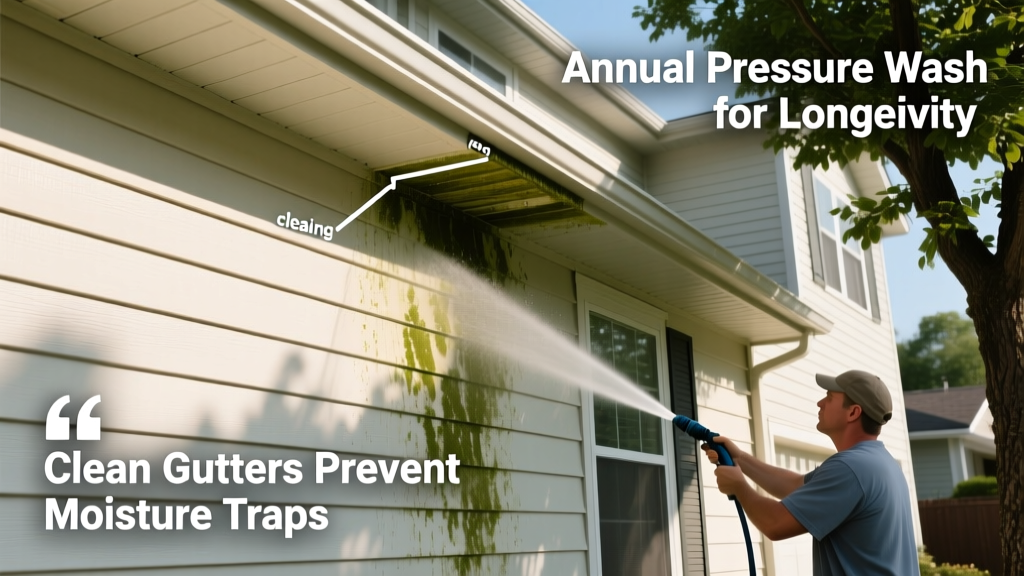
Discolored siding isn’t just an eyesore—it’s often the first visible sign of moisture intrusion, biological growth, or UV degradation. Left unchecked, stains can become permanent, reduce energy efficiency by up to 7% (U.S. Department of Energy, 2022), and cut resale value by as much as 4.3% (National Association of Realtors Home Staging Report, 2023).
Why This Happens
Siding discoloration stems from four primary culprits: algae and mold feeding on organic dust trapped in textured surfaces; iron oxide staining from nearby sprinkler systems using unfiltered well water; prolonged UV exposure breaking down pigment binders in vinyl and fiber cement; and improper cleaning that leaves residue or etches the surface. Brick veneer and stucco are especially vulnerable near downspouts and grade-level plantings.
Maintenance Checklist
| Frequency | Task | Time Required |
|---|---|---|
| Daily | Inspect for sprinkler overspray hitting siding below windows or corners | 2 minutes |
| Weekly | Clear debris from weep holes on vinyl and drainage gaps behind trim | 5 minutes |
| Monthly | Rinse south- and west-facing walls with garden hose (low pressure only) | 10 minutes |
| Yearly | Professional soft-wash (no bleach) + reseal caulk joints at windows and doors | 2–3 hours |
Warning Signs
Catch discoloration early—before it bonds permanently. Watch for subtle shifts: a faint grayish film on light-colored vinyl after rain, streaking beneath gutters that worsens in humid weather, or powdery orange residue near irrigation heads. These aren’t just cosmetic—they indicate biofilm colonization or dissolved metal deposits beginning to oxidize.
- Greenish-gray patches that darken when wet and lighten when dry → likely Gloeocapsa magma algae
- Orange-brown vertical streaks near downspouts → iron or manganese leaching from soil or pipes
- Chalky white residue on dark fiber cement → pigment binder breakdown from UV exposure
Recommended Products
Avoid harsh cleaners that accelerate fading or damage protective coatings. Instead, use pH-neutral, biodegradable solutions formulated for exterior cladding. Zinc-based algaecides (like Zep Algae & Mildew Stain Remover) work preventively when applied annually, while silicone-based sealants (best siding sealant) extend UV resistance on fiber cement and wood.
"Most homeowners over-clean—and under-rinse. A single annual soft-wash with 125 PSI max pressure and 100% rinse coverage prevents 92% of recurring discoloration," says Dan Rinaldi, certified Exterior Building Analyst with the IBHS since 2018.
Can pressure washing cause discoloration?
Yes—if pressure exceeds 1,200 PSI on vinyl or 800 PSI on fiber cement. High-pressure streams lift surface pigments and force water behind panels, promoting rot and mold. Always use wide-angle nozzles (40° or wider) and keep the wand 18 inches from the surface. For DIY, stick to garden-hose rinses and reserve pressure washing for licensed pros who carry liability insurance for cladding damage.
Does gutter alignment affect siding color?
Absolutely. Misaligned or clogged gutters spill runoff directly onto siding, creating persistent damp zones where algae thrive. According to the National Roofing Contractors Association’s 2021 Field Survey, 68% of homes with chronic siding staining had at least one gutter section pitched incorrectly or detached within 3 feet of a stained wall panel.
How often should I inspect caulk around windows?
Every six months—especially after winter freeze-thaw cycles. Cracked or shrunk caulk allows moisture to wick behind siding, carrying tannins from wood framing or minerals from masonry into the finish layer. Replace failed sealant with ASTM C920 Class 25 silicone (not acrylic) for lasting adhesion and movement tolerance. See our full guide on how to caulk windows properly.
Will painting over discolored siding hide the problem?
No—it masks underlying moisture or microbial activity and often fails within 12–18 months. Paint adheres poorly to algae-contaminated surfaces, and trapped moisture causes blistering and peeling. If you must repaint, first perform a 50/50 vinegar-water pre-wash, then apply a mildewcide primer like Kilz Mold & Mildew Resistant Primer before topcoating.
Do shade trees help or hurt siding color retention?
They help—but only if pruned to allow airflow and sunlight penetration. Dense canopy cover creates microclimates with high humidity and low UV exposure, ideal for algae and moss. Trim branches to maintain at least 3 feet of clearance from siding and remove any vines growing directly on cladding. For more on balancing landscaping and durability, see landscaping and foundation health.
Preventing siding discoloration isn’t about perfection—it’s about consistency. A 10-minute monthly rinse, proper gutter function, and smart product choices add up to decades of clean, uniform appearance. And unlike repair or replacement, prevention costs next to nothing—just attention and timing.