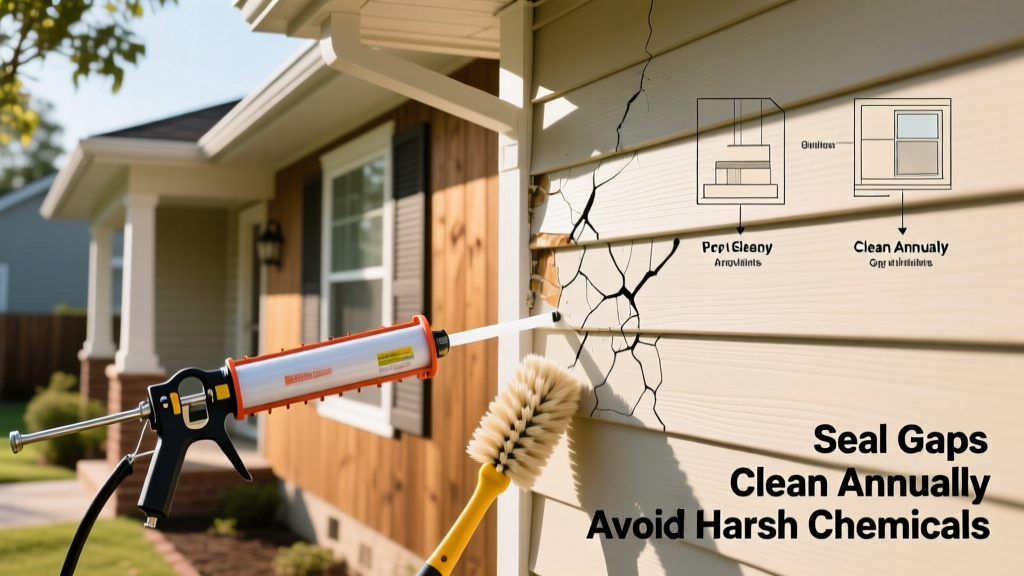
Cracked siding isn’t just cosmetic—it’s your home’s first line of defense failing. Once cracks form, water sneaks behind panels, rotting sheathing, inviting mold, and weakening structural integrity. According to the Insurance Institute for Business & Home Safety's 2023 report, 68% of water intrusion claims in single-family homes traced back to undetected siding damage—most preventable with routine inspection.
Why This Happens
Siding cracks stem from predictable stressors—not random failure. Thermal expansion and contraction cycle daily: vinyl expands up to 1/4 inch per 20 feet in summer heat and contracts sharply in sub-freezing temps. Wood dries and shrinks when humidity drops below 30%, especially on south- and west-facing walls. Impact damage from lawn equipment or hail accounts for 22% of early cracks (National Association of Home Builders, 2022). Poor installation—like nails driven too tightly or panels butted without expansion gaps—locks in stress that manifests as hairline splits within 2–3 years.
Maintenance Checklist
| Frequency | Vinyl Siding | Wood Siding | Fiber Cement |
|---|---|---|---|
| Daily | None | None | None |
| Weekly | Clear debris from weep holes at panel bottoms | Check for hanging vines or branches rubbing surface | Inspect for mortar dust buildup near joints |
| Monthly | Rinse with garden hose; avoid pressure washers above 1,200 PSI | Wipe test spots with damp cloth to assess finish integrity | Look for chalky residue indicating coating breakdown |
| Yearly | Recheck fastener tension; tighten loose screws only—not nails | Re-caulk all butt joints and window/door perimeters; sand and recoat if >15% gloss loss | Power-wash at 2,500 PSI max; reseal cut edges with acrylic masonry sealer |
Warning Signs
Early detection stops small cracks from becoming full-panel replacements. Don’t wait for visible gaps—look for subtler cues:
- White chalky powder (vinyl) or grayish fuzz (wood) along seams—signs of UV degradation accelerating micro-fractures
- Small black specks embedded in cracks—often mold spores already colonizing behind the surface
- Warped or bowed panels adjacent to a crack—indicates underlying moisture swelling substrate
- Paint blistering *only* on cracked sections—moisture vapor pushing paint off from behind
Recommended Products
Not all cleaners and sealants work equally—or safely—for your siding type. Avoid generic "all-surface" products that contain sodium hydroxide or citrus solvents; both degrade vinyl plasticizers and strip wood finishes prematurely.
- Vinyl: Simple Green House & Siding Cleaner (pH-neutral, no bleach); GAF Vinyl Siding Sealant for minor seam reinforcement
- Wood: DEFY Extreme Wood Cleaner (oxalic acid-based, safe for cedar/redwood); Sherwin-Williams SuperDeck Solid Stain for UV-blocking protection
- Fiber Cement: James Hardie-approved Acrylic Masonry Sealer; Rust-Oleum Protective Enamel for touch-ups on cut edges
Can I caulk over existing cracks?
No—caulking hides but doesn’t fix. Trapped moisture expands inside the crack during freeze-thaw cycles, widening it further. Instead, remove the damaged panel section (for vinyl/fiber cement) or sand and epoxy-fill deep wood cracks before refinishing. For hairline vinyl cracks under 1/16", use a flexible PVC welder rod and heat gun—never silicone.
Does power washing cause cracks?
Yes—if misused. A 3,000 PSI wand held within 6 inches of vinyl can fracture brittle older panels. The U.S. Department of Energy recommends keeping pressure below 1,500 PSI for vinyl and using a 40-degree fan tip angled downward—not straight-on—to avoid forcing water behind panels.
How often should I inspect siding near gutters?
Gutter overflow is the #1 localized cause of premature cracking—especially on north-facing walls where moisture lingers. Inspect the top 3 feet of siding beneath downspouts every 90 days. Look for softening, discoloration, or peeling paint—early signs of trapped water wicking upward. Clean gutters twice yearly and install leaf guards to reduce debris backups.
Do dark-colored sidings crack faster?
Yes—especially vinyl. Dark panels absorb up to 40°F more surface heat than light ones (Energy Star, 2021), accelerating plasticizer loss and embrittlement. If you’re replacing, choose Light Reflectance Value (LRV) 55+ for vinyl; for wood, use pigmented stains instead of clear finishes—they block UV rays that break down lignin.
What’s the best time of year to repair cracks?
Spring (50–75°F, low humidity) is ideal. Adhesives and caulks cure properly, wood isn’t saturated from winter rains, and vinyl is pliable enough to manipulate without snapping. Avoid repairs when temps dip below 40°F or soar above 90°F—bond strength drops 30–50% outside that range (Building Science Corporation, 2020).
"Most siding cracks begin as invisible stress fractures at fastener points. If you can press a fingernail into the seam and feel give—or see daylight through a joint when backlighted—you’ve already lost 60% of the panel’s weather resistance." — Gary Lippincott, Senior Building Envelope Consultant, RDH Building Science
Preventing cracked siding isn’t about perfection—it’s about consistency. Rotate inspections with your HVAC filter changes, track findings in a simple spreadsheet, and treat every crack like a leaky roof shingle: small now, catastrophic later. Pair smart product choices with seasonal rhythm, and your siding will protect—not perplex—for decades. For deeper guidance on matching materials to your climate zone, see our siding materials and climate guide.