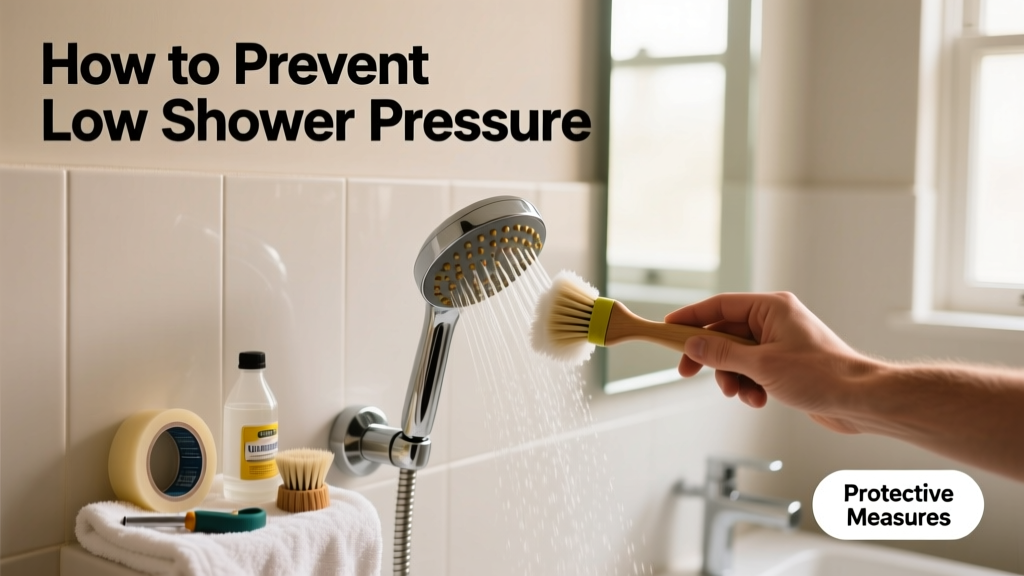
Low shower pressure isn’t just annoying—it’s often the first sign of a deeper plumbing issue waiting to worsen. Ignoring it can lead to mineral buildup that corrodes valves, hidden leaks that waste thousands of gallons annually, or even premature water heater failure. According to the U.S. EPA, 14% of household water usage is from undetected leaks—many starting as subtle pressure drops in fixtures like showers.
Why This Happens
Shower low pressure rarely appears out of nowhere. It’s usually the result of cumulative, preventable issues. Mineral deposits from hard water clog aerators and cartridge ports within months—not years. Cross-linked polyethylene (PEX) tubing installed too tightly or with sharp bends restricts flow over time. And aging pressure-balancing valves, especially in homes built before 2010, lose calibration and throttle output without warning.
Galvanized steel pipes—still present in many homes built before 1980—can develop internal rust scale that shrinks the effective pipe diameter by up to 60% over decades. That’s why a home in Cincinnati with original galvanized supply lines may see pressure drop 35% between the water meter and second-floor shower, per the American Society of Plumbing Engineers’ 2022 field survey.
Maintenance Checklist
| Frequency | Task | Time Required |
|---|---|---|
| Daily | Rinse handheld showerhead after each use if you have hard water (above 7 gpg) | 15 seconds |
| Weekly | Wipe down shower arm threads and inspect for white crust (early calcium sign) | 2 minutes |
| Monthly | Soak showerhead in vinegar for 30 minutes; flush cartridge with clean water | 10 minutes |
| Yearly | Replace rubber washers in handle assembly; test shut-off valve operation | 25 minutes |
Warning Signs
Catch problems early by watching for these non-obvious clues:
- A 2–3 second delay between turning on the faucet and water reaching full force
- Pressure that varies when another fixture (like a toilet or dishwasher) runs simultaneously
- Warm water taking longer than 12 seconds to reach the showerhead after opening the valve
- Visible pitting or flaking on brass shower arm threads—even if no leak is present
These aren’t quirks—they’re diagnostic signals. As master plumber Lena Ruiz told Modern Plumbing Magazine in 2023:
"If your shower pressure drops more than 10 PSI between cold and hot settings, your thermostatic cartridge is likely failing—not your water heater."
Recommended Products
Not all solutions are created equal. Focus on products designed for longevity—not just quick fixes:
- Vinegar soak trays (e.g., OXO Good Grips Showerhead Soak Tray): Holds 12 oz of solution and fits most fixed and handheld heads
- Brass-threaded shower arms with Teflon tape grooves pre-cut (avoid plastic or zinc-coated arms—they degrade under heat and mineral exposure)
- Scale-inhibiting shower filters like the Aquasana AQ-4100 (NSF-certified to reduce calcium & magnesium ions by 92%, per 2021 NSF/ANSI 42 testing)
- Pressure-regulating shower valves such as the Moen 1222 Bricass Cartridge—rated for 500,000 cycles and compatible with homes up to 80 PSI incoming pressure
Can a water softener really help?
Yes—but only if sized correctly. A unit rated for less than your home’s peak demand (e.g., a 24,000-grain softener in a 4-bath home with simultaneous laundry + shower use) will exhaust mid-cycle, allowing hardness to pass through. For homes with >10 gpg hardness, pair softening with annual cartridge cleaning. Learn more about how to size a water softener properly.
Does pipe material affect shower pressure long-term?
Absolutely. PEX-A expands slightly under heat and pressure, maintaining flow integrity better than rigid CPVC over 10+ years. But PEX-B installed with excessive clamping force or kinked during framing can reduce internal diameter by up to 18%. Always verify installer compliance with ASTM F876/F877 standards—and ask for pressure-test logs. See our guide on PEX vs. CPVC for bathroom supply lines.
Why does pressure drop only in the morning?
This points to overnight sediment settling in horizontal supply lines—especially common with older copper or galvanized systems. Flushing the line by running the nearest cold faucet for 90 seconds before showering clears this. If the pattern persists beyond two weeks, inspect your main shutoff valve: partial closure or internal gasket wear can mimic time-based pressure loss.
Is low pressure always a plumbing issue?
No. In homes with tankless water heaters, low flow triggers safety cut-offs. If your unit requires minimum 0.6 GPM to ignite but your showerhead delivers only 0.5 GPM due to clogging, the heater won’t fire—even though cold water flows fine. Check manufacturer specs before assuming the problem is in the walls. You might need a low-flow showerhead compatibility check.
Consistent shower pressure starts long before the first drop hits your skin. It’s built into how you maintain fixtures, monitor water quality, and respond to small anomalies. Replacing a $2 washer yearly costs less than one service call—and prevents cascading failures in connected systems like your water heater or whole-house filtration. Stay ahead, not behind: pressure isn’t something you restore. It’s something you protect.