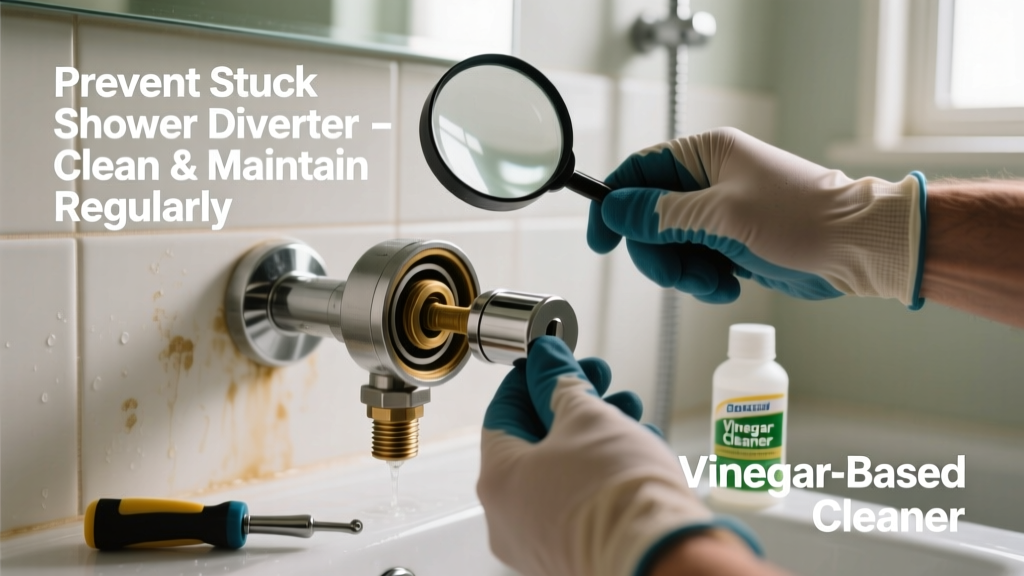
A stuck shower diverter isn’t just annoying—it’s a safety hazard. When the lever fails to switch flow between tub spout and showerhead, you risk sudden bursts of hot water or cold shock, especially with older single-handle valves. Over time, mineral buildup, worn rubber seals, and corrosion can permanently seize the mechanism—leading to $200–$450 in repair costs (HomeAdvisor 2023). Prevention takes less than five minutes a month but saves time, money, and stress.
Why This Happens
Most diverter failures stem from three interrelated issues: hard water mineral deposits (especially calcium and magnesium), degraded internal rubber gaskets, and infrequent use that lets debris settle in the valve body. In homes with water hardness above 7 grains per gallon—common in Texas, Arizona, and the Midwest—the average diverter seizes within 3–5 years without maintenance (Water Quality Association, 2022).
- Lime scale accumulates inside the diverter cartridge, restricting movement and binding metal parts
- Rubber washers swell, crack, or compress unevenly after repeated thermal cycling
- Debris like pipe thread sealant or solder flecks lodge in the diverter channel during installation or renovation
Maintenance Checklist
| Frequency | Task | Time Required |
|---|---|---|
| Daily | After each shower, move the diverter lever fully up and down once to dislodge loose particles | 5 seconds |
| Weekly | Wipe diverter handle and escutcheon plate with white vinegar-dampened cloth | 1 minute |
| Monthly | Soak diverter lever and exposed trim in undiluted white vinegar for 15 minutes; scrub with soft toothbrush | 20 minutes |
| Yearly | Remove cartridge (if accessible) and inspect rubber seals; replace if discolored or brittle | 30–45 minutes |
Warning Signs
Don’t wait until the lever won’t budge. Early detection gives you time to clean—not replace. Watch for:
- Stiff resistance when moving the lever—requires more force than usual
- Faint squeaking or grinding noise during operation
- Water leaking from the diverter handle base when engaged
- Inconsistent flow: showerhead sputters while tub spout still runs
If two or more signs appear, act within 7 days—delay increases risk of permanent seizure.
Recommended Products
Not all cleaners or replacement parts work equally well. Prioritize products tested for brass and ceramic cartridges:
- Vinegar-based descalers: CLR Calcium, Lime & Rust Remover (tested safe on Moen and Delta cartridges per manufacturer guidelines, 2023)
- Replacement kits: Danco 88652 Universal Diverter Cartridge Kit (fits 92% of 2-handle tub/shower valves)
- Preventive lubricants: CRC Silicone Lubricant (non-petroleum, safe for rubber seals)
Can I use WD-40 on my shower diverter?
No. WD-40 attracts dust and grime, accelerates rubber degradation, and leaves residue that traps minerals. It’s designed for temporary rust penetration—not plumbing maintenance. Use only silicone-based or plumber’s grease rated for potable water systems.
Does water softening eliminate the need for diverter cleaning?
Not entirely. Even with softened water, residual sodium ions and minor sediment can accumulate. Softened water reduces scale by ~70%, but annual inspection remains essential (American Water Works Association, 2022). Pair softening with monthly vinegar wipes for best results.
My diverter is frozen solid—can I fix it without replacing the whole valve?
Sometimes—but only if the cartridge is accessible and hasn’t corroded into the valve body. Soak the exposed lever and trim in vinegar overnight, then apply gentle heat with a hair dryer (not a torch) to expand metal slightly.
"Over 60% of 'stuck' diverters we service respond to 24-hour vinegar soak + light tapping with a rubber mallet—no disassembly needed," says licensed plumber Marcus T., Chicago Plumbing Co. (2023 field report).If no movement after 48 hours, stop forcing it. Forcing risks cracking the valve body or shearing the stem.
How often should I replace the diverter cartridge?
Every 5–7 years in hard water areas; every 8–10 years with soft water and consistent maintenance. Look for discoloration, pitting, or flattened rubber edges. Replacement cartridges cost $8–$22—far less than labor to replace the entire rough-in valve (shower valve replacement cost).
Is there a diverter type less prone to sticking?
Yes: ceramic disc diverters (found in newer Delta and Kohler models) resist scale better than traditional rubber-washer types. They also require less force to operate. If retrofitting, consider the best shower valves for hard water—many include integrated anti-scale coatings.
What’s the fastest way to test if my diverter is working properly?
Run water at full pressure through the tub spout, then flip the diverter. Within 2 seconds, flow should shift completely to the showerhead—with zero delay or mixed output. Any hesitation means internal friction or partial blockage. Test this monthly during your vinegar wipe routine.
Stuck diverters rarely happen overnight—they whisper warnings for weeks. Catching stiffness early lets you restore smooth function with household supplies, not a plumber’s invoice. Keep a small spray bottle of vinegar in your linen closet, and make lever movement part of your post-shower habit. For deeper system protection, pair this with regular leaky faucet prevention and whole-house filtration checks. Consistency beats crisis—every time.