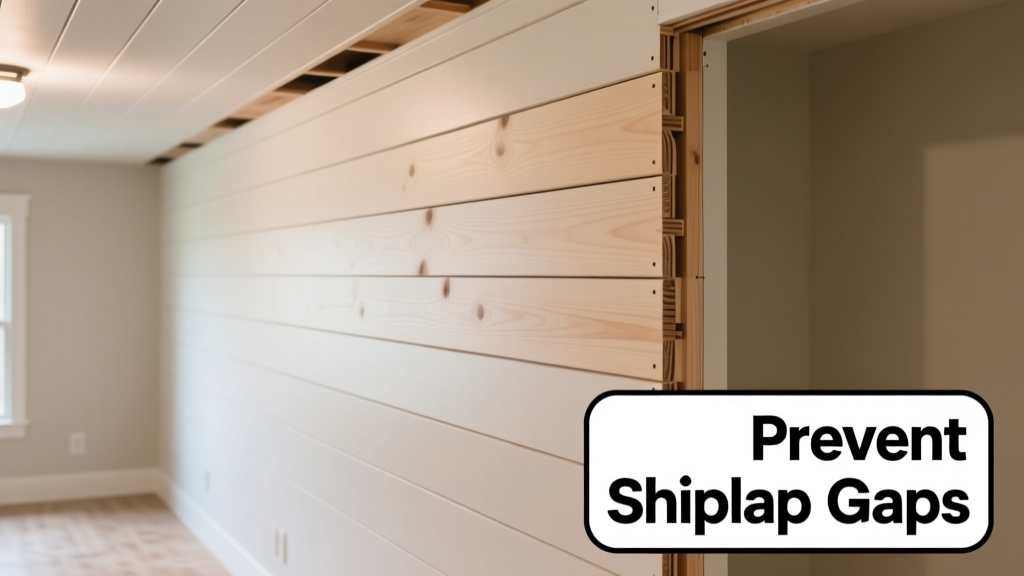
Shiplap gaps aren’t just cosmetic—they’re early warnings of moisture imbalance, poor acclimation, or structural movement. Left unchecked, even 1/16-inch gaps can widen into 1/4-inch cracks, inviting dust, pests, and drafts while undermining the crisp, layered aesthetic that makes shiplap so popular in kitchens, bedrooms, and living rooms.
Why This Happens
Shiplap is milled with a rabbet joint designed to overlap—not lock—so natural wood movement is expected. But problematic gaps stem from preventable causes: wood installed without proper acclimation (less than 72 hours in the room), interior relative humidity swinging more than 20% seasonally, fasteners driven too tightly or too loosely, and subfloor or wall framing that shifts due to settling or moisture exposure. According to the Forest Products Laboratory’s 2022 Wood Handbook, dimensional changes in kiln-dried pine—the most common shiplap material—can exceed 0.3% across grain for every 5% change in moisture content.
- Wood shrinks as indoor RH drops below 35% (common in winter with forced-air heating)
- Gaps widen fastest in rooms with no vapor barrier behind drywall or insulation
- Unfinished backside of boards invites uneven moisture absorption
Maintenance Checklist
| Frequency | Task |
|---|---|
| Daily | Wipe spills immediately—especially near seams in kitchens or bathrooms |
| Weekly | Inspect visible joints in high-traffic zones (e.g., hallway walls, entryway ceilings) |
| Monthly | Check hygrometer readings; adjust humidifier/dehumidifier to hold 35–45% RH |
| Yearly | Hire a certified inspector to assess framing stability and attic ventilation if gaps appear near exterior walls |
Warning Signs
Don’t wait for gaping seams. Early indicators include:
- Fine dust accumulating along board edges (suggests ongoing shrinkage)
- Clicking or popping sounds during temperature swings (wood moving against fasteners)
- Gaps wider at top or bottom of a board but tight in middle (sign of warping or framing shift)
- Discoloration or mineral deposits near seams (indicates moisture wicking through)
Recommended Products
Prevention isn’t about covering gaps—it’s about stabilizing conditions. Prioritize these categories:
- Whole-house humidifiers (e.g., AprilAire 800) that integrate with HVAC to maintain consistent RH
- Acclimation kits: digital hygrometers with logging (like ThermoPro TP55) to verify 72-hour stabilization pre-install
- Back-priming sealers like Zinsser Bulls Eye 1-2-3 to block moisture absorption on unfinished sides
- Construction adhesive with flexibility, such as PL Premium Polyurethane, applied in beads behind each board—not just at studs
Should I caulk shiplap gaps as they appear?
No—caulking hides symptoms but worsens long-term issues. Flexible acrylic caulk traps moisture behind boards, accelerating rot. Instead, identify the cause: if gaps open only in winter and close by summer, it’s RH-driven shrinkage. Address the environment first. If gaps persist year-round, investigate framing movement or inadequate fastening.
Does paint type affect gap formation?
Absolutely. Oil-based paints create a rigid film that restricts wood’s natural expansion. Use 100% acrylic latex paints (e.g., Benjamin Moore Aura) with ≥20% elongation—these move with the substrate. The U.S. Department of Energy’s 2021 Building America report found homes painted with flexible acrylics had 63% fewer visible joint failures over five years versus oil-based finishes.
Can I install shiplap over drywall without furring strips?
You can—but it increases gap risk significantly. Without an air gap behind the boards (created by furring strips), moisture has nowhere to escape, and thermal bridging causes uneven expansion. The National Association of Home Builders’ 2023 Remodeling Manual recommends 3/4" vertical furring strips spaced 16" on center for all interior shiplap installations—even over finished drywall.
How much space should I leave at expansion joints?
Always leave a 1/8" gap at ceiling/wall intersections and around windows and doors—never butt boards directly into trim. This allows for seasonal movement without buckling. As master carpenter and author Scott Schaefer notes in Carpentry for Professionals (2022): “The biggest rookie mistake isn’t misalignment—it’s forgetting that wood breathes. That 1/8" gap is insurance, not laziness.”
“The biggest rookie mistake isn’t misalignment—it’s forgetting that wood breathes. That 1/8" gap is insurance, not laziness.” — Scott Schaefer, Carpentry for Professionals, 2022
Do engineered shiplap boards eliminate gaps?
They reduce them—but don’t eliminate risk. Engineered options like LP SmartSide Lap Siding have a stable core, yet their wood-fiber veneer still responds to humidity. They require the same acclimation, back-priming, and RH management as solid wood. A 2023 study by the APA – The Engineered Wood Association showed engineered lap siding had 40% less gap variation than solid pine—but only when installed per spec and paired with whole-house humidity control.
What’s the best time of year to install shiplap?
Mid-spring (April–May) or early fall (September–October), when indoor RH typically stabilizes between 40–50% and outdoor temps are moderate. Avoid installing during HVAC commissioning months (January or July), when systems run continuously and create extreme indoor RH swings. For more on climate-aligned installation, see our guide on best time to install hardwood floors.
Shiplap should feel intentional—not accidental. Gaps form slowly, but prevention is immediate: monitor humidity, prime backs, use flexible adhesives, and respect wood’s need to move. Pair those habits with annual visual scans—especially after furnace season—and you’ll preserve clean lines for decades. For related strategies on managing wood movement in other applications, explore our articles on prevent floorboard gaps and fix cabinet door gaps.