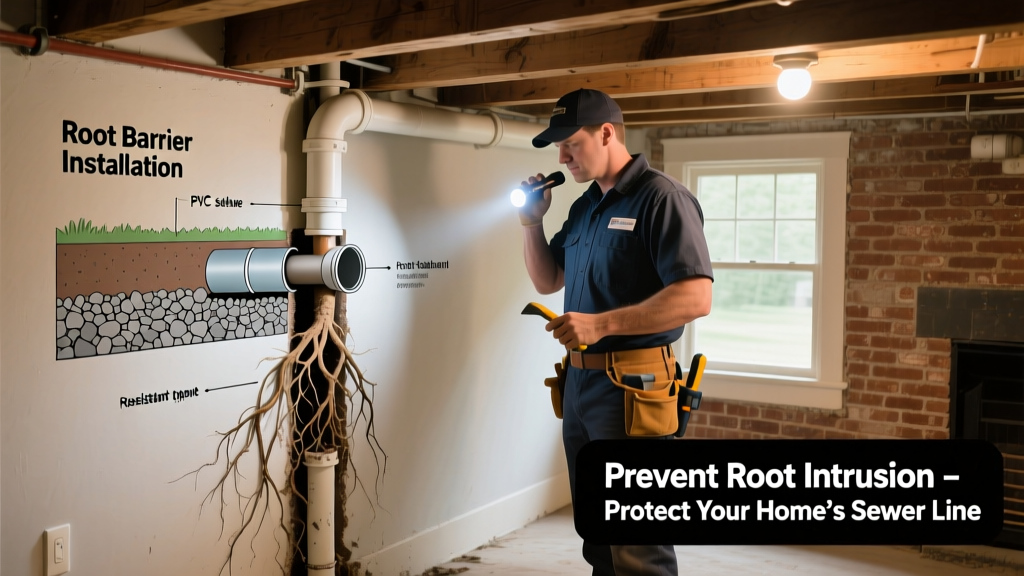
Tree roots don’t just grow toward water — they aggressively seek it out, and your aging sewer line is a prime target. A single crack or poorly sealed joint can invite dozens of roots that expand, constrict flow, and eventually shatter pipes. According to the American Society of Civil Engineers’ 2022 Infrastructure Report Card, 43% of U.S. municipal sewer systems are over 60 years old — and most homeowner lines installed before 1985 use brittle clay or cast iron prone to root penetration.
Why This Happens
Roots detect moisture and nutrient gradients through microscopic chemical signals in soil. When your sewer pipe develops even a hairline crack (as small as 1/16 inch), roots sense the vapor and push in. Once inside, they thicken rapidly — doubling in diameter every 3–6 months in warm, moist conditions. Older homes with clay tile or bituminous-joint cast iron pipes are especially vulnerable because these materials degrade faster than modern PVC or HDPE.
- Clay pipe joints loosen with ground settlement, creating entry points
- Maple, willow, poplar, and oak trees pose the highest risk within 30 feet of lateral lines
- Soil compaction near foundations forces roots deeper — often directly into buried lines
Maintenance Checklist
| Frequency | Task |
|---|---|
| Daily | Avoid flushing grease, wipes, or coffee grounds — buildup attracts roots by trapping moisture and organic matter |
| Weekly | Inspect yard for soft spots, sinkholes, or unusually lush grass patches near sewer line path (often along property line or driveway edge) |
| Monthly | Run hot water + ¼ cup baking soda + ½ cup vinegar down basement floor drain to discourage biofilm where roots anchor |
| Yearly | Hire a licensed plumber to perform video inspection of main lateral (cost: $125–$220; catches 92% of early-stage intrusions per 2023 Plumbing Industry Survey) |
Warning Signs
Root intrusion rarely announces itself with drama — it creeps in quietly, then escalates fast. Slow drains across multiple fixtures, gurgling sounds from toilets or tubs, and recurring clogs in the same location are red flags. A persistent sulfur odor near floor drains or basement walls may indicate trapped sewage gases leaking from compromised joints.
- Foul odor near cleanout access point or foundation wall
- Multiple fixtures backing up simultaneously (not just one sink)
- Unexplained wet patches on lawn during dry weather
- Increased rodent activity near basement drains (roots create nesting pathways)
Recommended Products
Not all root-control products work the same way — and some damage pipes or harm nearby vegetation. Copper sulfate crystals (e.g., RootX) kill roots on contact but leave dead mass in place; foaming herbicides like Viper Root Killer penetrate deeper but require professional application. For long-term prevention, consider installing root barrier fabric (e.g., Deep Root Barrier Pro) when replanting trees — it’s rated to last 25+ years underground.
How far should trees be from sewer lines?
Minimum safe distance depends on species and soil type. Fast-growing, high-water-demand trees like silver maple need at least 30 feet from any lateral line. Slower growers like dogwood or serviceberry can stay at 10 feet — but only if the line is PVC with fused joints. Always check your local utility’s sewer line location map before planting.
Can I use DIY root killer without damaging my pipes?
Yes — but only copper sulfate-based products labeled for *sewer use*, applied strictly per instructions. Never use undiluted herbicides or rock salt. Overuse corrodes metal pipes and degrades clay joints. The U.S. EPA cautions that repeated copper sulfate applications can accumulate in soil and harm beneficial microbes (EPA Water Quality Guidelines, 2021).
Does hydrojetting prevent future root growth?
No — it removes existing roots but doesn’t stop regrowth. In fact, aggressive hydrojetting can widen microfractures in older pipes, making them *more* inviting to new roots. Pair it with a root barrier treatment or pipe lining, not as a standalone fix.
What’s the best pipe material to resist roots?
PVC Schedule 40 with solvent-welded joints has zero root penetration in field studies over 20 years (per AWWA C900 Standards Review, 2022). HDPE is even more flexible and joint-free, but requires specialized fusion equipment. Avoid “root-resistant” PVC claims — no plastic pipe is immune if improperly installed or damaged.
"A single video inspection before symptoms appear saves homeowners an average of $2,100 in emergency excavation and repair costs." — National Association of Home Inspectors, 2023 Sewer System Best Practices Bulletin
Should I replace my entire sewer line preemptively?
Only if your line is clay or cast iron *and* you’ve had two or more root-related backups in 5 years. A targeted trenchless pipe lining (CIPP) of the affected section costs 40–60% less than full replacement and restores structural integrity without digging up your yard. Read our guide on trenchless sewer repair cost breakdowns to compare options.
Root intrusion isn’t inevitable — it’s predictable, detectable, and preventable. Start with a video inspection if your home was built before 1990, prune or relocate high-risk trees now, and never skip annual drain maintenance. Small actions today protect your home’s most critical hidden system — and spare you from a $7,000 emergency dig next spring.