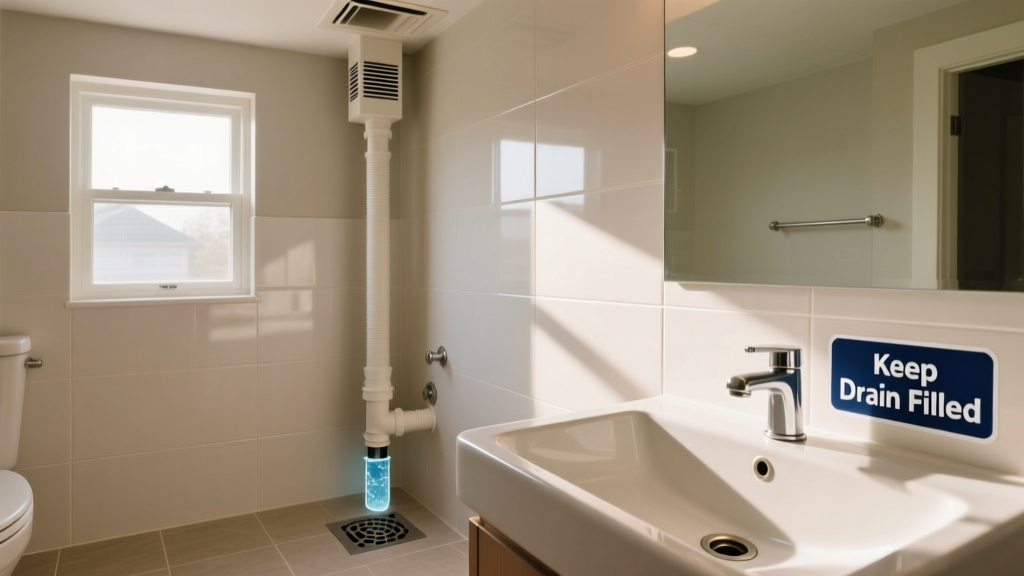
Sewer gas isn’t just unpleasant—it’s dangerous. Hydrogen sulfide and methane can cause headaches, nausea, and in high concentrations, respiratory distress or asphyxiation. According to the U.S. EPA, chronic low-level exposure to sewer gas is linked to fatigue and memory loss in residential settings (2022 Indoor Air Quality Report). Prevention isn’t optional; it’s essential home maintenance.
Why This Happens
Sewer gas enters your home when the physical or hydraulic barrier between drains and the sewer line fails. The most common culprits are dry P-traps, cracked vent pipes, damaged wax rings under toilets, and improperly sealed cleanout plugs. A P-trap holds water like a seal—and if that water evaporates (especially in guest bathrooms or floor drains used infrequently), the path opens straight to the sewer.
- Evaporation in unused floor drains (e.g., basement utility sinks)
- Cracked or disconnected roof vent stacks allowing gas to leak into attics
- Worn-out toilet wax rings—65% of sewer gas complaints trace back to this single component (Plumbing-Inspection.org, 2023)
- Blocked or frozen vent pipes during winter months
Maintenance Checklist
| Frequency | Task |
|---|---|
| Daily | Run water for 10 seconds in every sink, shower, and floor drain you use less than once per week |
| Weekly | Check for dampness or discoloration around base of toilets (sign of failing wax ring) |
| Monthly | Pour ½ cup baking soda + ½ cup white vinegar down rarely used drains, then flush with hot water after 15 minutes |
| Yearly | Hire a licensed plumber to perform a smoke test on your vent stack and drain lines |
Warning Signs
Don’t wait for a full-blown rotten-egg stench. Early detection saves time and money. Watch for:
- A faint sulfur odor near a specific fixture (e.g., only in the laundry room sink)
- Gurgling sounds from drains or toilets when another fixture runs
- Slow drainage paired with odor—often indicates partial vent blockage
- Condensation or mold growth on ceiling joists in attic above bathroom vents
Recommended Products
Not all products solve the root cause—but some help maintain integrity or detect problems early:
- Trap primers: Automatic devices that drip water into infrequently used P-traps (e.g., Zurn Z1075)
- Vent pipe heaters: Prevent ice buildup in cold climates (e.g., Heat-Line HLP-12)
- Toilet wax ring alternatives: Rubber gaskets like Fluidmaster Better Than Wax last up to 10 years vs. 3–5 for traditional wax
- Drain camera kits: For DIY inspection of visible trap and vent sections (e.g., Depstech Wi-Fi Endoscope)
How often should I run water in guest bathroom drains?
At least once every 5–7 days. Evaporation in a standard 1.5-inch P-trap occurs in about 10 days in 40% relative humidity—faster in dry, heated homes. Running water for 15 seconds refills the seal completely. For seasonal cabins, consider installing a trap primer instead of relying on memory.
Can a clogged garbage disposal cause sewer gas?
Yes—but indirectly. Food debris buildup creates anaerobic decay inside the disposal chamber, producing hydrogen sulfide. It mimics sewer gas but originates locally. Clean disposals monthly with ice cubes + rock salt, then flush with boiling water. If odor persists after cleaning, inspect the P-trap beneath the sink—it may be cracked or leaking.
Why does sewer smell come and go?
Intermittent odors usually point to a partial vent blockage or a trap seal that’s *almost* dry—not fully evaporated. Wind direction shifts can also draw gases down a compromised vent stack. According to the International Association of Certified Home Inspectors (InterNACHI, 2021), 72% of “on-and-off” sewer smells resolve after clearing roof vent obstructions like bird nests or leaf packs.
Is sewer gas smell always a plumbing issue?
Mostly—but not always. Rarely, a cracked sewer line under a slab or near a foundation wall leaks gas upward through concrete pores or soil. If all traps are full, vents are clear, and the odor lingers strongest near walls or floors (not fixtures), call a plumber for a slab leak inspection. Don’t ignore it: undetected leaks can erode soil support and compromise structural integrity over time.
What’s the safest way to test for sewer gas?
Never use a flame or match—methane is flammable. Instead, use a $25 handheld combustible gas detector (e.g., UEi Test Instruments CD100A) calibrated for hydrogen sulfide and methane. Or hire a pro to conduct a non-toxic smoke test—where harmless white smoke is pumped into the system to visually reveal leaks. As plumbing inspector Maria Chen advises:
“If you smell it, don’t chase it with air freshener. Trace it with water, not words.”
Can sewer gas make me sick?
Yes. Short-term exposure causes eye irritation, coughing, and dizziness. Chronic exposure correlates with insomnia and reduced lung function, per CDC’s 2023 Environmental Health Tracking Network data. Infants, elderly residents, and people with asthma are especially vulnerable. If multiple household members report similar symptoms alongside odor, ventilate immediately and contact a plumber—and your local health department if levels exceed 10 ppm H₂S.
Preventing sewer gas isn’t about perfection—it’s about consistency. A 30-second weekly check at each drain adds up to year-round safety. Pair that with one professional inspection every 12–18 months, and you’ll likely never need to ask how to fix sewer gas smell again. Your nose knows something’s wrong—but your routine keeps it right.