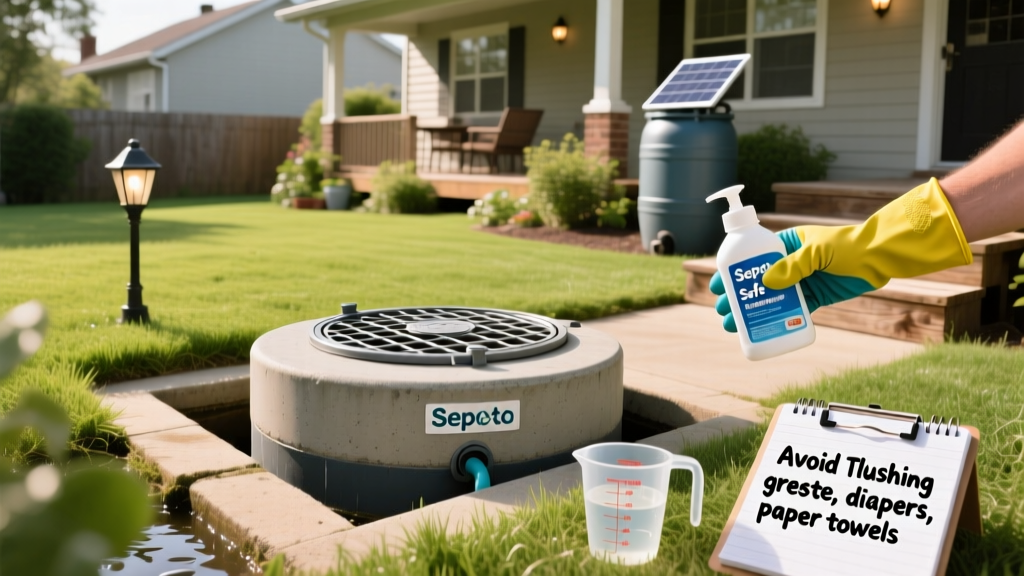
A full septic tank isn’t just inconvenient—it’s a health hazard and expensive liability. When solids accumulate past the 30% threshold, effluent flow backs up into drains or surfaces in your yard, contaminating soil and groundwater. According to the U.S. EPA, failing septic systems contribute to over 20% of household water contamination incidents annually—and emergency pump-outs cost $400–$900, nearly triple routine service.
Why This Happens
Septic tanks fill not because of volume alone, but because of biological imbalance and physical overload. Bacteria can’t break down waste fast enough when you flush non-biodegradables, use antibacterial cleaners excessively, or overload the system with water in short bursts. Soil compaction around the drainfield—often from heavy vehicles or landscaping—also halts absorption, causing hydraulic failure even if the tank itself isn’t technically ‘full’.
- Flushing wipes, dental floss, or cat litter (even ‘flushable’ brands)
- Using garbage disposals regularly (adds 50–70% more solids)
- Running multiple loads of laundry in one day (15–20 gallons per load)
- Planting trees within 30 feet of the drainfield (roots invade pipes)
Maintenance Checklist
| Frequency | Action | Notes |
|---|---|---|
| Daily | Use only septic-safe toilet paper and avoid flushing anything beyond human waste and tissue | Check labels: look for NSF/ANSI 46 certification |
| Weekly | Spread out water usage—no more than 2 laundry loads/day | Fix dripping faucets; a single leak adds ~3,000 gallons/year |
| Monthly | Inspect cleanout ports for standing water or foul odors | Record any changes in drainage speed or gurgling sounds |
| Yearly | Professional inspection + pumping if sludge layer exceeds 12 inches | Per septic tank pumping cost data, average interval is every 3–5 years for 3-bedroom homes |
Warning Signs
Don’t wait for sewage backup. Early detection saves thousands. Watch for these red flags:
- Slow-draining sinks, showers, or toilets—even after snaking
- Persistent sewer odor near drains, the tank lid, or in the basement
- Lush green patches or soggy ground over the drainfield, especially during dry weather
- Gurgling noises from plumbing fixtures when not in use
- Standing water or pooling near the tank or distribution box
Recommended Products
Not all additives are equal—and many do more harm than good. Stick with EPA-registered, enzyme-based treatments that support natural bacterial action without disrupting pH balance.
- Septic-safe detergents: Look for “low-sudsing” and “biodegradable” labels (e.g., Seventh Generation Free & Clear)
- Enzyme boosters: Bio-Clean (tested by the University of Minnesota Extension, 2022) shows measurable reduction in scum layer thickness after 90 days
- Drainfield aerators: For older systems, consider an aerobic pretreatment unit like Norweco Singulair (requires electricity but cuts pumping frequency by ~40%)
How often should I pump my septic tank?
Every 3–5 years for a standard 1,000-gallon tank serving 3–4 people—but it depends on usage. A family of six with a garbage disposal may need pumping every 18–24 months. Always confirm sludge depth with a professional probe during inspection. As the National Environmental Services Center advises:
“Pumping on a fixed calendar schedule is less reliable than monitoring actual sludge accumulation—up to 40% of tanks pumped unnecessarily miss critical early warning signs.”
Can I use bleach or vinegar safely?
Yes—but sparingly. One cup of household bleach per week won’t harm bacteria, but daily use or concentrated solutions will. Vinegar is safer for weekly drain maintenance, though never mix with bleach (toxic chlorine gas forms). For regular cleaning, choose plant-based, non-antibacterial soaps like Dr. Bronner’s Pure-Castile.
Does rain cause septic backup?
Heavy rainfall saturates the drainfield, preventing effluent absorption—even if your tank isn’t full. This is called hydraulic overloading. Install downspout extensions (minimum 5 feet from the drainfield), grade soil away from the area, and avoid driving or parking on the field during wet periods. According to the Insurance Institute for Business & Home Safety's 2023 report, 62% of septic failures during storms occurred in systems with ungraded or compacted drainfields.
Are septic tank additives worth it?
Only if used correctly—and only certain types. Probiotic additives (like Rid-X) show marginal benefit in new or stressed systems, but the EPA states they’re unnecessary for well-maintained tanks. Enzyme-only products degrade faster than bacteria and offer no long-term advantage. Skip chemical ‘cleaners’ entirely—they corrode pipes and kill beneficial microbes.
What’s the safest way to locate my septic tank?
Start with your home’s as-built diagram (check county records or builder files). If unavailable, probe gently with a metal rod every 10 feet starting 10 feet from your main bathroom wall—most tanks sit between 10–25 feet out. Never dig with power tools. Once located, mark the lid with a paver or landscape stone for future access. See our how to find septic tank guide for step-by-step visuals.
Preventing a full septic tank isn’t about perfection—it’s about consistency. Small habits, tracked over time, build system resilience. Keep a log of pumping dates, water usage spikes, and any odd smells or slow drains. That notebook becomes your best defense against surprise failures—and your most valuable tool for working with licensed professionals when needed.