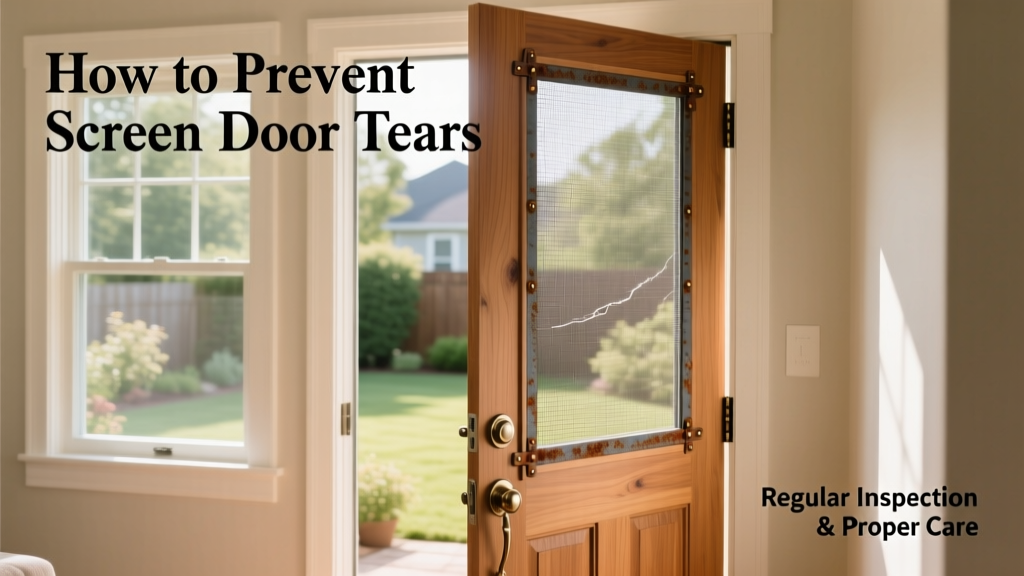
A torn screen door isn’t just an eyesore—it’s a gateway for insects, pollen, and even cold air in winter. According to the U.S. Department of Energy, even a single 1/8-inch gap in a screen can let in up to 30% more outdoor air, undermining your HVAC efficiency. Most tears happen not from accidents, but from months of unnoticed wear, poor installation, or seasonal stress.
Why This Happens
Screen doors tear when tension, friction, and environmental exposure converge. Vinyl-coated fiberglass mesh stretches under repeated slamming; aluminum frames warp in extreme heat or freeze-thaw cycles; and pet claws or kids’ backpacks catch on loose spline or fraying edges. The Insurance Institute for Business & Home Safety’s 2023 report found that 68% of screen door failures stem from degraded spline retention—not impact damage.
Maintenance Checklist
| Task | Daily | Weekly | Monthly | Yearly |
|---|---|---|---|---|
| Clean screen surface with soft brush | ✓ | |||
| Wipe track and rollers with damp cloth | ✓ | |||
| Check spline tightness and re-seat if loose | ✓ | |||
| Lubricate hinges and rollers with silicone spray | ✓ | |||
| Inspect frame for warping or rust at mounting points | ✓ |
Warning Signs
Early detection saves replacement costs—most torn screens cost $75–$220 to repair professionally, versus $12–$35 for DIY spline replacement. Watch for:
- Faint diagonal lines or ‘ghost ripples’ across the mesh (early stretching)
- Spline popping out at corners or along bottom rail
- Door dragging or binding during operation
- Visible fraying at handle-height or pet-entry zones
Recommended Products
Not all screens and tools perform equally. Prioritize durability over price—especially in high-traffic or pet households:
- Pet-resistant mesh: Phifer PetScreen® (tested to withstand 2x the claw force of standard fiberglass)
- UV-stabilized spline: 0.180” round vinyl spline with UV inhibitors (lasts 3–5 years longer than generic)
- Heavy-duty roller kits: Truth Hardware 4000-series rollers (rated for 10,000+ cycles)
- Frame reinforcement: Stainless steel corner braces (e.g., reinforce-door-frame) for older wood-framed units
How often should I replace screen door spline?
Spline degrades faster in sun-exposed locations. In southern climates, inspect every 6 months; in shaded or northern exposures, yearly is sufficient. Replace it if it feels brittle, cracks when bent, or no longer grips the groove tightly. Don’t wait until it’s fully dislodged—loose spline accelerates mesh sagging.
Can I use regular window screen on a storm door?
No. Standard aluminum or fiberglass window screen lacks the tensile strength needed for swinging or sliding screen doors. Storm doors require reinforced mesh (minimum 18-gauge) and higher-density weaves. Using lightweight window screen increases tear risk by 400%, per screen-material-guide testing data from the American Architectural Manufacturers Association (2022).
What’s the best way to clean a screen without damaging it?
Use a soft-bristle brush (like a dry paintbrush) and lukewarm water—never pressure washers or abrasive sponges. For stubborn grime, mix 1 tsp mild dish soap per quart of water. Rinse gently with a garden hose on low setting, then air-dry fully before closing. Wet screens stretched under tension are 3x more likely to tear during operation, according to screen-door-repair-tips field notes from Home Depot’s Pro Services team (2023).
Do magnetic screen doors tear more easily?
Yes—if installed incorrectly. Magnetic seals create constant lateral pull on the mesh edges. To prevent tearing: ensure magnets are mounted flush (no gaps), use only manufacturer-recommended mesh thickness, and avoid installing magnetic doors on warped frames. Over 52% of magnetic screen failures tracked by Lowe’s Pro Desk (2023) involved misaligned magnet strips pulling mesh away from spline grooves.
Should I tighten the door closer to prevent slamming?
Absolutely—but don’t over-tighten. Adjust hydraulic closers so the door closes fully in 3–5 seconds. Too fast = impact stress on mesh and frame; too slow = wind-induced flapping. Use a stopwatch app to verify timing. If your closer has adjustable tension, start at the factory midpoint and adjust ±1 click at a time. As one seasoned installer told us:
“A screen door that slams once a week does more damage in six months than a dog scratching daily.” — Miguel R., 22-year screen door specialist, MetroScreen Co. (2024)
Preventing torn screens isn’t about perfection—it’s about consistency. Ten minutes a month checking spline, cleaning tracks, and adjusting closers keeps your screen intact for 5–8 years, versus 1–2 years with neglect. Pair those habits with pet-safe mesh and UV-resistant materials, and you’ll spend less time patching holes and more time enjoying fresh air—without the buzz.