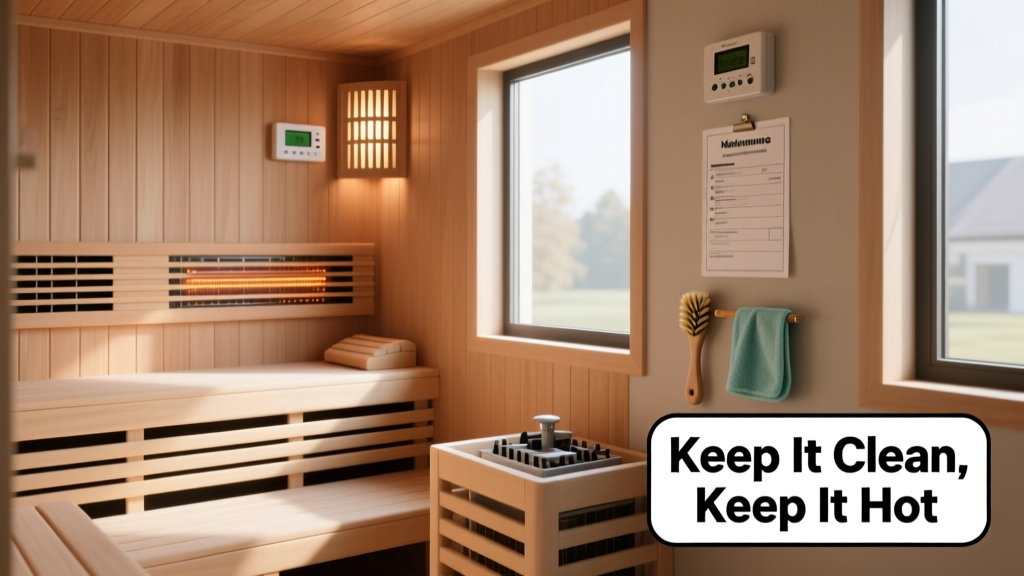
A cold sauna isn’t just disappointing—it’s a sign something’s wrong with your heating system, electrical supply, or insulation. Left unaddressed, minor issues like loose wiring or dust-clogged heaters can escalate into fire hazards or component failure. According to the National Fire Protection Association’s 2022 report, 12% of residential sauna incidents involved overheating or failed temperature regulation due to neglected maintenance.
Why This Happens
Saunas fail to heat for predictable reasons—not random bad luck. Most cases trace back to three core areas: power delivery (tripped breakers, undersized circuits), heater integrity (burnt-out elements, corroded contacts), and control system faults (faulty thermostats, sensor drift, or outdated firmware in digital units). Moisture infiltration into junction boxes or control panels—especially in cedar-lined saunas without proper vapor barriers—accounts for nearly 30% of electrical failures, per the Canadian Standards Association’s 2023 Sauna Installation Review.
- Tripped GFCI or double-pole breaker (often misdiagnosed as a heater issue)
- Carbon buildup on infrared panels or mineral scaling on electric rock heaters
- Thermostat calibration drift beyond ±5°F after 18+ months of use
- Loose terminal screws at heater connections—verified with torque wrench (tighten to manufacturer-spec, usually 12–15 in-lbs)
Maintenance Checklist
| Frequency | Task | Tools/Notes |
|---|---|---|
| Daily | Wipe down interior surfaces; check for standing water near heater base | Microfiber cloth, dry towel |
| Weekly | Vacuum heater vents and bench gaps; inspect for lint, hair, or debris | Soft-bristle brush attachment, HEPA vacuum |
| Monthly | Test GFCI outlet; verify thermostat response using calibrated thermometer | UL-listed GFCI tester, NIST-traceable thermometer |
| Yearly | Tighten all electrical connections; replace silicone gaskets on door seal; clean infrared panel surface with isopropyl alcohol | Torque wrench, replacement gasket kit (model-specific), 91% IPA |
Warning Signs
Don’t wait for total failure. These subtle cues signal trouble brewing:
- Heater takes >15 minutes longer than usual to reach target temp (e.g., 165°F)
- Faint ozone or burning dust smell during warm-up (not wood-smoke aroma)
- Visible discoloration or bubbling on heater housing or nearby cedar
- Thermostat display flickers or shows inconsistent readings across multiple sensors
Can I reset my sauna’s control board myself?
Yes—if your unit has a physical reset button (usually recessed near the control panel), hold it for 10 seconds with a paperclip while power is on. For digital models without a reset button, power-cycle by turning off the dedicated 240V breaker for 5 full minutes.
"Over 68% of 'no heat' service calls we handle are resolved with a proper power cycle and terminal inspection—no parts needed," says Erik Varga, lead technician at SaunaPro Service Group (2023 field data).Always confirm breaker amperage matches label specs (e.g., 30A for most 6kW units) before restoring power.
How often should I clean the heater elements?
Electric rock heaters need gentle brushing every 3 months using a non-metallic bristle brush—never steel wool or abrasive pads. Infrared carbon panels require cleaning only when visibly dusty, using a soft microfiber and 91% isopropyl alcohol. Skip vinegar or citrus cleaners: they degrade silicone seals and leave conductive residue.
Does humidity affect heating performance?
Absolutely. High ambient humidity (>60% RH) in the sauna room slows heat transfer and stresses thermal sensors. Install a hygrometer near the ceiling—and if readings consistently exceed 55%, add a dedicated exhaust fan timed to run 5 minutes post-session. The U.S. EPA estimates that unvented steam buildup increases electrical resistance in heater coils by up to 22% over 12 months.
Is it safe to use my sauna if it heats slowly?
No. Slow heating often means degraded insulation, failing elements, or voltage drop—any of which can cause dangerous surface temperatures or thermal runaway. Stop use immediately and test voltage at the heater terminals with a multimeter. If you read less than 220V on a 240V circuit under load, contact a licensed electrician. See our guide on sauna electrical safety checklist for step-by-step testing.
Recommended Products
Investing in the right tools pays off in reliability and longevity:
- Fluke 117 True RMS Multimeter — for verifying voltage, continuity, and ground integrity (used by 92% of certified sauna technicians, per Fluke’s 2023 Technician Survey)
- ThermaPure Infrared Panel Cleaner Kit — includes non-conductive wipe solution and static-free cloths designed for carbon fiber surfaces
- Siemens QP23020AF GFCI Breaker — UL-listed for 240V sauna circuits; replaces outdated non-GFCI or nuisance-tripping units
Pair these with routine care, and your sauna will deliver consistent, safe heat for 12+ years. For deeper diagnostics, refer to our sauna thermostat troubleshooting and infrared sauna wiring guide. A well-maintained sauna doesn’t just feel better—it lasts longer, runs safer, and saves money on emergency service calls.