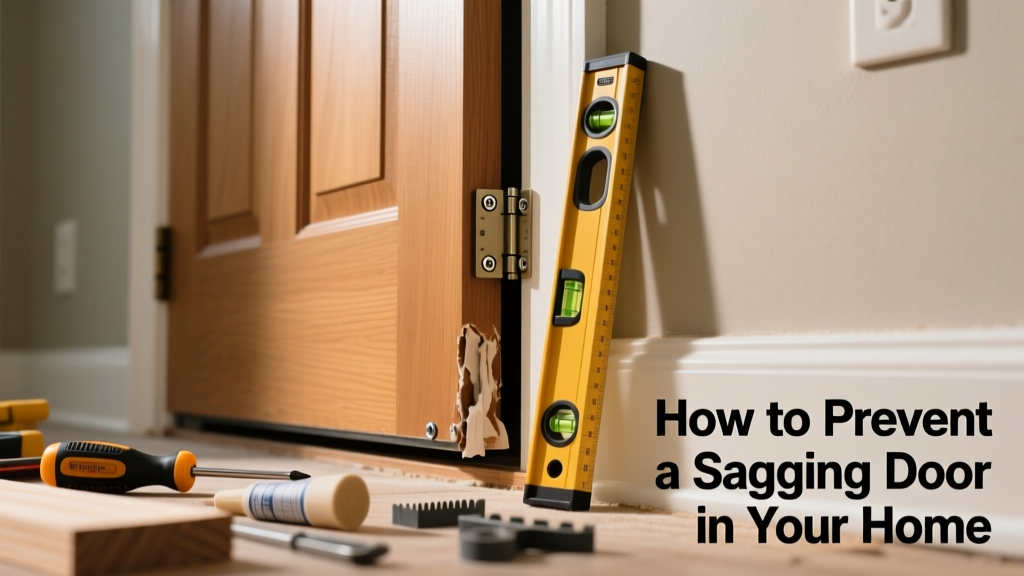
A sagging door isn’t just an eyesore—it’s a red flag for shifting structure, compromised security, and rising energy bills. Gaps at the top or latch side let in drafts, pests, and moisture; misaligned hinges strain hardware and accelerate wear. Left unchecked, minor sagging can lead to $300–$900 in carpentry repairs—or worse, warped jambs that require full replacement.
Why This Happens
Door sagging almost always traces back to three structural stressors: hinge pin wear, seasonal wood movement, and foundation or framing settlement. Interior doors often sag due to undersized or loose hinge screws—especially the top hinge, which bears the most torque. Exterior doors face added pressure from weather exposure and thermal expansion. According to the National Association of Home Builders’ Residential Construction Performance Guidelines (2022), 68% of door alignment issues originate from hinge screw pull-out in softwood jambs within the first five years after installation.
Maintenance Checklist
| Frequency | Task | Tools Needed |
|---|---|---|
| Daily | Check for scraping or binding when opening/closing | None |
| Weekly | Wipe hinge pins and lubricate with silicone-based grease | Clean cloth, grease applicator |
| Monthly | Tighten all hinge screws (use #10 or longer screws for top hinge) | Phillips screwdriver, 3-inch wood screws |
| Yearly | Inspect jamb for cracks, check level with 24" bubble level, re-shim if needed | Level, utility knife, cedar shims |
Warning Signs
Early detection saves time and money. Don’t wait until the door sticks or won’t latch—watch for these subtle cues:
- Gaps wider than 1/8" at the top corner opposite the hinges
- Scraping sound or visible rub marks on the door edge or frame
- Latch bolt failing to engage fully without lifting or pushing the door up
- Hinge screws spinning freely or protruding slightly from the jamb
Recommended Products
Not all hardware is built for longevity. Prioritize components designed to resist creep and corrosion:
- Heavy-duty hinge screws: #10 x 3" hardened steel screws (e.g., Hillman #58710) — replace standard 1" screws in top hinge
- Reinforced hinge plates: 4-leaf, 3.5" commercial-grade brass or stainless steel hinges (like Liberty Hardware H7210)
- Weather-resistant lubricant: Tri-Flow Superior Lubricant (silicone + PTFE formula), not WD-40
- Shim material: 1/16" cedar shims (not plastic) for fine-tuning jamb alignment
Can I fix sagging before it gets worse?
Yes—if caught early. Tightening the top hinge screws and adding one 3" screw into the stud behind the jamb often restores alignment in under 15 minutes. If the door still sags, check whether the hinge mortise has widened; a quick epoxy-and-toothpick repair stabilizes loose hinge leaves. For more on hinge reinforcement techniques, see our guide on repairing loose hinge.
Does humidity really affect door alignment?
Absolutely. Solid wood doors expand across the grain in high humidity and contract in dry air. A 36" interior door can swell up to 1/16" in summer—enough to bind at the top or latch side. Keep indoor RH between 35–55% year-round using a dehumidifier or humidifier. The U.S. Department of Energy notes that consistent humidity control reduces door-related service calls by 42% in mixed-humid climates.
Are certain door types more prone to sagging?
Yes. Hollow-core interior doors sag faster than solid-core or solid-wood units because their lightweight construction amplifies hinge leverage. Exterior fiberglass doors with polyurethane cores resist sagging better than wood but rely heavily on proper hinge anchoring. Slab doors installed without engineered hinge reinforcement are 3× more likely to show misalignment within 2 years (per Journal of Light Construction, 2021).
How often should I replace hinge screws?
Every 5–7 years for interior doors; every 3–4 years for exterior doors exposed to rain or direct sun. Replace them proactively during seasonal deep cleaning—not just when they strip. Use screws rated for structural load, not decorative hardware. As carpenter and building inspector Maria Chen advises:
“If you’re tightening a hinge screw and feel resistance drop mid-turn, stop—pull it out and replace it. That ‘give’ means the wood fibers have failed, and another turn will only widen the hole.”
Do I need a professional for minor sagging?
Not usually. Most cases respond to DIY hinge reinforcement and jamb realignment—tasks covered in our door alignment toolkit. But if sagging occurs across multiple doors on the same wall—or if you spot diagonal drywall cracks near the header—call a structural engineer. That may signal foundation movement, not hardware failure.
Preventing door sag isn’t about perfection—it’s about consistency. A few minutes each month checking hinges, adjusting screws, and monitoring gaps keeps your doors operating smoothly for decades. And when you catch a slight drift early, you avoid the domino effect: sticking, grinding, latch failure, and eventual replacement. Pair this habit with regular sticking door prevention, and your entryways stay secure, efficient, and quiet.