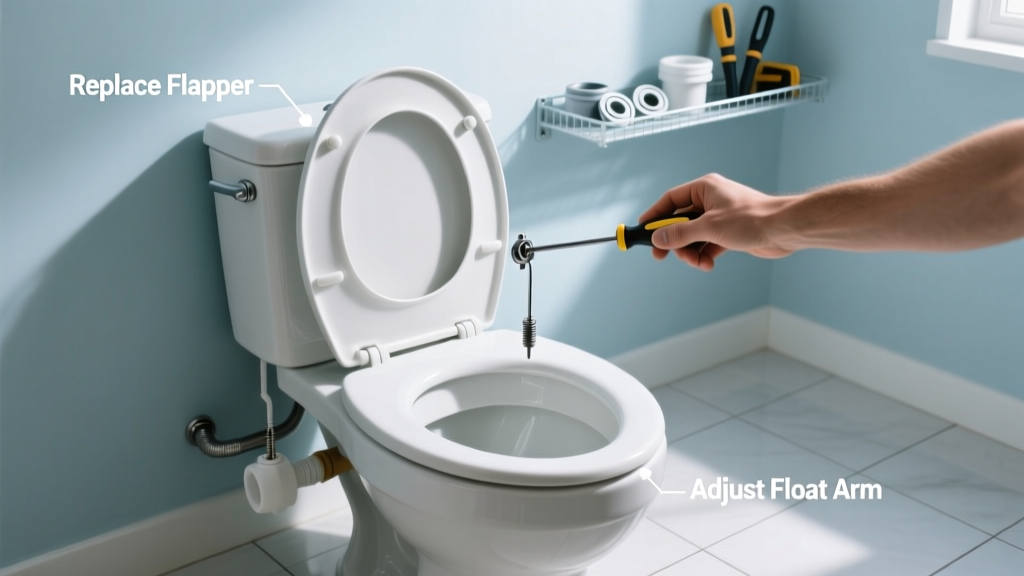
A running toilet isn’t just an annoying hiss—it’s a silent water waster that can flush away over 200 gallons per day. According to the U.S. EPA, household leaks account for nearly 1 trillion gallons of wasted water nationwide each year, and running toilets make up nearly 30% of those losses (EPA WaterSense, 2023). Left unchecked, they strain your septic system, inflate utility bills, and may even cause moisture damage around the base.
Why This Happens
Most running toilets stem from wear inside the tank—not faulty plumbing outside it. The flapper valve degrades after 3–5 years, losing its seal. Fill valves get mineral-coated or misadjusted. Overflow tubes crack or sit too low. And float arms bend or corrode, throwing off water level calibration. Hard water areas see failure rates 2.3× higher than soft-water regions (Plumbing Manufacturers Institute, 2022).
Maintenance Checklist
| Frequency | Task | Time Required |
|---|---|---|
| Daily | Listen for intermittent refills or phantom flushes | <1 minute |
| Weekly | Check tank water level: should be 1 inch below overflow tube rim | 2 minutes |
| Monthly | Inspect flapper for warping, grit, or calcium buildup; clean with vinegar-soaked cloth | 5 minutes |
| Yearly | Replace flapper and fill valve; test shutoff valve operation | 20 minutes |
Warning Signs
Catch trouble early—before it becomes a constant drip or full-on run. These cues mean action is needed within 48 hours:
- A faint gurgling or trickling sound when the toilet hasn’t been used for 10+ minutes
- Water rippling in the bowl without flushing
- Condensation on the outside of the tank during normal use
- The tank refills every 5–10 minutes, even with no usage
Don’t wait until you hear the telltale “shhh-shhh-shhh” — by then, the flapper has likely failed completely.
Recommended Products
Not all replacement parts are equal. Choose components designed for longevity and compatibility:
- Flappers: Fluidmaster 502P (rubber compound resists chlorine and hard-water scaling)
- Fill valves: Korky Quiet-Fill Plus (adjustable height, dual-seal design)
- Shutoff valves: BrassCraft quarter-turn ball valves (full-flow, leak-tested to 150 psi)
- Cleaning tools: Oatey Calcium Lime Rust Remover gel + soft nylon brush for tank interiors
How often should I replace the flapper?
Every 3–5 years—even if it seems fine. Rubber deteriorates invisibly. In homes with well water or municipal systems using chloramine, replace it every 2–3 years. A cracked or warped flapper won’t seal fully, letting water bleed into the bowl at up to 500 gallons per day.
Can I adjust the water level myself?
Yes—and it’s one of the fastest fixes. Locate the float (ball-arm or cup-style). For ball-arm models, gently bend the arm downward ¼ inch. For cup floats, slide the adjustment clip down the rod. Always verify the final water level sits 1 inch below the top of the overflow tube. Too high? Water spills constantly. Too low? Weak flushes and incomplete bowl refill.
What if my toilet runs only after flushing?
This usually points to a slow-closing flapper or improperly seated chain. Check that the chain has ¼ inch of slack—not taut, not coiled. If the flapper lifts but doesn’t drop fully, replace it. Also inspect the flush valve seat for pitting or debris: a dime-sized scratch can break the seal.
Is a running toilet dangerous?
Not immediately life-threatening—but yes, it poses real risks. Continuous overflow can saturate subflooring, encouraging mold growth under tile or vinyl. In older homes with cast-iron drain lines, constant water flow accelerates corrosion. And if your home uses a septic system, excess water overwhelms the drain field, risking surfacing effluent or system failure.
Do smart leak detectors help prevent running toilets?
They don’t prevent—but they alert fast. Devices like the Moen Smart Water Detector or Phyn Plus detect abnormal flow patterns and shut off water remotely. They’re especially useful for vacation homes or multi-unit buildings. Just remember: detection isn’t prevention. Pair them with routine maintenance, not instead of it.
Can hard water cause premature toilet part failure?
Absolutely. The U.S. Geological Survey classifies 85% of U.S. homes as having ‘hard’ or ‘very hard’ water (USGS, 2021). Calcium and magnesium deposits build up on flapper seals, fill valve diaphragms, and float mechanisms. Install a whole-house water softener—or at minimum, soak flappers monthly in white vinegar for 15 minutes to dissolve scale.
"A properly maintained toilet should never run more than 2 seconds after flushing. Anything longer means something’s out of spec—and that ‘something’ is almost always fixable with under $15 in parts and 10 minutes of time." — Mike R., master plumber and Plumbing Code Instructor, NEHA Certified, 2023
Preventing a running toilet isn’t about luck or brand loyalty—it’s about consistency. Replace worn parts before they fail, monitor water levels monthly, and treat hard water aggressively. You’ll protect your plumbing, conserve thousands of gallons yearly, and avoid the 3 a.m. panic of a flooded bathroom floor. For deeper troubleshooting, see our toilet flapper replacement guide and fill valve troubleshooting steps. If your shutoff valve won’t close fully, read our how to replace a toilet shutoff valve walkthrough.