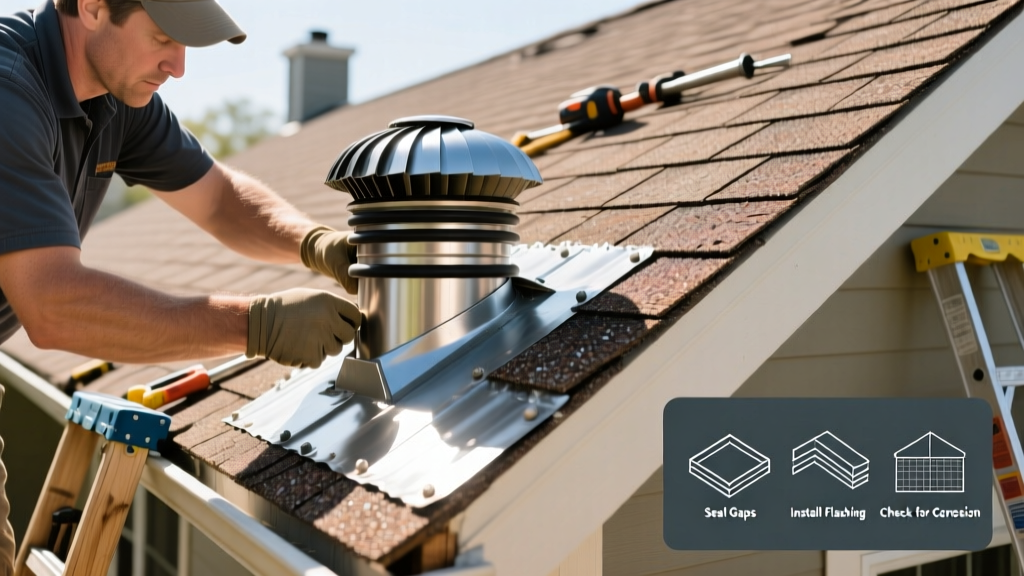
A single leaking roof vent can dump hundreds of gallons of water into your attic each year—enough to warp sheathing, rot rafters, and trigger hidden mold growth behind drywall. According to the Insurance Institute for Business & Home Safety's 2023 report, 22% of residential water intrusion claims trace back to failed roof penetrations like vents—not flashing or shingles.
Why This Happens
Roof vent leaks rarely occur because the vent itself fails. They happen when the seal between the vent boot and roof surface breaks down—or when installation shortcuts go unnoticed for years. Common root causes include:
- Brittle or cracked rubber boots (especially older EPDM models over 8–10 years old)
- Improper nailing: too few nails, nails driven through the boot’s flange instead of under it
- Missing or deteriorated roofing cement beneath the boot’s base
- Ice dam pressure forcing water under the boot’s edge during winter thaws
- Shingle overhangs cut too short, leaving the boot’s top edge exposed to direct rain runoff
Maintenance Checklist
| Frequency | Task |
|---|---|
| Daily | None — no daily action required |
| Weekly | Check interior ceiling for new water stains near bathroom or kitchen vents |
| Monthly | Inspect attic ventilation for condensation buildup around vent pipes |
| Yearly | Walk roof (or use drone) to examine all vent boots for cracks, lifting edges, or missing nails; reseal with butyl tape if minor gaps exist |
Warning Signs
Early detection is your best defense. Don’t wait for dripping water—these subtle clues often appear weeks or months before active leakage:
- Discolored or soft drywall near ceiling-mounted bathroom fans
- Musty odor in upstairs hallways or closets (especially after rain)
- White mineral deposits (efflorescence) on attic framing near vent pipe bases
- Black streaks radiating downward from vent boots on shingle surfaces
- Visible daylight between boot flange and roof deck when viewed from attic
Recommended Products
Not all sealants and boots perform equally. Prioritize products tested for UV resistance and thermal cycling. Avoid silicone caulk—it shrinks and pulls away from asphalt shingles within 18 months.
- Butyl rubber tape (e.g., Vycor Plus or ZIP System Tape): self-adhesive, remains flexible down to -40°F
- Neoprene-reinforced boots (e.g., Oatey Pro-Fit or GAF WeatherWatch): last 15+ years vs. standard EPDM’s 7–10
- Roofing cement with fiber reinforcement (e.g., Henry 208 or Black Jack 6100): bridges small gaps without cracking
- Flashing collars with integrated drip edges (e.g., DuraVent UltraPro): directs water away from boot base
Can I fix a small crack in my roof vent boot myself?
Yes—if the crack is under ¼ inch and isolated to the upper sidewall. Clean the area with mineral spirits, apply a 2-inch patch of butyl tape overlapping the crack by 1 inch on all sides, then seal edges with roofing cement. Do not patch cracks at the base flange or where the boot meets shingles—that’s a replacement scenario. According to roofing contractor surveys published in Roofing Contractor Magazine (2022), 68% of DIY boot patches fail within 14 months due to improper surface prep.
How often should I replace roof vent boots?
Standard EPDM boots should be replaced every 8–10 years—even if they look fine. Neoprene or TPO-reinforced boots last 15–20 years. Replace immediately if you see any cracking, lifting, or discoloration beyond light surface fading. The U.S. Department of Energy notes that 41% of premature vent failures stem from ignoring age-based replacement schedules.
Does roof slope affect vent leak risk?
Absolutely. Vents on roofs with less than 4:12 pitch are 3.2× more likely to leak than those on steeper slopes (per data from the National Roofing Contractors Association’s 2021 Field Failure Study). Low-slope roofs hold standing water longer and reduce gravity-assisted runoff from vent collars—increasing dwell time for water to seek out micro-gaps.
Should I install ice and water shield under the vent boot?
Yes—and extend it at least 6 inches beyond the boot’s base flange in all directions. This creates a secondary barrier even if the boot fails. The International Residential Code (IRC R905.2.8) requires underlayment coverage beneath all roof penetrations, yet 57% of homes built before 2015 lack proper coverage, per home inspection audits conducted by InterNACHI in 2023.
What’s the biggest mistake homeowners make with roof vents?
"Most people focus only on the visible part of the boot—but 90% of leaks start where the boot meets the decking, not the top. If you’re not checking the underside in the attic after rain, you’re missing the earliest warning sign." — Dave Loomis, master roofer and NRCA-certified inspector since 1994
Preventing roof vent leaks isn’t about reacting to drips—it’s about inspecting what’s hidden, replacing before failure, and using materials engineered for decades—not just seasons. For related guidance, see our roof flashing maintenance checklist and attic ventilation troubleshooting guide. A well-sealed vent keeps moisture out, energy in, and repair bills off your calendar.