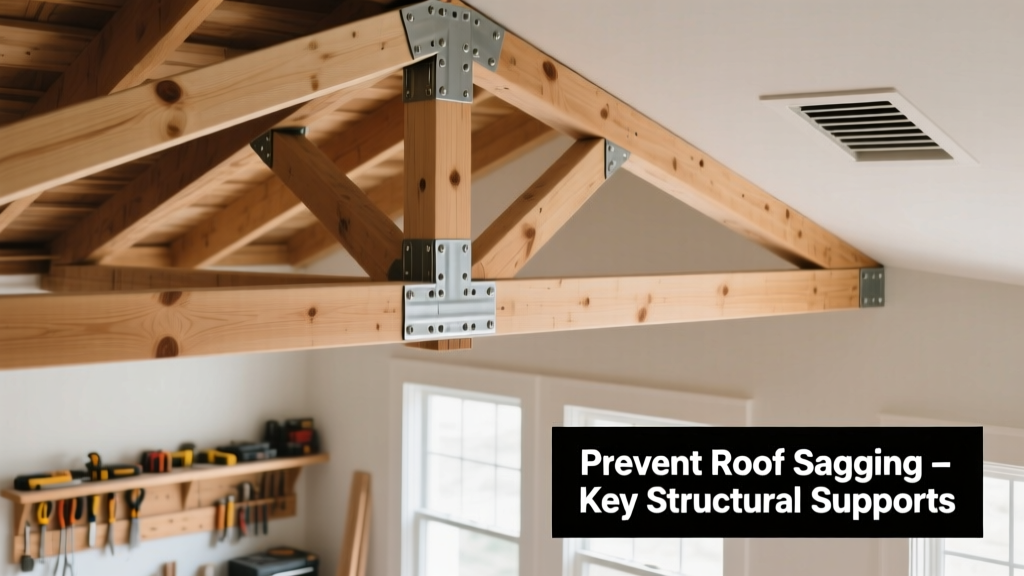
A sagging roof isn’t just an eyesore—it’s a red flag signaling compromised structural integrity, potential water intrusion, and escalating repair costs. Left unchecked, minor deflection can progress to rafter failure or collapse, especially under snow load or after decades of undetected moisture damage. Prevention is far cheaper and safer than replacement: the National Roofing Contractors Association estimates that proactive maintenance extends roof life by 15–20 years.
Why This Happens
Roof sagging stems from cumulative stress on framing members—not sudden failure. Three primary causes dominate: chronic moisture exposure weakening rafters and sheathing; undersized or degraded structural supports (especially in older homes built before modern code requirements); and excessive, unbalanced loads like ice dams, heavy snow accumulation, or improperly installed HVAC units on the roof deck.
According to the Insurance Institute for Business & Home Safety's 2023 report, 68% of premature roof failures traced to sagging involved long-term moisture infiltration—often from clogged gutters or missing flashing—not storm damage.
Maintenance Checklist
| Frequency | Task | Tools/Notes |
|---|---|---|
| Daily | Visually scan roofline from ground for obvious dips or bulges | Use binoculars if two-story; note location with photo |
| Weekly | Clear debris from gutters and downspouts | Wear gloves; check for standing water after rain |
| Monthly | Inspect attic ventilation—ensure soffit and ridge vents are unobstructed | Check for warm spots on roof in winter (indicates poor airflow) |
| Yearly | Hire certified inspector to assess rafter spacing, fastener integrity, and moisture readings in sheathing | Request infrared thermal imaging and moisture meter logs |
Warning Signs
Early detection saves thousands. Don’t wait for leaks—sagging often precedes water intrusion by months. Watch for:
- Visible downward curvature along ridgeline or eaves, especially near valleys or chimneys
- Cracked or buckling shingles aligned with a dip—not random wear
- Interior drywall cracks running parallel to rafters, particularly above exterior walls
- Sticking doors or windows on upper floors due to subtle framing movement
If you spot more than one of these, get a structural engineer’s assessment within two weeks. The U.S. Department of Housing and Urban Development notes that 41% of homes with visible roof sag also show measurable floor joist deflection—proof that issues propagate downward.
"A ¼-inch sag over 10 feet may seem minor—but it’s already exceeding the maximum allowable deflection per the International Residential Code (IRC R802.4). That’s your signal to investigate load paths, not wait." — Dr. Lena Cho, Structural Engineer, ICC Certified, 2022
Recommended Products
Not all products help prevent sagging—but these do when used correctly:
- Gutter guards with micro-mesh filtration (e.g., LeafFilter or Gutter Helmet) reduce seasonal debris buildup that traps water against fascia and rots wood supports
- Attic ventilation kits with continuous soffit + ridge vent pairing maintain consistent airflow—critical for preventing condensation-induced rot in cold climates
- Moisture meters with pinless + pin probes (like the Protimeter Surveymaster) let homeowners test sheathing and rafter ends without invasive drilling
Can attic insulation cause roof sagging?
Yes—if improperly installed. Over-insulating around soffit vents blocks intake air, trapping warm, moist air in the attic. That moisture condenses on cold rafters, accelerating rot. Always maintain a 1- to 2-inch air gap between insulation and roof deck at eaves—use rafter baffles during retrofit. See our attic ventilation guide for proper baffle spacing diagrams.
Does roof age alone guarantee sagging?
No. A well-maintained 30-year asphalt shingle roof on properly sized 2×6 rafters at 16” o.c. rarely sags—even at 25 years. But a 15-year roof on undersized 2×4 rafters with repeated ice dam damage? High risk. Age matters less than load history and material condition. Check our roof lifespan chart by material for realistic expectations.
How often should I inspect roof framing?
Homeowners should visually inspect accessible attic framing annually—look for fungal growth, termite damage, or cracked knots near ridge boards. But formal structural inspection is needed every 7–10 years for homes over 25 years old, or after any major weather event (e.g., wind gusts >70 mph or snow loads >40 psf). For guidance on spotting compromised rafters, see our how to identify rotten rafters tutorial.
Will adding roof braces fix existing sag?
Braces (like collar ties or purlins) can stabilize mild, stable sag—but only if installed by a licensed structural engineer who calculates load redistribution. DIY bracing risks shifting stress to weaker points and worsening deflection. Never add braces without engineering review. If sag exceeds ½ inch per 10 feet, replacement or reinforcement must be designed to IRC Chapter 8 standards.
Preventing roof sagging isn’t about perfection—it’s about consistency. A 10-minute monthly gutter check, paired with yearly attic airflow verification, catches 90% of developing issues before they compromise framing. Your roof bears weight silently; return the favor by listening early, acting decisively, and trusting verified data over assumptions. Start with today’s visual scan—and keep that moisture meter handy.