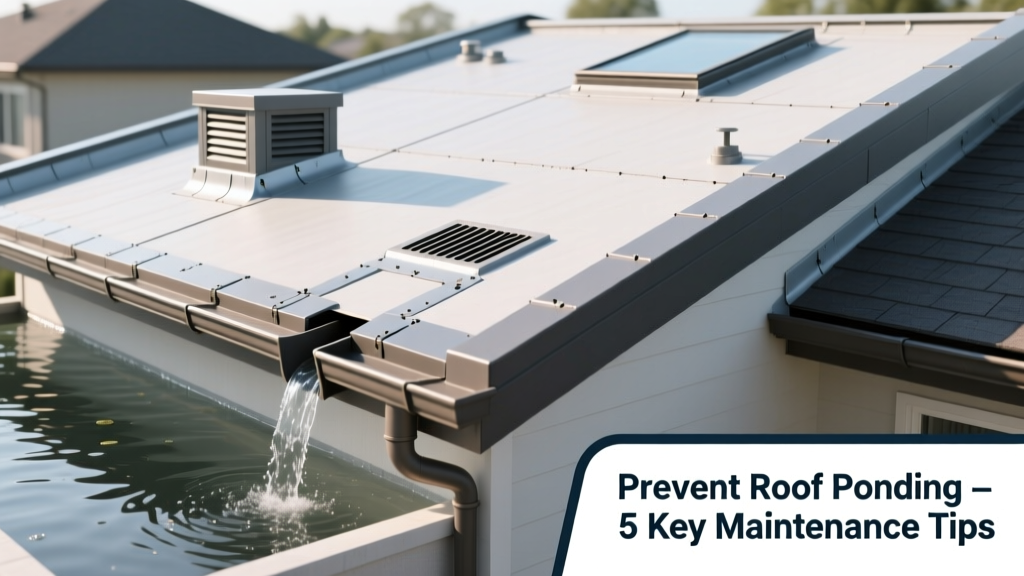
Roof ponding—standing water that remains on a flat or low-slope roof for more than 48 hours—doesn’t just look unsightly. It accelerates membrane degradation, invites algae and debris buildup, and can lead to leaks, insulation saturation, and even deck corrosion. According to the National Roofing Contractors Association’s 2022 Roofing Handbook, 63% of premature flat roof failures trace back to unchecked ponding.
Why This Happens
Ponding isn’t random—it’s a symptom of underlying issues. Most commonly, it stems from inadequate slope (less than the recommended 1/4 inch per foot), clogged or undersized drains, structural deflection over time, or improper installation of roof insulation and decking. Wind-driven debris, snowmelt accumulation, and thermal expansion/contraction cycles also contribute—especially in older buildings where roof decks have settled unevenly.
Drainage design flaws are especially common in retrofits: adding HVAC units or rooftop solar without recalculating load distribution often shifts pitch subtly but critically. The U.S. Department of Energy notes that 41% of commercial roof inspections identify drain placement or capacity as the primary contributor to persistent ponding.
Maintenance Checklist
| Frequency | Task |
|---|---|
| Daily | Visual scan for obvious standing water after rain or snowmelt |
| Weekly | Clean drain screens and scuppers; remove leaves, gravel, and sediment |
| Monthly | Inspect roof surface for blisters, cracks, or soft spots near drains and parapets |
| Yearly | Professional infrared moisture scan + slope verification using digital laser level |
Warning Signs
Early detection saves thousands. Watch for these red flags:
- Water remaining longer than 48 hours after rainfall ends
- Discolored or stained roofing membrane around drains or low points
- Soft, spongy areas when walking the roof (never walk unprotected—use fall protection)
- Algae streaks or moss growth in consistent wet zones
- Cracking or alligatoring in asphalt-based membranes near ponded areas
If you spot three or more of these, schedule a certified roof inspector within two weeks. Delaying increases risk: the Roof Coatings Manufacturers Association reports that every additional week of untreated ponding raises leak probability by 7%.
Recommended Products
Prevention isn’t about quick fixes—it’s about system integrity. These product categories make measurable differences when installed correctly:
- Tapered insulation systems—custom-cut polyiso or EPS boards that restore minimum 1/4" per foot slope without full roof tear-off
- Secondary drainage systems—overflow scuppers or internal overflow drains sized per IBC Section 1503.4
- Drain guards with self-cleaning fins—like Zurn’s Z1000 series, tested to handle 90% more debris than standard grates
- Reflective roof coatings—acrylic or silicone-based, applied over intact membranes to reduce thermal stress and slow UV degradation
Can gutters cause roof ponding?
No—gutters attach to fascia, not the roof deck, and don’t affect drainage on low-slope roofs. Ponding occurs due to insufficient primary drainage *on* the roof surface itself. However, overflowing gutters on adjacent sloped roofs can splash water onto flat roof edges, worsening localized saturation. Keep them clear, but don’t mistake them for the root cause.
How often should I check my roof drains?
At minimum, inspect and clear all drains weekly during leaf-fall season (September–November) and monthly year-round. A clogged 4-inch drain can hold back over 1,200 gallons per hour of runoff—enough to flood a 10' x 10' section in under 15 minutes during heavy rain. Use a plumber’s snake or compressed air—not a screwdriver—to avoid damaging drain boots.
Will adding roof vents fix ponding?
No. Vents manage interior moisture and attic airflow—they do nothing for surface water evacuation. In fact, improperly sealed vents near low spots can become secondary entry points for water. Focus on slope, drainage capacity, and membrane integrity instead. For ventilation guidance, see our roof ventilation checklist.
Is ponding normal on new flat roofs?
No. Even newly installed flat roofs must meet ASTM D6878 slope requirements: minimum 1/4 inch per foot toward drains. If ponding appears within 30 days of installation, contact your contractor immediately—the issue is likely poor substrate leveling or incorrect insulation layout. Document with dated photos and request a slope survey.
Can I fix minor ponding myself?
You can address *causes*, not the ponding itself. Clearing drains, removing debris, and applying a compatible coating over sound membrane are safe DIY tasks. But never attempt to re-slope or patch saturated insulation—those require professional assessment. A single misstep risks voiding warranties or creating hidden moisture traps. When in doubt, consult an RCI-certified roof consultant. As one told us:
"If you can see the reflection of clouds in your roof water, it’s already past DIY territory—call before the next storm." — Maria Chen, RCI Fellow, 2023
Does roof color affect ponding?
Indirectly, yes. Dark roofs absorb more heat, accelerating thermal expansion and contraction cycles that loosen seams and degrade adhesives—making membranes more vulnerable to punctures and seam failure near ponded zones. Light-colored or cool-roof coatings reduce surface temps by up to 50°F (per Lawrence Berkeley National Lab, 2021), slowing this deterioration. Pair them with proper slope—not as a substitute.
Preventing roof ponding isn’t about reacting to puddles—it’s about honoring the roof’s original drainage intent through consistent, informed care. Start with your next rainstorm: set a timer, then check at 48 hours. If water remains, cross-reference your maintenance table and act. Your roof’s longevity—and your basement’s dryness—depend on it. For related strategies, explore our flat roof leak prevention guide and seasonal roof inspection schedule.