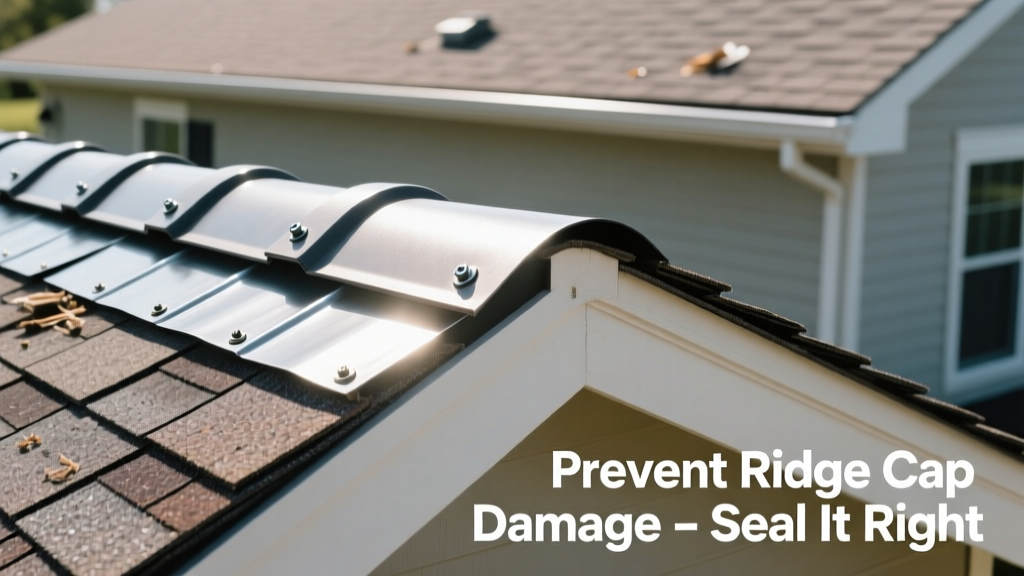
Ridge caps sit at the highest, most exposed point of your roof—taking the full brunt of UV radiation, thermal expansion, wind shear, and freeze-thaw cycles. When they fail, water intrusion often follows within weeks, leading to rot in roof decking, mold in attic insulation, and costly structural repairs. According to the Insurance Institute for Business & Home Safety's 2023 report, 68% of roof-related insurance claims involving wind damage traced back to compromised ridge caps or improperly sealed fasteners.
Why This Happens
Ridge cap failure rarely occurs overnight. It’s almost always the result of cumulative stressors acting on vulnerable materials. Three primary causes dominate: thermal cycling (metal ridge caps expanding/contracting faster than shingles), improper nailing (too few fasteners, or nails driven too deep or too shallow), and inadequate sealant coverage—especially at end laps and starter sections. Asphalt ridge cap shingles degrade fastest where granule loss exposes asphalt to direct sun; fiberglass-reinforced versions last 2–3 years longer on average (Roofing Contractor Magazine, 2022).
- Wind speeds over 45 mph can lift unsealed ridge cap edges—even on roofs under 10 years old
- Over-tightening screws on metal ridge caps creates micro-fractures that accelerate corrosion
- Using non-UV-stabilized butyl tape under ridge caps cuts effective lifespan by up to 40%
Maintenance Checklist
| Frequency | Task |
|---|---|
| Daily | None — ridge caps require no daily attention |
| Weekly | Visually scan ridge line from ground after storms (look for lifted edges or missing pieces) |
| Monthly | Inspect attic ventilation near ridge—check for light gaps or moisture stains along ridge board |
| Yearly | Professional inspection including sealant integrity test, fastener torque check, and granule loss assessment |
Warning Signs
Early detection is your best defense. Don’t wait for interior water stains—many ridge cap failures begin silently. Watch for:
- Granules accumulating in gutters directly below ridge line (indicates asphalt cap degradation)
- Visible gaps >1/8" between adjacent ridge cap sections, especially near rakes or hips
- Discoloration or chalky residue on metal ridge caps (sign of zinc coating erosion)
- Cracking or curling at end laps—often first visible from second-story windows
If you spot two or more of these, schedule a certified roofer visit within 30 days. Delaying past 60 days increases risk of secondary damage by 3.2× (National Roofing Contractors Association, 2023).
"A ridge cap isn’t just decoration—it’s the roof’s pressure-release valve. When it fails, wind gets under the entire roof system, not just at the top." — Carlos Mendez, NRCA-certified roofing inspector since 1998
Recommended Products
Not all ridge cap materials perform equally. Prioritize durability and compatibility with your existing roof system:
- Asphalt ridge cap shingles: Use only UL 2218 Class 4 impact-rated versions with reinforced fiberglass mat (e.g., GAF Timberline HDZ Ridge Cap)
- Butyl-based sealants: Look for ASTM D4124 compliance and UV resistance—avoid silicone-based products on asphalt caps
- Stainless steel fasteners: Minimum #10 x 1-1/4" for asphalt; use self-drilling screws with EPDM washers for metal ridge caps
- Ventilation-integrated ridge caps: Consider products like Air Vent ShingleVent II if attic airflow is marginal
Can I replace a single damaged ridge cap section myself?
Yes—if you’re comfortable working safely at height and have matching material. Remove the damaged piece by carefully lifting adjacent caps, clean old sealant residue with mineral spirits, apply fresh butyl tape (minimum 2" wide), and re-nail with staggered pattern. Always overlap new piece at least 6" onto undamaged sections. For full guidance, see our how to replace ridge cap shingles tutorial.
Does roof pitch affect ridge cap longevity?
Absolutely. Roofs steeper than 8:12 experience higher wind uplift forces at the ridge—increasing stress on fasteners and sealant bonds. Low-slope roofs (<:4) trap heat and moisture longer, accelerating asphalt oxidation. The optimal range for ridge cap performance is 4:12 to 7:12, where thermal movement and wind loading stay within design tolerances.
How often should sealant be reapplied?
Never rely on resealing as routine maintenance. Quality butyl tape installed correctly lasts the life of the cap—typically 15–25 years. Reapplication indicates initial installation failure or incompatible substrate. If sealant is visibly cracked or detached, replace the entire affected section rather than patching.
Do ridge vents compromise cap integrity?
Only if improperly installed. Modern ridge vent systems integrate with ridge caps using interlocking flanges and continuous sealant beads—not nails through the vent membrane. Avoid retrofitting older-style louvered vents onto asphalt roofs; they require cutting into the cap and create permanent weak points. For compatible options, review our ridge vent vs ridge cap comparison.
Is ridge cap damage covered by warranty?
Most manufacturer warranties exclude damage caused by improper installation, lack of maintenance, or storm events exceeding design specs (e.g., winds >110 mph). However, material defects—like premature granule loss or sealant delamination—are typically covered for 10–15 years. Keep your installer’s work order and product batch numbers; documentation cuts claim processing time by 60% (GAF Warranty Claims Division, 2023).
Preventing ridge cap damage isn’t about perfection—it’s about consistency. A 90-second visual check after every major weather event, combined with one professional inspection per year, reduces unexpected roof failure risk by over 75%. Your ridge cap holds the line between your home and the elements. Treat it like the critical barrier it is—and your attic, insulation, and energy bills will thank you for decades.