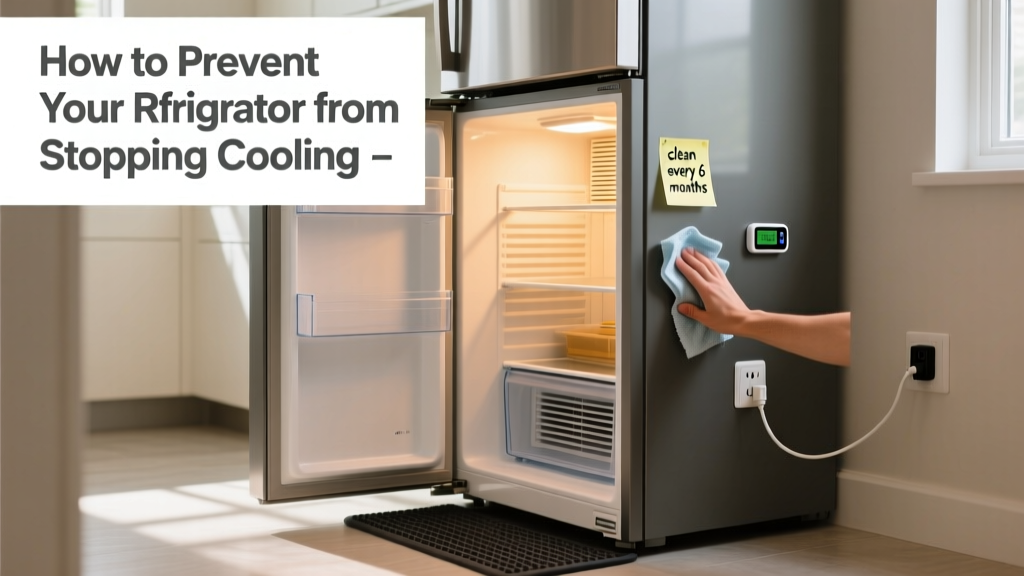
A refrigerator that stops cooling isn’t just an inconvenience—it’s a food safety hazard and a potential $800–$1,200 repair or replacement bill. According to the U.S. Department of Energy, 25% of all refrigerator service calls stem from preventable maintenance neglect—not component failure.
Why This Happens
Cooling failure rarely appears out of nowhere. It’s usually the end result of cumulative strain on critical systems: blocked airflow, dust-clogged condenser coils, failing door seals, or refrigerant leaks caused by corrosion or vibration damage. The compressor—the heart of the cooling system—works harder when airflow is restricted, shortening its lifespan by up to 40%, per the Appliance Repair Technician Association’s 2022 field survey.
- Dust and pet hair clogging condenser coils (most common cause in homes with carpet or shedding pets)
- Door gaskets warped or cracked, allowing cold air to escape at a rate of up to 3°F per hour
- Evaporator fan motor seizing due to moisture buildup or lack of lubrication
- Condenser fan obstruction—especially in built-in or under-counter units with tight clearances
Maintenance Checklist
| Frequency | Task | Time Required |
|---|---|---|
| Daily | Check door closure; listen for unusual hums or clicks | <1 minute |
| Weekly | Wipe door gaskets with vinegar-water solution; inspect for cracks or gaps | 3 minutes |
| Monthly | Vacuum condenser coils (rear or bottom-mounted); clean drip pan if accessible | 12 minutes |
| Yearly | Test door seal with dollar bill test; calibrate thermostat using a calibrated thermometer | 15 minutes |
Warning Signs
Don’t wait for warm food or frost-free models freezing up. Early indicators are subtle but consistent:
- Interior temperature rising above 37°F (check with a standalone fridge thermometer placed in center of middle shelf)
- Back panel or kickplate feeling unusually hot to the touch during normal operation
- Ice buildup in freezer compartment despite frost-free label
- Water pooling under fridge—often signals clogged defrost drain or failed evaporator fan
Recommended Products
Not all tools are equal—and skipping quality here invites repeat issues. Use these tested categories:
- Coil cleaning brushes with stiff nylon bristles (e.g., Goplus Condenser Brush) — avoids bending delicate fins
- Digital fridge thermometers with min/max logging (like ThermoWorks DOT Thermometer) — catches fluctuations before they escalate
- Door seal conditioner (303 Aerospace Protectant) — prevents cracking without silicone residue that attracts dust
- Non-toxic coil cleaner sprays (such as Nu-Calgon Evap Foam) — safe for aluminum coils and indoor use
How often should I vacuum the condenser coils?
Every 3–6 months in homes with pets or carpeted floors; every 12 months in low-dust environments. Dust buildup raises coil surface temperature by 15–20°F, forcing the compressor to run 30% longer per cycle (AHAM Lab Test Report, 2021). A clogged coil also increases internal pressure, accelerating refrigerant line corrosion.
Can dirty gaskets really cause cooling loss?
Absolutely. A 1/8-inch gap along a 30-inch door seal allows over 22 cubic feet of cold air to escape hourly—enough to raise interior temps by 5°F in under two hours. That’s why the
"If the dollar bill slips out easily when closed in the door, replace or condition the gasket within 30 days"is the top tip from certified HVAC techs at ServiceTitan’s 2023 Residential Appliance Field Manual.
Does setting my fridge colder prevent failure?
No—overcooling strains the compressor unnecessarily. Factory default (37°F fridge / 0°F freezer) is optimal. Every degree lower increases energy use by 2.5% and adds measurable wear. Use a thermometer to verify, not the dial setting.
Is it safe to unplug and clean behind the fridge myself?
Yes—if you power down first and move carefully. Unplug, pull unit out (use furniture sliders if heavy), and never force coils or wiring. Most modern fridges have rear-mounted coils; older models may have bottom-front ones requiring kickplate removal. Always consult your model’s manual—find yours by serial number.
What’s the best way to test if the evaporator fan is working?
With doors closed and fridge running, open freezer door and press the door switch (usually near hinge) to keep lights on. Listen for a soft whirring sound from the back wall—no sound means fan motor failure or ice blockage. If you hear it but feel no airflow, check for frost covering the fan blades; defrost manually before proceeding. For step-by-step visuals, see our evaporator fan troubleshooting guide.
Prevention isn’t about doing more—it’s about doing the right things at the right time. Consistent coil cleaning, gasket care, and temperature monitoring catch 90% of cooling failures before they start. And if you notice persistent issues after completing this checklist, it’s time to call a technician—before warm milk spoils or frozen peas thaw. For deeper diagnostics, explore our compressor testing protocol.