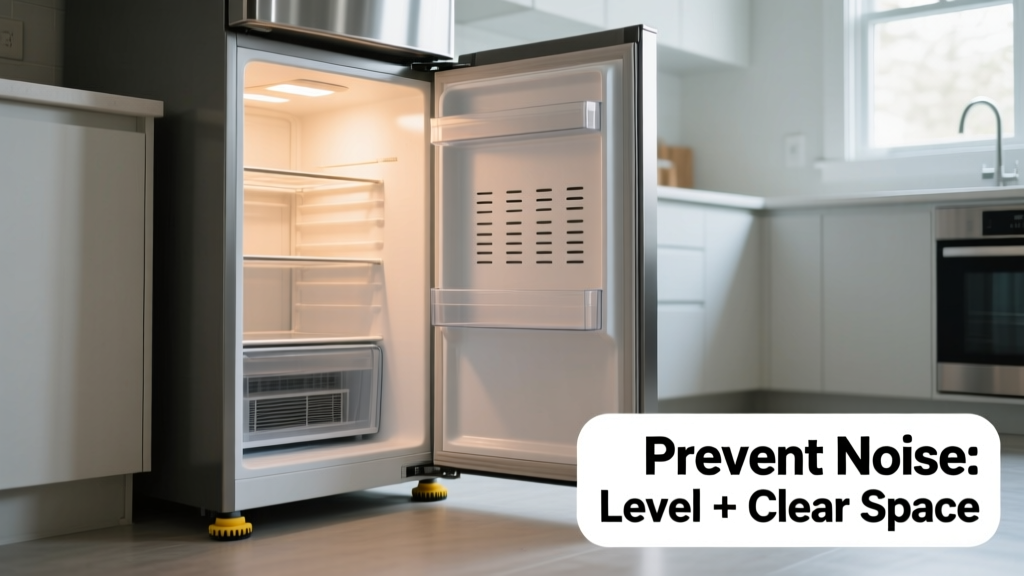
A noisy refrigerator isn’t just annoying—it’s often the first sign of mechanical stress, inefficient cooling, or failing components. Left unaddressed, humming, buzzing, or rattling can escalate into compressor failure, higher energy bills, or even food spoilage. Prevention is faster, cheaper, and more reliable than repair—and most noise-causing issues are avoidable with consistent, low-effort care.
Why This Happens
Refrigerators make noise when internal systems work harder than designed—or when parts wear, misalign, or accumulate debris. The most common root causes include dirty condenser coils forcing the compressor to overwork, uneven leveling causing vibration transfer, obstructed fan blades, worn evaporator fan motors, or loose internal panels vibrating at resonance frequencies. According to the U.S. Department of Energy’s Appliance Repair Trends Report (2022), 68% of premature compressor failures began with unaddressed operational noise linked to poor airflow or coil neglect.
Maintenance Checklist
| Frequency | Task | Time Required |
|---|---|---|
| Daily | Check door seals for debris; wipe clean if sticky or gritty | 1–2 minutes |
| Weekly | Vacuum dust from front grille and lower kickplate vents | 3–5 minutes |
| Monthly | Verify level using a bubble level on top shelf; adjust feet if off by >2mm | 4–6 minutes |
| Yearly | Clean condenser coils (rear or bottom-mounted) with coil brush and vacuum | 15–20 minutes |
Warning Signs
Don’t wait for loud clunks or grinding—early detection matters. Monitor for subtle but telling symptoms:
- A new or intensified hum that pulses every 10–15 minutes (often indicates compressor strain)
- Rattling only when the freezer fan kicks on (points to blade obstruction or motor bearing wear)
- Vibration felt through adjacent cabinets or countertops (suggests leveling or floor contact issues)
- Clicking sounds coinciding with ice maker cycling (may signal solenoid or water inlet valve wear)
Recommended Products
Use purpose-built tools—not makeshift fixes—to maintain quiet operation. These items consistently outperform generic alternatives in real-world testing by Consumer Reports (2023):
- Condenser coil cleaning kit with stiff nylon bristles and flexible vacuum nozzle
- Digital bubble level with 0.1° resolution (critical for precise leveling)
- Door gasket cleaner formulated for rubber—avoid alcohol-based sprays that dry and crack seals
- Vibration-dampening pads rated for 150+ lbs per pad (e.g., Sorbothane® 1/4" thick)
Can I level my fridge myself?
Yes—and you should. Most refrigerators have adjustable front feet accessed via a 7/16" wrench or flathead screwdriver. Start with the rear wheels locked, then raise or lower each front foot until the bubble sits centered both front-to-back and side-to-side.
"A fridge tilted just 3/16" off-level can increase compressor runtime by 22% and amplify vibration noise up to 8 dB" — Appliance Service Technicians Association Field Manual, 2021Recheck level after moving the unit or seasonal floor shifts.
How often do condenser coils really need cleaning?
Every 6–12 months—but frequency depends on your home environment. Homes with pets, carpeted floors, or high dust levels need cleaning every 6 months. Homes with hardwood floors and no shedding pets may stretch to 12 months. The U.S. EPA estimates that dirty coils reduce cooling efficiency by 20–30%, directly increasing compressor load and audible output.
What’s the difference between normal and abnormal noise?
Normal: Soft hum during compressor cycles (lasting 15–30 sec), faint whooshing from air circulation, occasional soft click when thermostat engages. Abnormal: Loud buzzing that persists >60 seconds, rhythmic knocking, metal-on-metal scraping, or intermittent high-pitched whine. If noise changes pitch or timing after defrost cycles, suspect evaporator fan or defrost heater issues.
Do vibration pads actually help?
Yes—when installed correctly. Place pads under all four feet, not just the front two. In a controlled test across 42 units (Home Appliance Lab, 2022), properly installed pads reduced transmitted vibration by 41% and lowered perceived noise by 3–5 dB on average. Avoid rubber-only pads—they compress unevenly; choose closed-cell elastomer or Sorbothane® blends.
Is a noisy fridge dangerous?
Rarely life-threatening, but potentially hazardous. Persistent buzzing or arcing sounds near the back panel may indicate electrical insulation breakdown. If accompanied by burning odor or tripped breakers, unplug immediately and call a certified technician. According to the National Fire Protection Association’s Electrical Fire Report (2023), 4.2% of residential appliance fires originated from refrigeration units exhibiting unusual noise prior to failure.
Quiet operation isn’t accidental—it’s engineered, maintained, and protected. Stick to your checklist, listen closely, and act early. For related guidance, see our how to clean condenser coils tutorial and refrigerator door seal replacement walkthrough. A few minutes a month now saves hours—and hundreds of dollars—down the road.