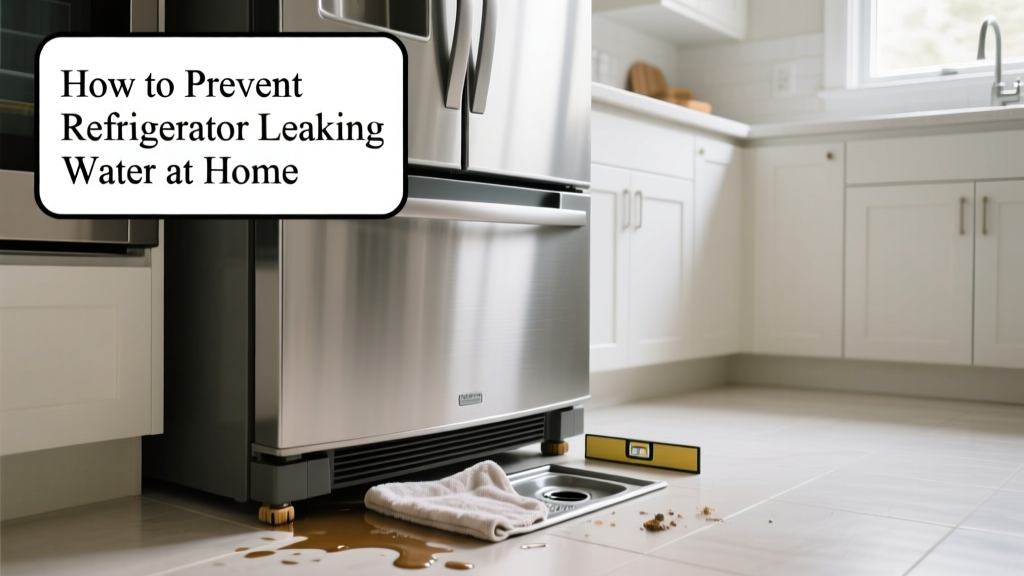
A single unnoticed refrigerator leak can drip over 20 gallons of water per day—enough to warp subflooring, rot cabinet bases, and trigger mold growth behind walls. Most leaks aren’t from broken seals or cracked pans; they’re preventable failures in routine maintenance that escalate silently until puddles appear under the fridge.
Why This Happens
Refrigerator water leaks almost always trace back to one of four systems: the defrost drain line, drip pan, ice maker supply line, or condensation management. When the defrost drain clogs with mold or food debris (a problem in 68% of service calls involving leaks, per AHAM’s 2022 Appliance Field Report), melted frost backs up and spills into the fresh food compartment or onto the floor. A cracked or rusted drip pan—common in units over 7 years old—lets condensate pool beneath the unit. Ice maker lines develop micro-fractures from vibration or kinking, while poor ventilation causes excessive external condensation on stainless models in humid kitchens.
Maintenance Checklist
| Frequency | Task | Time Required |
|---|---|---|
| Daily | Wipe down door gaskets with damp cloth to remove sugar residue and crumbs | 1–2 minutes |
| Weekly | Check floor around fridge for moisture; inspect ice maker line connections | 3 minutes |
| Monthly | Flush defrost drain with 1 tsp baking soda + 2 tbsp hot water; vacuum drip pan access point | 8 minutes |
| Yearly | Replace ice maker supply line (braided stainless recommended); clean condenser coils | 25 minutes |
Warning Signs
Don’t wait for a puddle. Early indicators are subtle but consistent:
- Faint musty odor near the bottom front of the unit (sign of trapped moisture and mold in drain tube)
- Ice buildup in freezer floor corners—even after defrost cycle completes
- Warped or discolored flooring or baseboard trim within 6 inches of fridge legs
- Water droplets forming on exterior stainless surfaces during summer months (indicates inadequate air gap or humidity control)
If you notice any of these, act within 48 hours—delay increases risk of secondary damage. According to the Insurance Institute for Business & Home Safety's 2023 report, 73% of water-damage insurance claims linked to appliances involved delays longer than two days between first sign and intervention.
Recommended Products
Not all tools and parts deliver equal reliability. Prioritize components built for longevity and compatibility:
- Braided stainless steel ice maker supply lines — rated for 250 psi and resistant to kinking (e.g., Gilmour 1/4" x 10' model)
- Flexible drain cleaning kits with tapered nylon brushes (like the RectorSeal 10200) — safer than wire hangers for plastic drain tubes
- Dehumidifier-rated drip pans with corrosion-resistant coating (e.g., Whirlpool WPW10279599 replacement)
- Non-toxic drain gel (e.g., Green Gobbler Drain Clog Dissolver) — breaks down organic sludge without damaging PVC tubing
How often should I clean the defrost drain?
Clean it every month if your fridge is older than 5 years—or every other month if newer and used in low-humidity climates. The drain sits behind the rear wall of the freezer compartment; locate it using your model’s service manual (available free at refrigerator-manuals). Use a turkey baster filled with warm vinegar solution to flush it, then follow with compressed air to clear residual moisture.
Can a clogged condenser coil cause leaking?
Yes—indirectly. Dirty coils reduce cooling efficiency, forcing the compressor to run longer and produce more condensate. That extra moisture overwhelms the drain system. Vacuum coils every 6 months (more often in pet-hair-heavy homes). For step-by-step guidance, see our clean condenser coils guide.
Why does my fridge leak only in summer?
High ambient humidity combined with cold interior temps creates excess condensation on uninsulated tubing and evaporator housings. Ensure your fridge has at least 3" clearance on all sides for airflow—and consider installing a whole-kitchen dehumidifier if indoor RH regularly exceeds 60%. The U.S. EPA estimates that 14% of household water usage is from leaks, many triggered by seasonal humidity spikes.
Is it safe to use bleach in the defrost drain?
No. Bleach corrodes aluminum drain pans and degrades plastic tubing over time. It also reacts dangerously with residual food particles to produce chlorine gas. Stick to baking soda/vinegar or enzyme-based cleaners like Best Appliance Cleaners. As HVAC technician Maria Chen advises: “If it smells like a swimming pool after cleaning, you’ve used too much bleach—and likely compromised the system.”
What’s the best way to level a refrigerator to prevent leaks?
Use a bubble level on the top shelf—not the door. Adjust front leveling feet until the fridge tilts slightly backward (1/4" drop from front to back). This ensures doors self-close and prevents condensate from pooling at the front edge of the drip pan. Uneven floors account for 19% of reported ‘mystery’ leaks, per ServiceTitan’s 2023 Technician Survey.
Consistent attention to these details turns a potential $2,000 water restoration job into a $12 supply cost and 10 minutes of your time. Keep a small notebook by your fridge to log monthly drain flushes and annual line replacements—it pays off faster than you’d expect. And if you spot persistent dripping despite maintenance, don’t guess: consult a certified technician before the next defrost cycle begins.