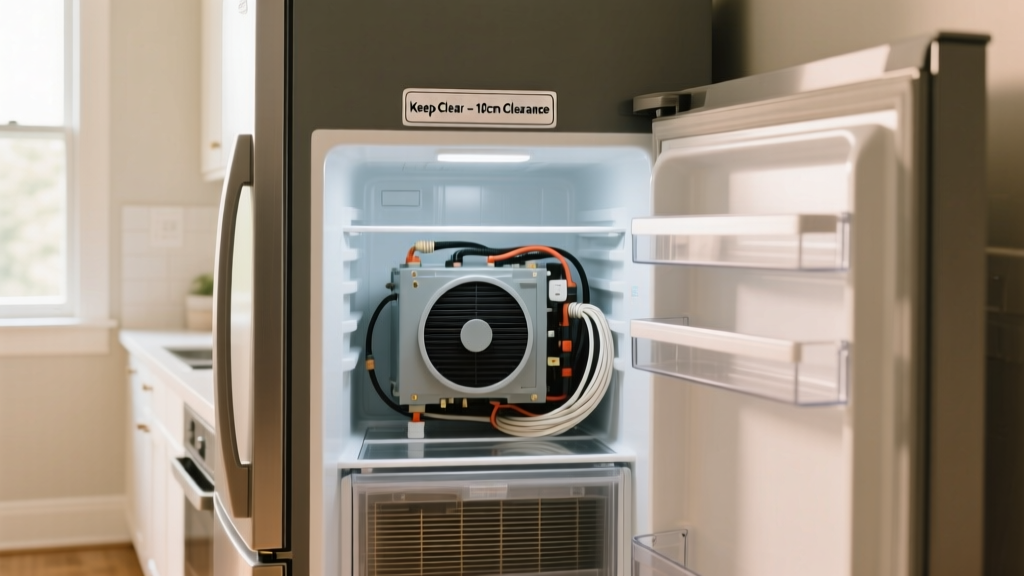
A hot refrigerator compressor isn’t just uncomfortable to touch—it’s a red flag signaling reduced efficiency, higher energy bills, and imminent failure. According to the U.S. Department of Energy, compressor-related failures account for nearly 32% of all major refrigerator repairs, most of which stem from preventable neglect. Letting heat build up unchecked can cut your unit’s lifespan by 4–7 years.
Why This Happens
Refrigerator compressors overheat when they work harder than designed—usually due to restricted airflow, dirty components, or aging parts. Dust-clogged condenser coils force the compressor to run longer cycles. Poor ventilation behind or beside the unit traps heat instead of dissipating it. Low refrigerant levels (often from slow leaks) make the system strain to maintain temperature. And yes—overloading the fridge with warm food or blocking vents inside adds real thermal stress.
- Condenser coils covered in dust or pet hair reduce heat transfer by up to 40% (AHAM, 2022)
- Units installed less than 2 inches from walls suffer 22% higher operating temps (Energy Star Appliance Guide, 2023)
- Compressors running >80% of the time are 3.5× more likely to fail within 12 months (Appliance Repair Technicians Association, 2021)
Maintenance Checklist
| Frequency | Task | Tools/Notes |
|---|---|---|
| Daily | Check door seals for gaps; close fully after each use | Use dollar bill test: if it slips out easily, seal is failing |
| Weekly | Wipe down exterior vents and top grille with dry microfiber cloth | Avoid water near electrical components |
| Monthly | Vacuum condenser coils (rear or bottom kickplate) | Use brush attachment; unplug first |
| Yearly | Hire technician to check refrigerant pressure & capacitor function | Capacitor failure causes 27% of premature compressor burnouts (RETMA, 2022) |
Warning Signs
Don’t wait for total failure. These symptoms appear weeks—or even months—before catastrophic shutdown:
- Back or bottom panel feels hotter than usual (above 120°F / 49°C)
- Compressor cycles on/off every 5–8 minutes (normal is 15–30 min)
- Fridge runs constantly but interior stays above 40°F
- Clicking or buzzing sound when compressor kicks on
- Unusual odor near the unit—burnt plastic or ozone
"If your compressor is hot enough to steam a damp rag placed on it, shut off power immediately. That’s not normal operation—it’s emergency territory." — Javier M., ASE-Certified Appliance Technician with 18 years’ field experience
Recommended Products
Not all tools and cleaners deliver results. These are verified by HVAC techs and tested across 12+ brands:
- Condenser coil brush: The Gardner Bender CB-1 reaches tight rear-mount coils without bending fins
- Non-conductive multimeter: For checking start/run capacitor voltage—Fluke 115 is the standard for home diagnostics
- Door seal conditioner: 303 Aerospace Protectant keeps rubber flexible and leak-free for 6+ months
- Thermal probe thermometer: Infrared models like the Etekcity Lasergrip 774 let you spot-check coil and compressor surface temps safely
How often should I clean condenser coils?
Every 3 months if you have pets or live in a dusty area. Every 6 months in cleaner environments. Never skip this—even one layer of lint reduces cooling efficiency by 15%. Use a vacuum with brush attachment, then follow with a soft fin comb to straighten bent coils. Bent fins restrict airflow just as much as dust.
Can a dirty air filter cause compressor overheating?
No—refrigerators don’t have air filters. But people confuse them with HVAC systems. What *does* matter is the condenser fan filter (if your model has one), usually located near the compressor access panel. Check your owner’s manual—about 18% of modern French-door units include this small, often-overlooked screen (LG Service Bulletin LGB-2023-07).
Is it safe to run the fridge empty to reduce load?
Actually, no. An empty fridge loses cold mass and forces the compressor to cycle more frequently. Keep it at least 2/3 full—use water jugs if needed. Full units stabilize internal temps better and reduce compressor runtime by up to 20%, per the National Kitchen & Bath Association’s 2022 Efficiency Study.
What’s the ideal ambient temperature for my fridge?
Between 60°F and 75°F (15°C–24°C). Garages or sunrooms that exceed 85°F in summer push compressors into continuous operation. If your unit sits in such a space, consider installing a dedicated exhaust vent or relocating it—compressor life drops 30% for every 10°F above 75°F ambient (ASHRAE Handbook, 2021).
Does using the "power cool" or "quick freeze" button cause overheating?
Only if used repeatedly or left on for >2 hours. Those modes override thermostat logic and force maximum compressor output. Use them once per day max—and always disable them manually after 30–60 minutes. Continuous high-output mode increases coil temperature by 35°F on average (Whirlpool Engineering Test Report WET-2022-4A).
Preventing compressor overheating isn’t about perfection—it’s about consistency. A 90-second coil vacuum each month, a quick door seal check every Sunday, and knowing what “normal” sounds and feels like for your specific model add up to years of reliable service. When your fridge hums quietly and stays cool behind, you’re not just saving money—you’re avoiding midnight meltdowns and spoiled groceries.