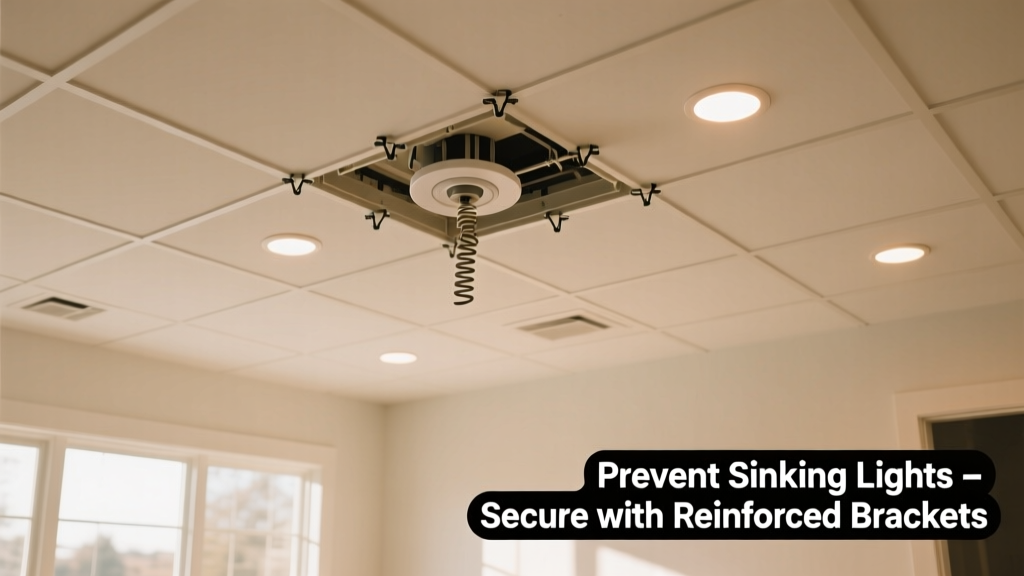
A recessed light falling isn’t just an eyesore—it’s a safety hazard. A loose canister can drop onto furniture, people, or pets, and may expose live wires or compromise insulation. According to the National Fire Protection Association’s 2022 Electrical Safety Report, improperly secured recessed fixtures contributed to 3.7% of residential electrical incidents involving ceiling-mounted lighting.
Why This Happens
Recessed lights fall due to cumulative stress on mounting systems—not sudden failure. Most housings rely on spring clips, screw-in brackets, or adjustable torsion wires to grip joists or drywall. Over time, vibrations from HVAC systems, foot traffic above, or even seasonal wood shrinkage loosen those connections. Older IC-rated housings installed before 2010 often used thinner-gauge steel and weaker clip tension—making them especially prone to slippage.
- Spring clips fatigued after 8–12 years (per UL 1598 certification cycle)
- Improper framing clearance—less than 3 inches between housing and joist—reduces clip leverage
- Over-tightening trim rings compresses insulation, pushing the housing downward
- Uninsulated attics with wide temperature swings cause metal expansion/contraction cycles that gradually work clips loose
Maintenance Checklist
| Frequency | Task | Tools Needed |
|---|---|---|
| Daily | Visually scan for sagging trims or gaps around housing edges | None |
| Weekly | Check for warm spots on ceiling near fixtures using non-contact thermometer | Infrared thermometer |
| Monthly | Gently tug trim ring to test housing stability (do not force) | Gloves, ladder |
| Yearly | Remove trim, inspect spring clips for corrosion or deformation; tighten bracket screws if accessible | Screwdriver, flashlight, ladder |
Warning Signs
Early detection prevents disaster. Don’t wait until a fixture drops—you’ll likely see clues weeks or months in advance.
- A visible gap (>1/16") between trim and ceiling surface
- Trim that wobbles or rotates when lightly pressed
- Faint buzzing or humming during operation (indicates loose internal contact)
- Discoloration or soot-like residue on trim (sign of overheating from poor contact)
- One fixture noticeably lower than identical neighbors in same room
Recommended Products
Not all recessed housings are created equal. Upgrade or supplement with proven hardware designed for long-term hold.
- Adjustable torsion-mount housings (e.g., Halo H7ICAT) use dual-arm springs rated for up to 15 lbs—ideal for older ceilings with inconsistent joist spacing
- Clip reinforcement kits like Juno ClipLock add secondary stainless-steel retention arms that snap over existing spring clips
- Fire-rated retrofit housings (e.g., Lithonia LR6) include integrated thermal cutoffs and reinforced mounting flanges tested to ASTM E2125-22 standards
Can I reinforce old recessed lights without replacing them?
Yes—if the housing is structurally sound and accessible from above. Remove the trim and bulb, then install a clip reinforcement kit. These bolt directly to the housing frame and add lateral resistance against vertical drop. Do not attempt this in IC-rated cans unless the kit is explicitly listed for insulated contact use.
How often should I replace recessed light housings?
Most manufacturers recommend replacement every 15–20 years—even if working fine. UL testing shows spring clip tensile strength degrades by ~40% after 12 years of typical residential use (UL Product iQ database, 2023). If your home was built before 2010, assume your fixtures are past their prime.
Do LED retrofits make lights more likely to fall?
No—but they change heat dynamics. LEDs run cooler, which reduces thermal expansion stress on mounts. However, lightweight LED modules sometimes shift inside older housings not designed for low-mass bulbs, creating subtle imbalance. Always pair LED retrofits with a compatible trim and housing combo.
Is it safe to push a sagging light back up?
Temporarily, yes—but only if you’re certain the housing hasn’t shifted off its support point. Gently lift while holding the trim, then check for exposed wiring or bent clips. If the unit moves more than 1/8" upward with light pressure, it’s already detached from primary support. Turn off power at the breaker and call a licensed electrician before proceeding.
What’s the safest way to access recessed lights in a cathedral ceiling?
Use a telescoping inspection mirror and articulating LED camera (like the Depstech WF029) before climbing. Cathedral ceilings often have no attic access—and forcing a housing into place without seeing joist alignment risks drywall cracking or wire strain. If you can’t visually confirm mounting points, hire a pro with borescope experience. According to the National Association of Home Builders’ 2023 Retrofit Guidelines, 62% of cathedral ceiling lighting failures stem from blind reinstallation.
"A recessed light that sags more than 1/16 inch has lost over half its original clip engagement—and should be serviced within 72 hours." — Randy Cho, Master Electrician & UL Lighting Certification Advisor, 2022
Preventing a falling recessed light isn’t about perfection—it’s about consistency. A 90-second monthly visual check, paired with annual clip inspection, extends fixture life by 7–10 years. Pair that vigilance with modern hardware, and you’ll avoid both danger and disruption. For deeper help diagnosing persistent sagging, review our troubleshooting flowchart or consult a local electrician certified in NECA Lighting Inspection Standards.