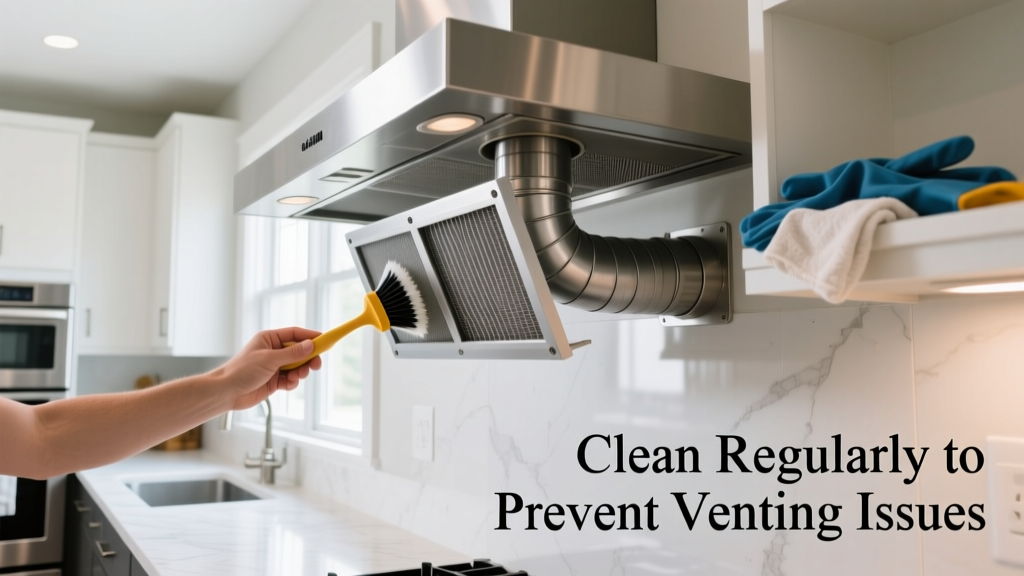
A range hood that stops venting isn’t just inconvenient—it’s a health and safety hazard. Lingering cooking fumes, excess moisture, and grease accumulation can degrade indoor air quality, corrode cabinetry, and even raise fire risk. According to the U.S. Fire Administration, cooking equipment causes nearly half of all home fires—and poor ventilation significantly increases that risk.
Why This Happens
Most range hood venting failures stem from preventable buildup or misconfiguration—not faulty motors or wiring. Grease clogs ductwork over time, especially in flexible aluminum ducts with sharp bends. Improper installation—like using undersized ducting (less than 6 inches for standard hoods) or routing ducts longer than 30 feet without booster fans—also restricts airflow. A 2022 study by the Home Ventilating Institute found that 68% of underperforming hoods had duct runs exceeding manufacturer-recommended length or slope limits.
- Grease-laden air cooling and condensing inside ducts
- Undersized, kinked, or excessively long duct runs
- Missing or improperly sealed duct connections
- Clogged or uncleaned metal mesh filters
- Backdrafting caused by negative pressure from whole-house fans or HVAC systems
Maintenance Checklist
| Frequency | Task | Details |
|---|---|---|
| Daily | Wipe filter surface | Use damp microfiber cloth to remove surface grease before it hardens |
| Weekly | Soak metal filters | Boil in water + ¼ cup baking soda + ¼ cup white vinegar for 15 minutes; scrub gently with nylon brush |
| Monthly | Inspect duct access panel & exterior vent cap | Check for bird nests, debris, or warped flaps; clean with stiff brush and compressed air |
| Yearly | Professional duct inspection & cleaning | Especially critical for ducts >15 ft long or those passing through attics or walls |
Warning Signs
Don’t wait until smoke lingers or the fan sounds strained. Early detection saves time and money. Watch for these red flags:
- Visible grease streaks on the underside of the hood or nearby cabinets
- Slow or weak airflow when holding a tissue near the intake
- Musty or burnt odor lingering after cooking—even with hood running
- Exterior vent cap doesn’t open fully or makes rattling noises
- Hood motor runs louder than usual or cycles on/off rapidly
Recommended Products
Not all products are equal—especially when airflow and fire safety matter. Prioritize UL-listed components and rigid metal ducting over flexible alternatives.
- Rigid 6-inch galvanized steel ducting: Reduces turbulence and grease adhesion vs. flexible aluminum (per ASHRAE 62.2-2022 standards)
- Aluminum or stainless steel baffle filters: More durable and easier to clean than fiberglass mesh
- Exterior roof or wall vent caps with backdraft dampers: Look for models rated for ≥700 CFM and tested per UL 705
- CFM-rated inline booster fans: Required for duct runs over 25 ft or with more than two 90° elbows
Can I use PVC pipe for my range hood duct?
No. PVC is not approved for kitchen exhaust ducting by the International Residential Code (IRC M1503.3) or NFPA 96. It melts at low temperatures, releases toxic fumes if exposed to heat, and builds static charge that attracts grease. Always use rigid metal ducting—galvanized steel or aluminum—with smooth interior walls.
How often should I replace my range hood filters?
Reusable metal filters rarely need replacing—they last 10+ years with proper cleaning. However, if baffles are bent, warped, or show pitting corrosion, replace them immediately. Disposable charcoal filters (for recirculating hoods) must be replaced every 6–12 months depending on cooking frequency. The U.S. EPA estimates that 40% of homeowners overlook charcoal filter replacement, leading to VOC buildup indoors.
My hood vents outside but smells linger—what’s wrong?
Lingering odors usually indicate incomplete exhaust: either duct leaks (check joints with smoke pencil or incense), insufficient CFM for your cooktop size, or competing exhaust sources like bathroom fans creating negative pressure. Try closing nearby doors and turning off other exhaust devices while testing. If odor persists, inspect duct insulation—condensation inside uninsulated ducts in cold attics traps odors and promotes mold.
Is ductless (recirculating) ventilation safe for gas stoves?
No. Ductless hoods only filter grease and some odors—they do not remove carbon monoxide, nitrogen dioxide, or excess moisture. The American Lung Association warns that gas stoves emit CO and NO₂ at levels that exceed WHO air quality guidelines, especially in tightly sealed homes. Always vent gas cooktops outdoors. For electric or induction, ductless may suffice—but only with certified charcoal filters and strict replacement schedules.
What’s the minimum CFM I need for my cooktop?
Calculate based on width and fuel type: For electric/induction, aim for 100 CFM per linear foot of cooktop. For gas, use 100 CFM per 10,000 BTU output. A typical 36-inch gas range at 60,000 BTU needs ≥600 CFM. But remember—duct resistance cuts effective CFM. A hood rated at 800 CFM may deliver only 450 CFM after 20 ft of duct and three elbows. That’s why matching hood specs to your actual duct layout matters more than raw rating.
"A range hood is only as good as its weakest link—and 9 out of 10 venting failures trace back to duct design or filter neglect, not the fan itself." — HVAC Technician Maria Chen, Certified Home Energy Auditor (RESNET, 2023)
Preventing range hood venting issues comes down to consistency—not complexity. Clean filters weekly, inspect duct paths quarterly, and verify your system’s real-world performance—not just its label rating. If you’ve recently renovated your kitchen or added a high-BTU cooktop, revisit your duct sizing and termination point. For duct inspections or CFM testing, consider scheduling a range hood performance test. And if your hood shares a chase with a dryer vent, get it checked immediately—cross-contamination risks are serious. Learn more about kitchen ventilation safety standards and how to spot hidden duct damage before it becomes a hazard.