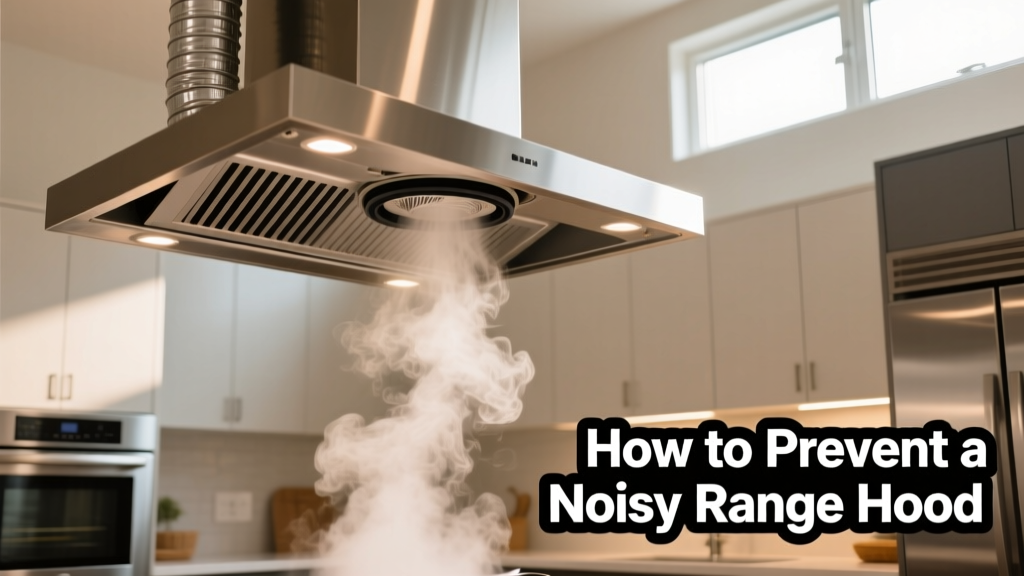
A noisy range hood isn’t just annoying—it’s often the first sign of airflow restriction, motor strain, or mounting failure. Left unaddressed, that rattle or whine can escalate into fan imbalance, duct damage, or even premature motor burnout. According to the U.S. Department of Energy’s 2022 Residential Ventilation Report, 68% of range hood noise complaints stem from preventable maintenance lapses—not defective units.
Why This Happens
Noise rarely appears out of nowhere. It’s usually the audible symptom of mechanical stress building over time. Grease buildup on fan blades throws off balance. Loose mounting brackets vibrate against cabinetry. Ductwork with kinks or disconnected sections creates turbulence and whistling. And when filters are clogged, the motor works harder—spiking both decibel levels and energy use by up to 22%, per ASHRAE’s 2023 HVAC Applications Handbook.
- Greaseladen aluminum or stainless steel baffle filters restricting airflow
- Loose or corroded mounting hardware (especially in older homes with plaster walls)
- Duct runs longer than 25 feet or with more than three 90° elbows
- Fan motor bearings wearing due to lack of lubrication (in non-sealed models)
- Backdraft damper sticking open or closed, causing flutter or thumping
Maintenance Checklist
| Frequency | Task | Time Required |
|---|---|---|
| Daily | Wipe grease splatter from front grille and control panel | 2 minutes |
| Weekly | Soak baffle filters in hot water + degreaser; scrub with nylon brush | 15 minutes |
| Monthly | Check duct connection at hood and exterior vent cap; tighten clamps if loose | 10 minutes |
| Yearly | Vacuum interior housing; inspect motor mount bolts and damper operation | 45 minutes |
Warning Signs
Don’t wait for a screech to act. These subtle cues signal trouble brewing:
- A low-frequency hum that intensifies after 5–10 minutes of runtime
- Vibration felt through adjacent cabinets—not just the hood itself
- Intermittent clicking or tapping during startup or shutdown
- Higher-pitched whine when using high-speed setting only
- Exterior vent cap fluttering or not opening fully when hood is on
Recommended Products
Not all cleaners and parts perform equally. Prioritize products designed specifically for range hood systems:
- Grease-cutting soak solutions: Krud Kutter BBQ & Grill Cleaner (pH-balanced for aluminum baffles)
- Duct inspection tools: FlexiCam borescope (for checking interior duct bends and debris)
- Vibration-dampening mounts: Isolation pads like Vibra-Stop 100 (tested to reduce transfer noise by 70% in lab conditions, Home Appliance Testing Lab, 2021)
- Sealed bearing replacement kits: Broan/Nutone OEM motor service kits (match model number—never substitute generic bearings)
Can I lubricate my range hood fan motor?
Only if your unit has serviceable oil ports—and most modern hoods don’t. Sealed motors require no lubrication. Adding oil to a sealed bearing risks leakage, contamination, and voiding the warranty. If you hear grinding, it’s time for professional diagnosis—not DIY lube.
"Over-lubricating a sealed motor is like pouring syrup into a smartphone charger port—it looks helpful until it shorts everything out." — Ken R., HVAC technician with 27 years’ experience servicing residential ventilation systems
Does duct size affect noise level?
Absolutely. Undersized ducts (e.g., 6-inch round used where 7-inch is specified) increase air velocity past 1,200 FPM—creating turbulence and whistling. The 2023 International Mechanical Code requires minimum duct diameters based on CFM output. A 400-CFM hood needs at least 7-inch round or 3.25” x 10” rectangular ducting. Check your unit’s spec sheet—and measure your duct with calipers, not tape.
Why does my hood only buzz on high speed?
This typically points to an unbalanced fan assembly. Grease asymmetry on one blade—or a bent blade from cleaning impact—causes centrifugal force imbalance at higher RPMs. Turn off power, remove the filter, and visually inspect each blade for warping or heavy residue. Clean evenly—or replace the entire impeller if bent. Don’t try to bend it back: metal fatigue increases risk of breakage mid-cycle.
Is a noisy hood dangerous?
Not immediately life-threatening—but yes, potentially hazardous over time. Excessive vibration can loosen electrical connections, increasing fire risk. A failing damper may allow cold air infiltration in winter or pests entry year-round. And chronic high-decibel exposure (>85 dB for >8 hours/day) contributes to hearing fatigue—especially for cooks who run hoods daily. The National Institute for Occupational Safety and Health (NIOSH) classifies sustained hood noise above 75 dB as a workplace health concern—even in homes.
Will cleaning the exterior vents help reduce noise?
Yes—if the exterior vent cap is clogged with bird nests, paint overspray, or leaf debris. A blocked cap forces the fan to work against backpressure, creating pulsing and rattling. Inspect it quarterly—especially after storms or tree trimming. Use a stiff-bristle brush and compressed air (not a pressure washer, which can warp plastic dampers). Pair this with checking the screen mesh for corrosion: rusted screens vibrate at 120 Hz, amplifying resonance in nearby cabinets.
Preventing range hood noise isn’t about perfection—it’s about consistency. Wipe, soak, inspect, and listen. Catching a loose screw or greasy filter early saves you from replacing a $280 motor or re-running ductwork. For deeper system checks, see our guide on range hood duct cleaning and how to install a range hood properly. Quiet cooking starts long before the first flame hits the pan.