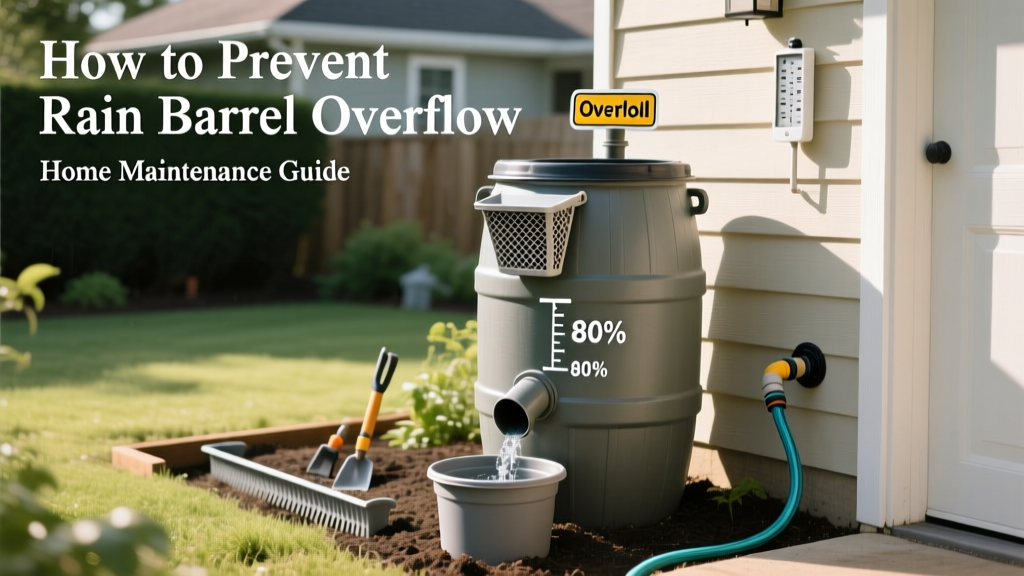
Rain barrels are smart water-saving tools—but when they overflow, they can erode soil near your foundation, wash away mulch, create mosquito breeding pools, and even back up gutters. According to the Insurance Institute for Business & Home Safety's 2023 report, 22% of basement water intrusion cases in single-family homes involved improper rainwater diversion from clogged or overfilled barrels.
Why This Happens
Overflow isn’t random—it’s almost always caused by one or more of these preventable issues: a downspout that dumps more volume than the barrel can hold during heavy storms; a clogged screen or inlet filter; frozen or blocked overflow hose in winter; or a barrel placed on uneven ground that shifts and misaligns the overflow outlet. Older barrels without first-flush diverters also fill faster because debris-laden runoff enters immediately instead of being routed away.
Maintenance Checklist
| Frequency | Task |
|---|---|
| Daily | Check for visible overflow after rain; verify hose end is clear and unburied |
| Weekly | Clean leaf screen with soft brush; inspect for cracks or bulging seams |
| Monthly | Flush overflow pipe with garden hose; test float valve (if equipped); tighten all fittings |
| Yearly | Drain and scrub interior with vinegar-water solution; replace rubber gaskets; re-level base if settling occurred |
Warning Signs
Don’t wait for puddles to appear. These subtle cues mean overflow is imminent:
- Water pooling within 12 inches of your home’s foundation after light rain
- A persistent damp smell or algae growth around the barrel’s base
- Gutter downspout splashing instead of flowing smoothly into the inlet
- Overflow hose discharging only during the first 5 minutes of rain—then stopping
Recommended Products
Not all accessories are equal. Prioritize reliability over price:
- First-flush diverters (e.g., Rain Harvesting Solutions Model D-2): divert the first gallon of roof runoff—where most sediment and bird droppings collect—away from the barrel
- Float-controlled shut-off valves (e.g., Fiskars Rain Wizard Auto-Stop): cut off inflow at 90% capacity, giving buffer for sudden downbursts
- Gravity-fed overflow kits with 1.25" PVC piping and built-in check valves (like those from RTS Home Products) prevent back-siphoning during dry spells
Can I connect multiple barrels to handle bigger storms?
Yes—but only with proper engineering. Use 1.25" diameter linking hoses (not standard garden hose), install equalizing valves between units, and ensure all barrels sit on the same level concrete pad. Uneven placement causes one barrel to fill and overflow while others remain half-empty. The U.S. EPA estimates that properly linked systems increase usable storage by 65% without increasing overflow risk.
What’s the safest overflow discharge location?
Direct overflow at least 6 feet from your foundation, onto permeable surfaces like gravel beds or rain gardens—not driveways or compacted soil. Slope the discharge path at 1–2% grade to prevent pooling. For homes on slopes, consider installing a rain garden downslope to absorb and filter excess flow.
Do I need an overflow valve if my barrel already has a spigot?
No—spigots control drawdown, not inflow. An overflow valve is essential to relieve pressure when inflow exceeds capacity. Without one, water backs up into gutters, lifts shingles, or forces its way through seams. A study published in Journal of Sustainable Water Management (2022) found barrels without dedicated overflow paths failed 4x more often during 1-inch-per-hour rainfall events.
How do I prevent freezing damage to my overflow system in winter?
Before first frost, disconnect and drain all overflow hoses. Store them indoors. Install a freeze-resistant overflow kit with brass fittings and insulated housing (e.g., Aquabarrel WinterGuard). Never rely on plastic quick-connects—they crack at 20°F. Also, tilt the barrel slightly backward so residual water drains out of the inlet.
Is overflow more likely with metal or plastic barrels?
Plastic barrels (especially HDPE) flex under pressure and often develop micro-fractures near overflow ports after 5+ years of thermal cycling. Metal barrels resist cracking but corrode at weld points where overflow pipes attach. The National Association of Home Builders’ 2021 Rainwater Harvesting Field Guide recommends rotating barrel materials every 7 years—and always using stainless-steel clamps, not zip ties, on overflow connections.
"A barrel without a functioning overflow is a ticking time bomb during spring thunderstorms—especially on homes with steep roofs and clay soil. Test yours monthly with a garden hose set to full blast for 90 seconds." — Carla Mendez, Certified Stormwater Manager, ASCE, 2023
If you’ve noticed moss growing along your foundation wall or fine silt collecting in your window wells, your rain barrel may already be contributing to hidden moisture problems. Fixing overflow starts with consistency—not complexity. Pair your seasonal gutter cleaning routine with this barrel checklist, and add a downspout inspection each fall to catch alignment issues early. Small habits today prevent foundation repairs tomorrow.