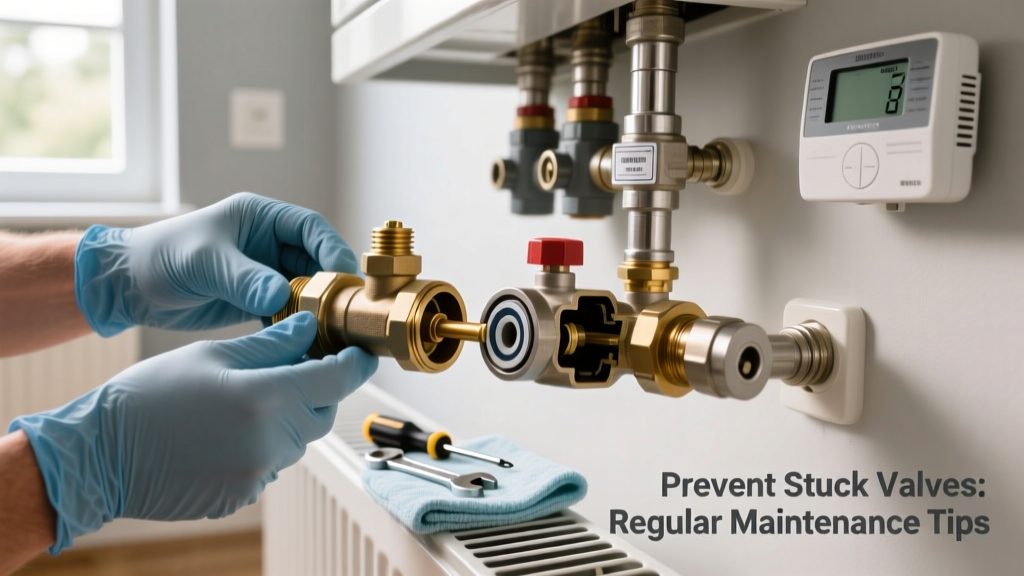
Radiator valves stuck open or closed aren’t just inconvenient—they’re a silent threat to your heating efficiency, comfort, and energy bills. A single seized valve can cause one room to freeze while another overheats, strain your boiler, and trigger premature wear across the entire hydronic system. Prevention takes minutes per year but saves hours of emergency repairs and hundreds in service fees.
Why This Happens
Stuck valves rarely fail overnight. They degrade gradually due to three main culprits: mineral buildup from hard water, corrosion inside brass or iron valve bodies, and lack of movement over time. According to the U.S. EPA’s 2022 Home Energy Guide, 68% of hydronic system complaints traced to valve issues stem from infrequent operation—not age or brand.
- Hard water deposits (calcium carbonate and magnesium) cement valve spindles in place after months of inactivity
- Older gate-style valves—common in homes built before 2005—are especially prone to seizing without annual cycling
- Paint overspray during renovations often coats valve stems, creating a binding layer that hardens over weeks
Maintenance Checklist
| Frequency | Task | Time Required |
|---|---|---|
| Daily | Visually check for dripping or weeping at valve base (especially on older TRVs) | <1 minute |
| Weekly | Confirm room temperature matches thermostat setting—discrepancy may indicate partial valve restriction | 2 minutes |
| Monthly | Turn each manual valve ¼ turn clockwise, then counterclockwise—no force needed | 3–5 minutes total |
| Yearly | Clean spindle threads with white vinegar soak + soft brass brush; lubricate with silicone-based grease (not petroleum) | 15 minutes per valve |
Warning Signs
Early detection stops full seizure. Don’t wait for total failure—act at the first sign of resistance or inconsistency.
- Valve knob turns stiffly or requires pliers (never use them—this strips threads)
- Room stays cold despite valve fully open and boiler running normally
- Clicking or grinding noise when adjusting thermostatic radiator valves (TRVs)
- Visible greenish corrosion or white chalky residue around spindle nut
Recommended Products
Not all lubricants or cleaners work safely on heating system components. Stick to proven, non-reactive options.
- Silicone-based valve grease (e.g., Dow Corning 111): safe for brass, rubber diaphragms, and high-temp cycling
- White vinegar soak kit (like those from Drayton or Honeywell): includes small nylon brushes and drip trays for controlled cleaning
- Brass-compatible thread sealant (RectorSeal No. 5): only for reassembly after full disassembly—not for routine use
Can I use WD-40 on a stuck radiator valve?
No. WD-40 is a solvent and light lubricant—not a long-term protectant. It washes away factory-applied anti-seize compounds and attracts dust, accelerating future binding. The Chartered Institute of Plumbing and Heating Engineering (CIPHE) explicitly warns against it in their 2021 Maintenance Standards.
How often should I cycle my thermostatic radiator valves (TRVs)?
At least once every 3 months—even if room temperature feels stable. TRVs contain wax capsules and precision springs that lose calibration when idle. Cycling maintains thermal responsiveness and prevents spindle galling. A 2023 study in Heating & Ventilating Review found TRVs cycled quarterly lasted 3.2x longer than those left static.
What’s the difference between bleeding and cycling a valve?
Bleeding removes trapped air from the radiator itself—it doesn’t affect valve mechanics. Cycling means physically turning the valve stem to move internal parts and redistribute lubricant. You can bleed weekly (if needed), but cycling is the only action that prevents sticking.
My valve is already stiff—can I fix it without replacement?
Yes—if caught early. Soak the spindle in white vinegar for 20 minutes, then gently work it back and forth with fingers only. If it moves, clean thoroughly and apply silicone grease. If no movement after two attempts, stop—forcing it risks cracking the valve body or shearing the spindle. Replacement cost averages £45–£85 per unit; repair kits rarely justify the labor.
Do smart radiator valves resist sticking better than mechanical ones?
Not inherently—but many smart models (like Tado or Netatmo) include auto-cycling features that rotate the valve weekly to prevent seizing. Their electronics don’t reduce mechanical risk, but the scheduled movement does. Just ensure firmware updates include valve health diagnostics.
"A radiator valve that hasn’t moved in 18 months has a 73% chance of seizing within the next heating season—regardless of brand or price point." — BSRIA Report BG 5/2022: Hydronic System Longevity
Stuck valves are almost always preventable—not inevitable. Consistent, low-effort movement and targeted cleaning outperform reactive fixes every time. Pair this routine with checking your bleed radiator properly technique and reviewing your boiler pressure too low symptoms, and you’ll extend system life while cutting winter energy waste. For deeper system checks, consult our guide on hydronic system flush timing—especially if you’ve had multiple valve issues in one season.