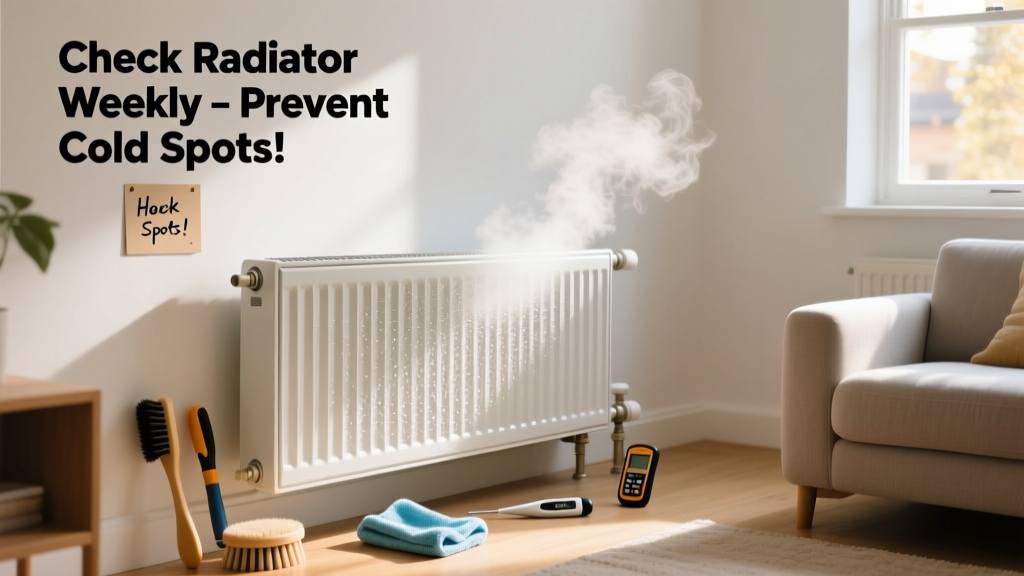
One cold radiator in your home isn’t just an annoyance—it’s a symptom of inefficiency that can raise your heating bill by up to 12% and strain your boiler, according to the UK’s Energy Saving Trust (2022). Left unaddressed, minor airlocks or sludge buildup become major system failures—often during the coldest weeks of the year.
Why This Happens
Radiators fail to heat for three primary reasons: trapped air blocking water flow, internal corrosion or sludge restricting circulation, and valve or thermostat issues preventing proper activation. Less commonly, low system pressure or a failing pump contributes—but those are usually accompanied by broader heating problems across multiple rooms.
A 2021 survey by the Chartered Institute of Plumbing and Heating Engineering found that 68% of reported 'cold radiator' calls were resolved with simple bleeding or balancing—not part replacement.
Maintenance Checklist
| Frequency | Task | Time Required |
|---|---|---|
| Daily | Check room thermostat setting and radiator TRV position (not fully closed) | 30 seconds |
| Weekly | Feel each radiator top-to-bottom: consistent warmth indicates proper flow; cool bottom = sludge, cool top = air | 2 minutes |
| Monthly | Bleed any radiator with a cool top (use a radiator key; catch water in a cloth) | 5–7 minutes per unit |
| Yearly | Power flush system if >10 years old or multiple radiators show cold spots; inspect boiler pressure (1.0–1.5 bar) | 2–4 hours (pro recommended) |
Warning Signs
Don’t wait for total failure. These early indicators mean action is needed within days—not weeks:
- Cool patch at the top of the radiator (airlock forming)
- Gurgling or knocking sounds when heating kicks on
- One radiator consistently colder than others on the same circuit
- Discolored or rusty water when bleeding
- TRV head won’t turn or feels stiff
According to the Building Engineering Services Association (BESA), ignoring two or more of these signs increases sludge-related failure risk by 300% over 18 months.
Recommended Products
Not all products deliver equal value. Focus on reliability and compatibility with your system type (combi, regular, or system boiler):
- Radiator keys: Stainless steel, not plastic—prevents stripping bleed valves (e.g., Drayton or Honeywell branded)
- Inhibitor additives: Sentinel X100 or Fernox Protector F1—add every 5 years or after draining
- TRV heads: Choose programmable models like Heatmiser NeoStat-R for zoned control and leak detection alerts
- Pressure test kits: For DIY verification between service visits (e.g., Tectite ProCheck)
Can I bleed a radiator while the heating is on?
No. Always switch off the boiler and let the system cool for at least 30 minutes. Hot water under pressure can scald—and releasing steam risks damaging the valve seal. Wait until the radiator is warm to the touch but not hot.
Why does only one radiator stay cold while others work?
Most often, it’s imbalance—not a fault. Radiators closest to the boiler get priority flow. Use lockshield valve adjustments (count turns from fully closed) to slow flow to near-boiler units and increase it to distant ones. A step-by-step radiator balancing guide walks through this precisely.
How often should I add inhibitor to my system?
Every 5 years—or immediately after any drain-down, new radiator installation, or power flush. The U.S. Department of Energy notes that systems without inhibitor lose heat transfer efficiency by up to 18% annually due to internal corrosion.
Will a smart thermostat fix cold radiators?
Not directly—but it helps diagnose them. Smart thermostats like Nest or Hive log runtime patterns. If a zone consistently runs longer than others without reaching temperature, that’s a red flag for flow issues. Pair with smart TRVs to isolate the problem radiator.
What’s the best way to tell if sludge is the issue?
Bleed the radiator and catch water in a white bowl. If it’s brown, black, or contains gritty particles, sludge is present. Also check the magnet on your system filter—if it’s coated in black debris, flushing is overdue. The CIPHE recommends magnetic filters be cleaned quarterly in homes with older steel radiators.
"Sludge doesn’t form overnight—but once it’s in the system, it accelerates corrosion exponentially. Prevention starts the day the system is installed, not when the first radiator goes cold." — Martin Green, Technical Director, CIPHE, 2023
Preventing cold radiators isn’t about reacting—it’s about rhythm. Stick to the monthly bleed, watch for temperature gradients, and treat your system like the sealed hydraulic circuit it is. A few minutes a month saves hundreds in emergency call-outs and keeps your home evenly warm, year after year. For deeper diagnostics, consult our guide to low boiler pressure or steps to identify small leaks before they worsen.