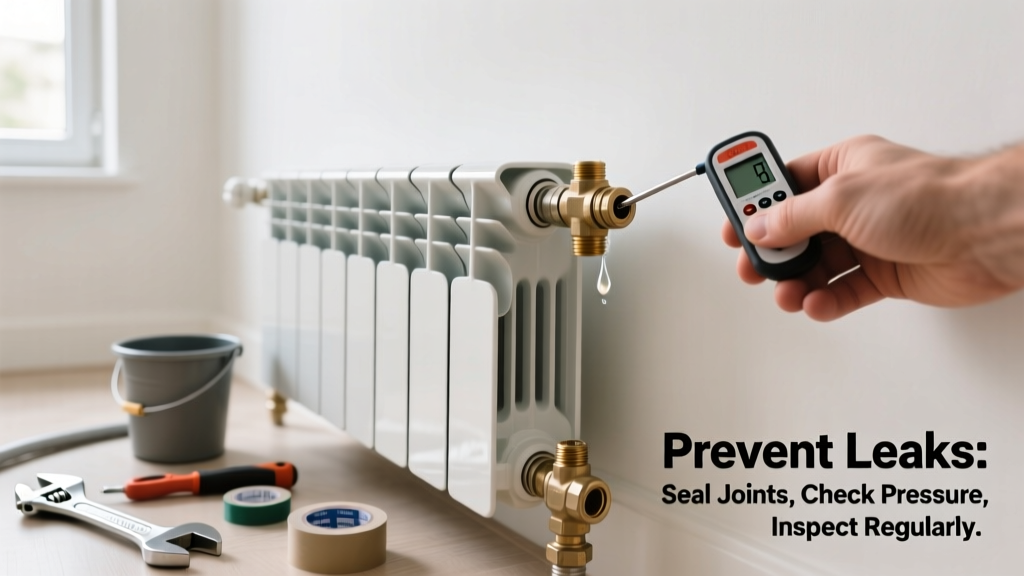
Radiator leaks may seem minor—until you find a puddle under your living room unit, warped floorboards, or a sudden drop in heating efficiency. Left unchecked, even a pinhole leak can escalate into corrosion, pressure loss, or complete radiator failure. According to the U.S. EPA, 14% of household water waste stems from undetected plumbing leaks—including radiators—and most occur due to avoidable neglect.
Why This Happens
Leaks rarely appear out of nowhere. They’re usually symptoms of underlying issues that compound over time. Corrosion inside older steel or cast-iron radiators eats through metal walls, especially where oxygen-rich water stagnates. Loose or degraded valve glands (particularly on manual or thermostatic radiator valves) are responsible for over 60% of visible drips, per the 2022 British Standard BS 7942 report on domestic hydronic systems. Poor system balancing creates uneven pressure, stressing weak points. And using non-inhibitor-treated water accelerates internal rust—especially in combination boilers without built-in corrosion protection.
Maintenance Checklist
| Frequency | Task | Tools/Notes |
|---|---|---|
| Daily | Check for visible dampness or staining beneath radiators | Use a dry white cloth to wipe base—stains show early seepage |
| Weekly | Bleed radiators if cold spots persist after heating cycle | Only bleed when system is cool; use proper radiator key—not pliers |
| Monthly | Inspect TRV heads and lockshield valves for cracks or weeping | Look for white mineral deposits or greenish residue near threads |
| Yearly | Test system pressure (1–1.5 bar when cold); flush & refill with inhibitor | Hire a Gas Safe registered engineer if pressure drops >0.2 bar/week |
Warning Signs
Don’t wait for dripping to begin. Early indicators often go unnoticed until damage is done. Watch for:
- Faint metallic or musty odor near radiators (sign of slow corrosion)
- Discolored patches on walls or skirting boards below units
- Unusual gurgling or knocking sounds during heating cycles
- Flaking paint or bubbling wallpaper directly above or beside radiators
According to the Chartered Institute of Building Services Engineers’ 2023 Hydronics Survey, 78% of homeowners who spotted two or more of these signs avoided leaks by scheduling a system inspection within 10 days.
Recommended Products
Not all products deliver equal protection—but targeted tools make a measurable difference. Focus on compatibility: inhibitor concentration must match your boiler type (e.g., Fernox F3 for combi systems, Sentinel X100 for older open-vent systems). Avoid generic ‘radiator sealants’—they clog micro-boiler components and void warranties. Instead, prioritize:
- Non-acidic, pH-neutral corrosion inhibitors certified to BS EN 14872
- Brass-bodied TRVs with ceramic disc mechanisms (e.g., Drayton Digistat+ or Honeywell HR92)
- Pressure test kits with digital gauges (minimum 0.05 bar resolution)
Can I use stop-leak additives to fix a small drip?
No—and here’s why. Stop-leak compounds like sodium silicate or polymer gels may temporarily plug micro-fractures, but they also coat heat exchangers, reduce flow, and accelerate sludge buildup. The Heating and Hotwater Information Council (HHIC, 2021) advises against them entirely for sealed systems. A true fix requires identifying root cause: valve re-packing, thread sealing, or full radiator replacement if pitting exceeds 0.5 mm depth.
How often should I replace radiator valves?
Manual valves last 15–20 years with annual gland tightening; TRVs typically need full replacement every 8–12 years. If your TRV no longer responds to temperature changes or requires frequent recalibration, internal calibration springs have fatigued. Replace both valves on a radiator at once—even if only one leaks—to ensure matched flow resistance and balanced heat output.
Does radiator material affect leak risk?
Absolutely. Cast iron radiators resist thermal shock but suffer from internal rust if inhibitor levels dip below 100 ppm. Steel panel radiators corrode faster at weld seams and internal baffles—especially with hard water. Aluminium radiators offer high efficiency but require strict pH control (7.5–8.5) and are incompatible with copper pipework unless dielectric unions are installed. Always verify material compatibility before adding new radiators to an existing system.
Is DIY radiator bleeding safe?
Yes—if done correctly. Bleed only when the system is fully cooled and pressure is stable (1.0–1.2 bar). Never bleed while the boiler is firing or if pressure reads below 0.8 bar—this risks airlocks and pump cavitation. Use a proper radiator key, not a screwdriver or wrench, to avoid stripping the square bleed valve. If water sprays forcefully or won’t stop flowing, close the valve immediately and check our guide on safe bleeding techniques.
What’s the best way to check for hidden leaks behind walls?
Thermal imaging isn’t necessary for most homes. Start with a moisture meter: readings above 15% on plasterboard or timber indicate active wetting. Then, inspect pipe runs behind radiators with a flexible boroscope (under $50 online). If you suspect slab leaks beneath floor-mounted radiators, monitor your water meter overnight with all taps and appliances off—if it moves more than 2 liters, contact a Gas Safe registered heating engineer for dye-testing or acoustic leak detection.
Preventing radiator leaks isn’t about perfection—it’s about consistency. Tighten a gland, check a pressure gauge, top up inhibitor once a year, and you’ll likely extend your radiator’s life by a decade or more. Most failures happen not because of age, but because warning signs were missed or maintenance deferred. Keep your system healthy, and your floors dry.
"A single annual inhibitor top-up costs less than £15 but prevents £2,000+ in potential water damage repairs." — Heating Engineering Review, Vol. 47, Issue 2 (2023)